
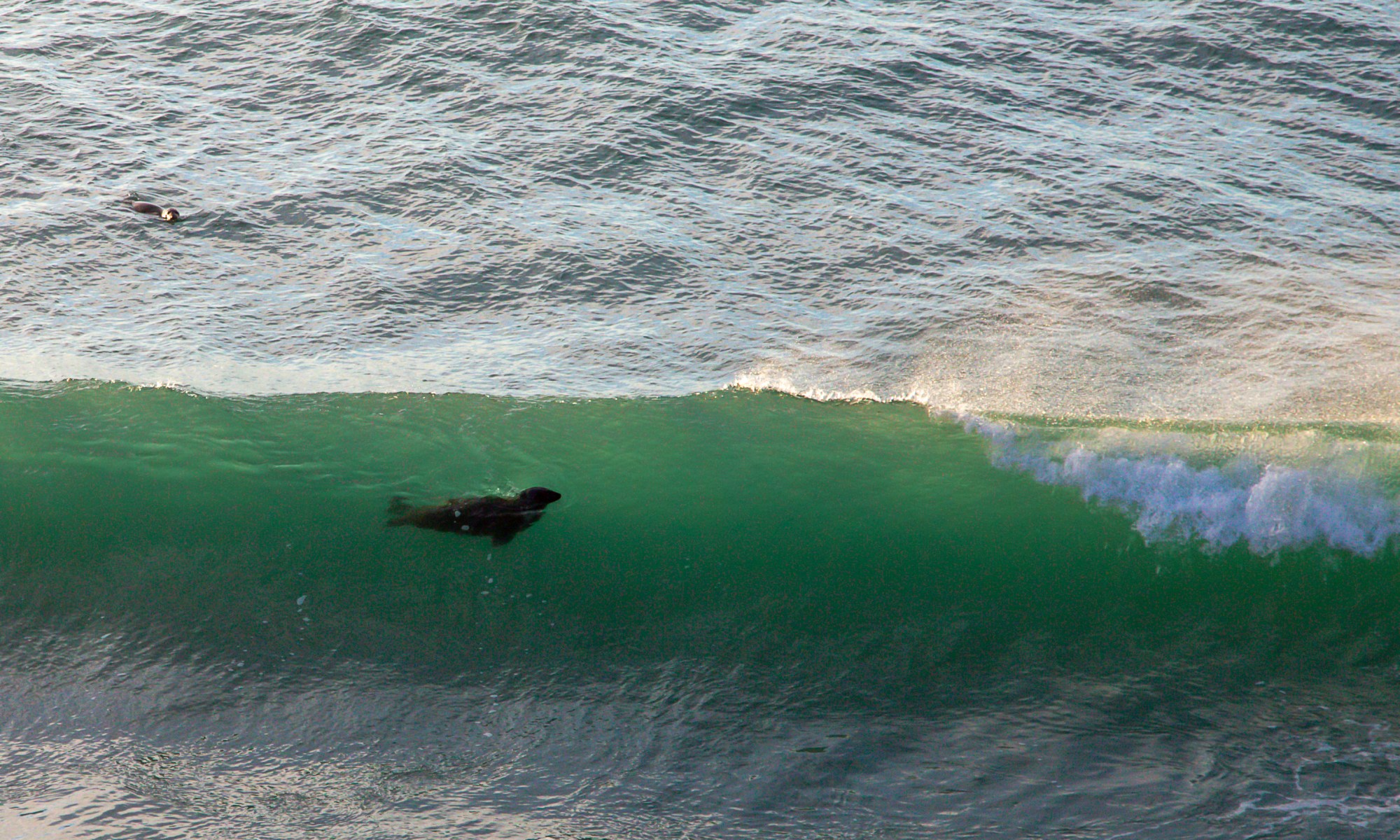

The UK’s waters are home to just over a third of the world’s population of grey seals, and around 30% of the European sub population of harbour seals, otherwise known as the common seal. The majority of seals that can be spotted in the water and on-land along the southwest coastline are grey seals, with occasional sightings of common seals and one recorded successful common seal pupping site. Seals can be seen all year round—swimming and playing in the water, and as they “haul out”, in other words, come ashore to moult and rest, to mainland beach sites in autumn, winter and spring and offshore rocks and islands in the summer.
Whilst spending most of their lives in the water, seals regularly come ashore to mainland beaches, coves and caves as well as offshore islands and rocky outcrops for vital rest—recovering energy spent when out at sea foraging and travelling, replenishing oxygen supplies for diving, thermoregulating, digesting food and breeding. Whilst the southwest waters are home to other marine mammals such as dolphins and porpoises, seals are regularly spotted due to spending time both in water and on the shoreline. However, whilst many beaches are the chosen place for rest and breeding by seals and may be close to human activity, it’s important to minimise human impact on these protected species, to ensure seals return to their places for rest and breeding, have a prolonged lifespan and to reduce effects on the wider seal population.
What is seal disturbance?
Home to some of the best beaches in the UK, many people make their way to Devon and Cornwall for their holidays, spending time in or beside the sea on wildlife cruises, surfing, stand-up paddleboarding, kayaking and walking on the coast path. Increased visits to these beaches are having an impact on our marine life, so it’s important to be aware of how to safely watch marine life and the consequences of wildlife disturbance.
‘Disturbance’ is defined as a change in natural behaviour in an animal as a result of human behaviour. While hauled out, seals are vulnerable to being disrupted into prematurely entering the sea, as a result of the presence and proximity of human seaside activities. When disturbed prematurely back into the sea, seals are unable to complete vital processes such as resting, thermoregulating, digesting and breeding— all of which can affect their ability to successfully breed and can seriously compromise their life expectancy. Disturbance is also a waste of energy, often leads to injury and can be fatal. In the wild, every calorie counts and can make the difference between life and death. Long-term effects of seal disturbance can result in permanent site abandonment, behaviour alterations, reduced survivorship and wider population effects. Disturbing heavily pregnant females in the summer also means that they cannot feed their pup enough in the autumn for it to stand any chance of surviving its first winter.
Advice on safely watching seals
- Whilst walking on the South West Coast Path, aim to keep a distance of at least 100m from seals. Never get close to, feed, or touch a seal.
- When seal watching, move slowly and whisper.
- Keep to the footpath and follow signage and local advice.
- Keep your dog close to you, preferably on a lead.
- Safely watch seals at a distance with binoculars and zoom cameras.
- Stay out of sight during pupping season, between August and January, as mother seals won’t return to feed their pups if they spot or smell a human.
Fun facts about seals
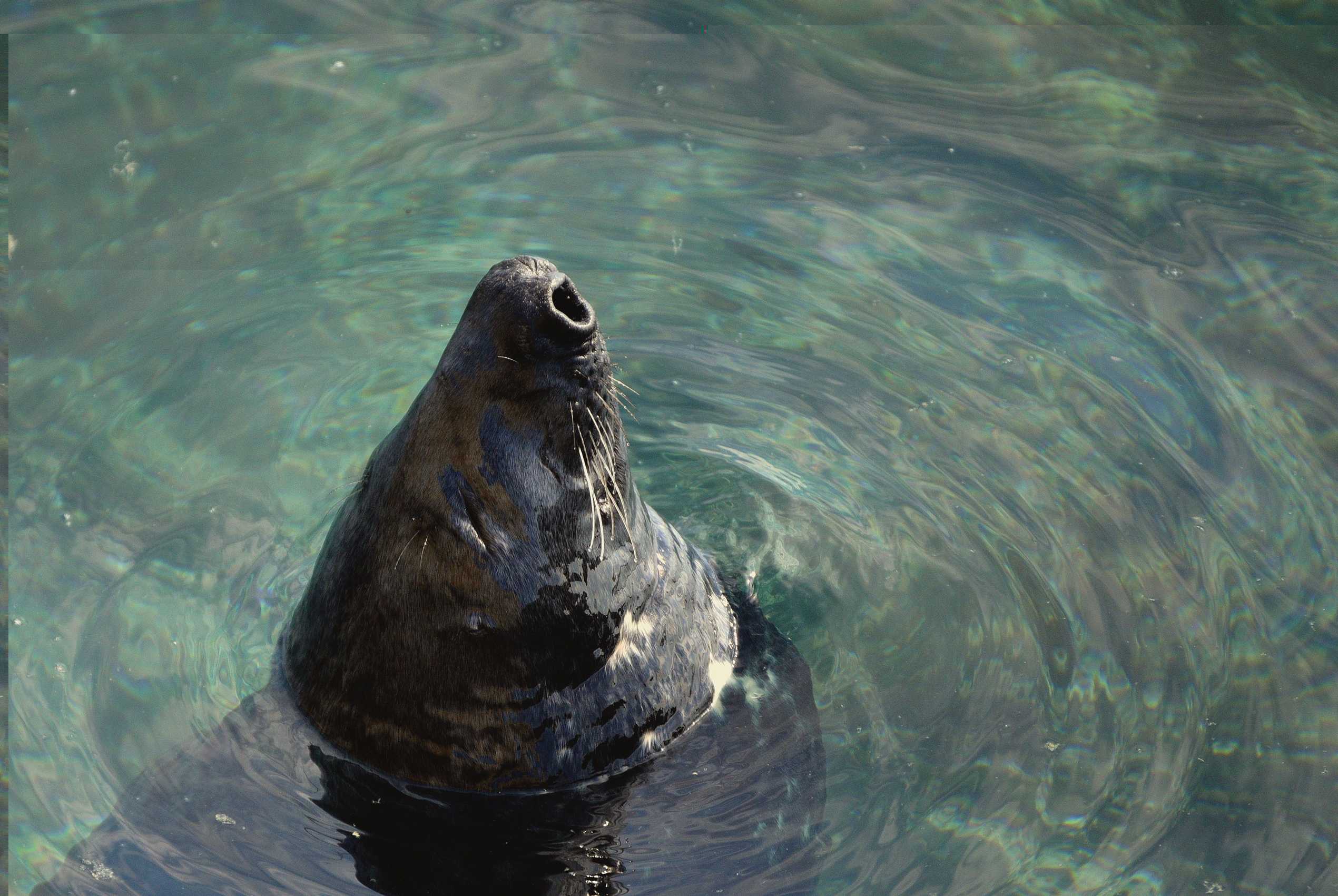
- Both grey and common seals are protected under the Conversation of Seals Act 1970.
- Seals are one of 18 members of the ‘true seal’ family, which includes grey, common, leopard and elephant seals. True seals don’t have external ears, but instead small holes on the sides of their head. They also have larger rear flippers to enable them to waddle on land and propel them through the water.
- Seals are the largest land breeding mammal in the UK, with males weighing in at often over 300kg.
- Grey seals can dive down to 300m.
- Seals can sleep in the water; By “bottling” (floating upright) or “logging” (floating horizontally) with their noses above the surface.
- Seals get a new coat every year. Each spring, adult grey seals spend 2-3 weeks (mostly on land) shedding their outer coat of fur and growing a new one.
- Seals howl above water, and communicate with each other underwater with clicks and moans.
- Seal pups travel huge distances; Once weaned off their mothers, pups cover great distances in search of food, rest and shelter. One seal pup was recorded leaving a beach at 4 weeks old, to swim 1,000km in the next 8 weeks routinely diving to 120m! Another three-year-old seal swam the whole of the Cornish coast in 4 days. Seals can swim at a top speed of 25km/h and 100km a day for several consecutive days.
Wildlife walks on the South West Coast Path
There are many stretches of the South West Coast Path where you can see marine life. Seals can be spotted year-round, resting on beaches and swimming and playing in the water. If you’re looking for a walk this half-term to head out and watch seals (at a distance!) then we have lots of walks on our website to browse, simply search on our walk finder for walks in your local area or where you’re visiting, by clicking on the magnifying glass icon on our home page, here.
Thanks to Sue Sayer MBE, Founder and Director of the Seal Research Trust, for her incredible knowledge and advice with this blog. To help keep the Seal Research Trust’s records up to date and contribute to their marine conservation efforts, send your seal sightings to sightings@cornwallsealgroup.co.uk. For more information, visit The Seal Alliance and Seal Research Trust, and have a listen to our ‘Connecting to Nature’ podcast (below) with Sue Sayer MBE; Tom Munro, Manager, Dorset National Landscape; and Charlotte Wray, Ranger, Exmoor National Park.
This episode focuses on the nature and wildlife that you may encounter as you walk along the Path, how nature can adapt to changing landscapes caused by climate change, and highlights the beauty and ruggedness of the coastal environment that the South West Coast Path traverses.
 The South West Coast Path