

Although the South West Coast Path is famous for its wildlife and jaw-dropping natural landscapes, there are plenty of man-made marvels which are worth stopping for too. For thousands of years, people have built their homes, workplaces, castles and churches along this stunning coastline, and we’re lucky enough that much of it is well-preserved for us to enjoy.
From ancient chapels to hidden huts, read on to learn about some of the fascinating built heritage along the South West Coast Path, and the stories behind it.
Culbone Church
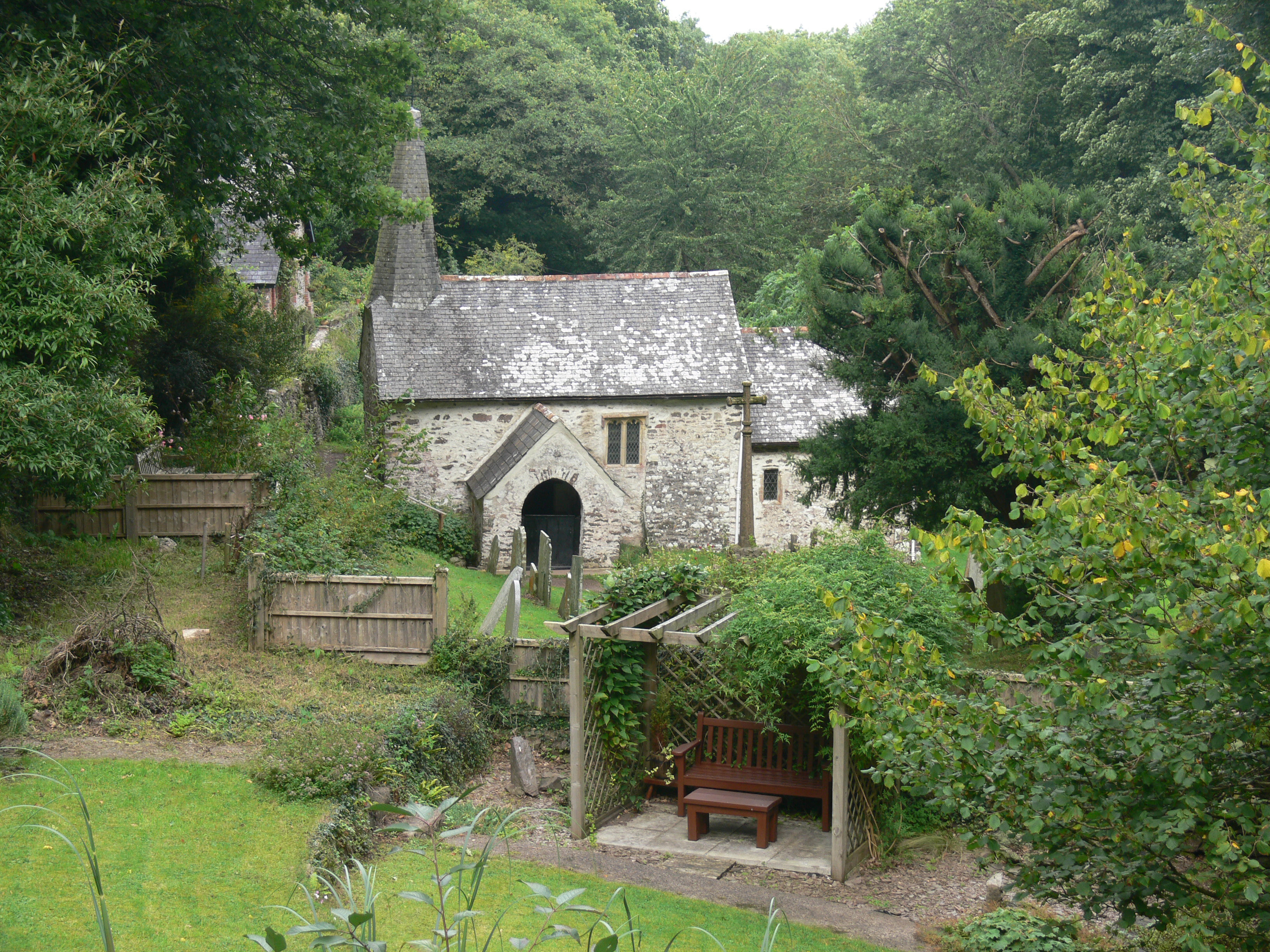
Hidden away in an ancient wooded valley, just meters from the Coast Path, is a church that’s argued to be the UK’s smallest. Culbone’s St Beuno’s Church is a curious building, thought to be 1,000 years old and unusually dedicated to a little-known Welsh saint from the 6th Century.
Despite its remote location that can only be accessed on foot, Culbone’s Church has been a popular place of worship throughout its life. It’s not hard to imagine why, with a wonderfully natural, peaceful location that’s perfect for taking a breather. The church has certainly seen its fair share of comings-and-goings, from Welsh monks, to a 16th Century leper colony, to waterproof-clad walkers in the modern day.
St Beuno’s makes a welcome stop on the wild stretch of Coast Path from Porlock Weir to Lynmouth. If you’d like to visit as part of a shorter walk, take our 5-mile circular route from Porlock Weir car park, which also takes in the historic ‘fairy tunnels’.
Hawker’s Hut
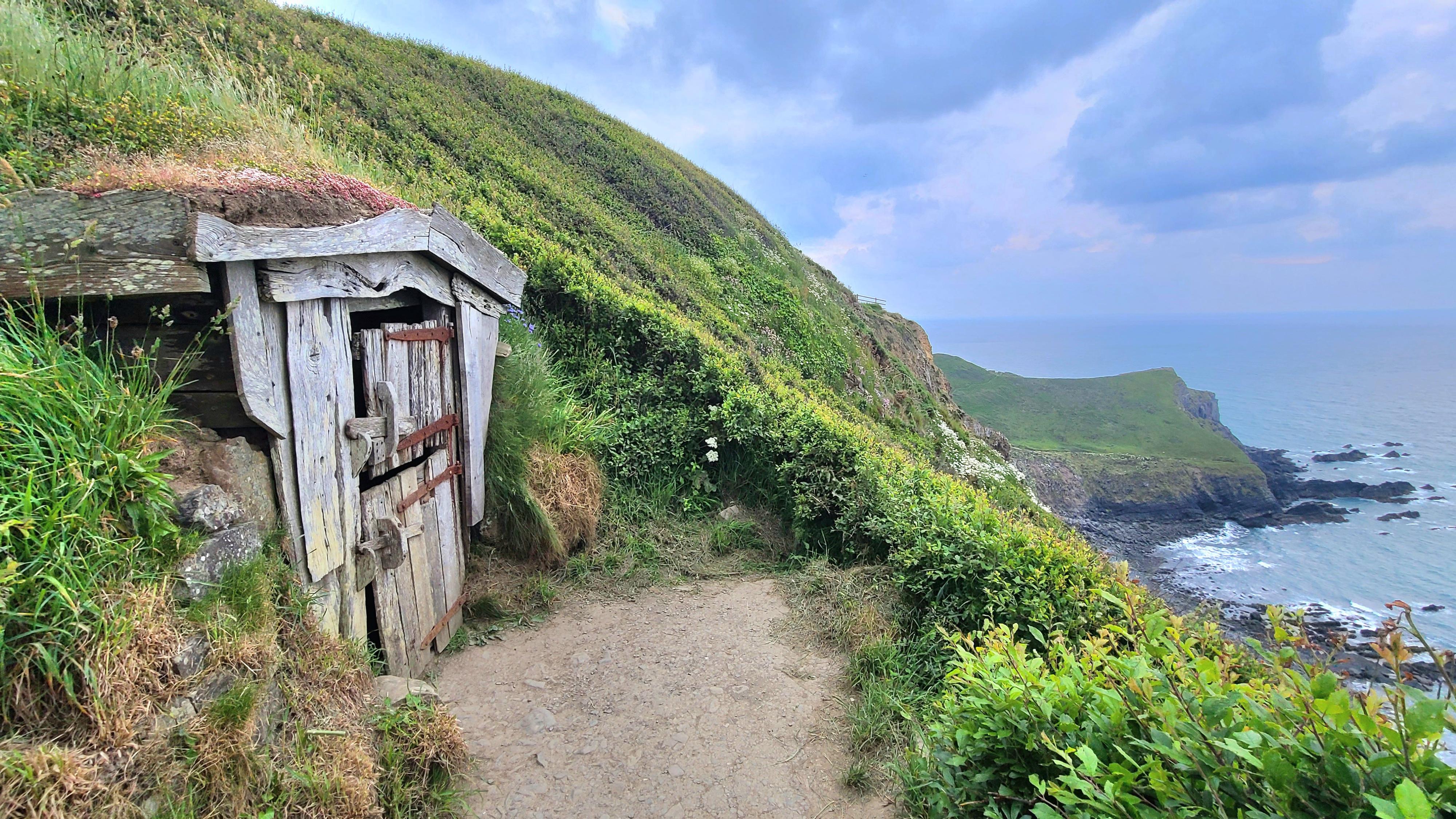
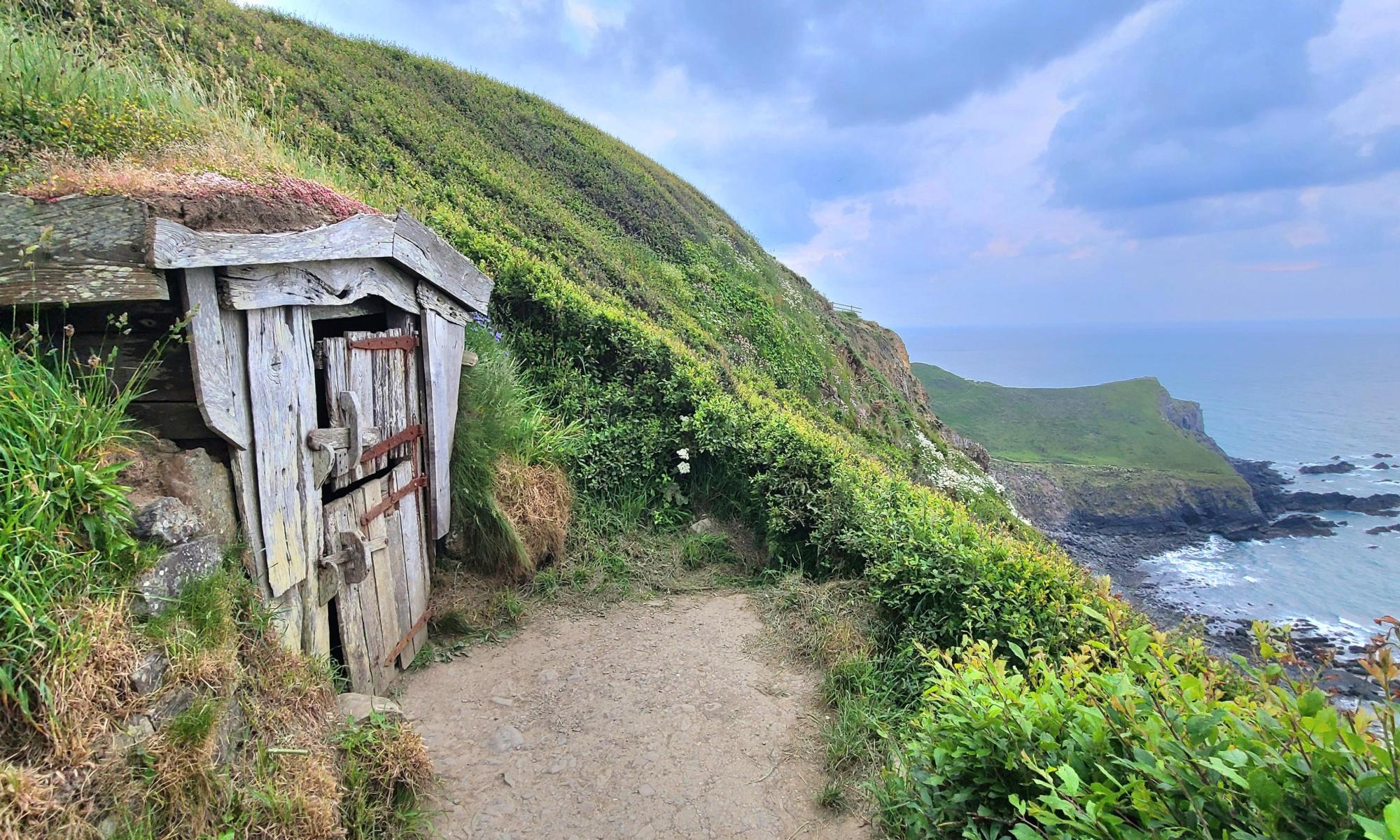
One of the Coast Path’s most charming buildings (if you can call it that), this small wooden hut was built by Reverend Hawker, an accomplished poet and the vicar of Morwenstow. Hawker’s hut was constructed during the 1840s, using driftwood gathered from nearby shipwrecks, and acted as a refuge for the Reverend to meditate, smoke and write poetry. It also happens to be the single smallest building cared for by the National Trust.
Tucked tightly into the cliff’s edge and overlooking the dramatic Atlantic, it’s no wonder that this spot was chosen for the hut. A perfect place to shelter from the wind with a snack or hot drink, walkers of the Coast Path are sure to feel the escapism Reverend Hawker did when he relaxed in front of the view well over a hundred years ago.
If you fancy seeing the hut for yourself, take a look at our 2-mile circular walk from Morwenstow Church car park. Or, if you’d rather more of a challenge, Hawker’s Hut features in the 10-mile section from Hartland Quay to Bude.
Doyden Castle

If quirky buildings are your thing, this 19th Century play-castle is sure to pique your interest! Perched on top of Doyden Point overlooking Port Quinn, this folly fortress was fittingly owned by the notorious party animal Samuel Symons, and used as a space to entertain guests away from prying eyes.
The party pad was built in the style of a medieval castle but much smaller, made up of just two floors and a basement. The floors were used for hosting, while the cellar housed Symons’ surely plentiful supplies of booze.
Doyden Castle features in the stretch of Coast Path between Port Isaac and Padstow, and can be visited as part of the 5-mile walk from Port Isaac to Portreath. For a real up-close look, Doyden Castle can be booked as a one bed holiday cottage, with decor leaning into its historical charm, on the National Trust website.
The Huer’s Hut, Newquay
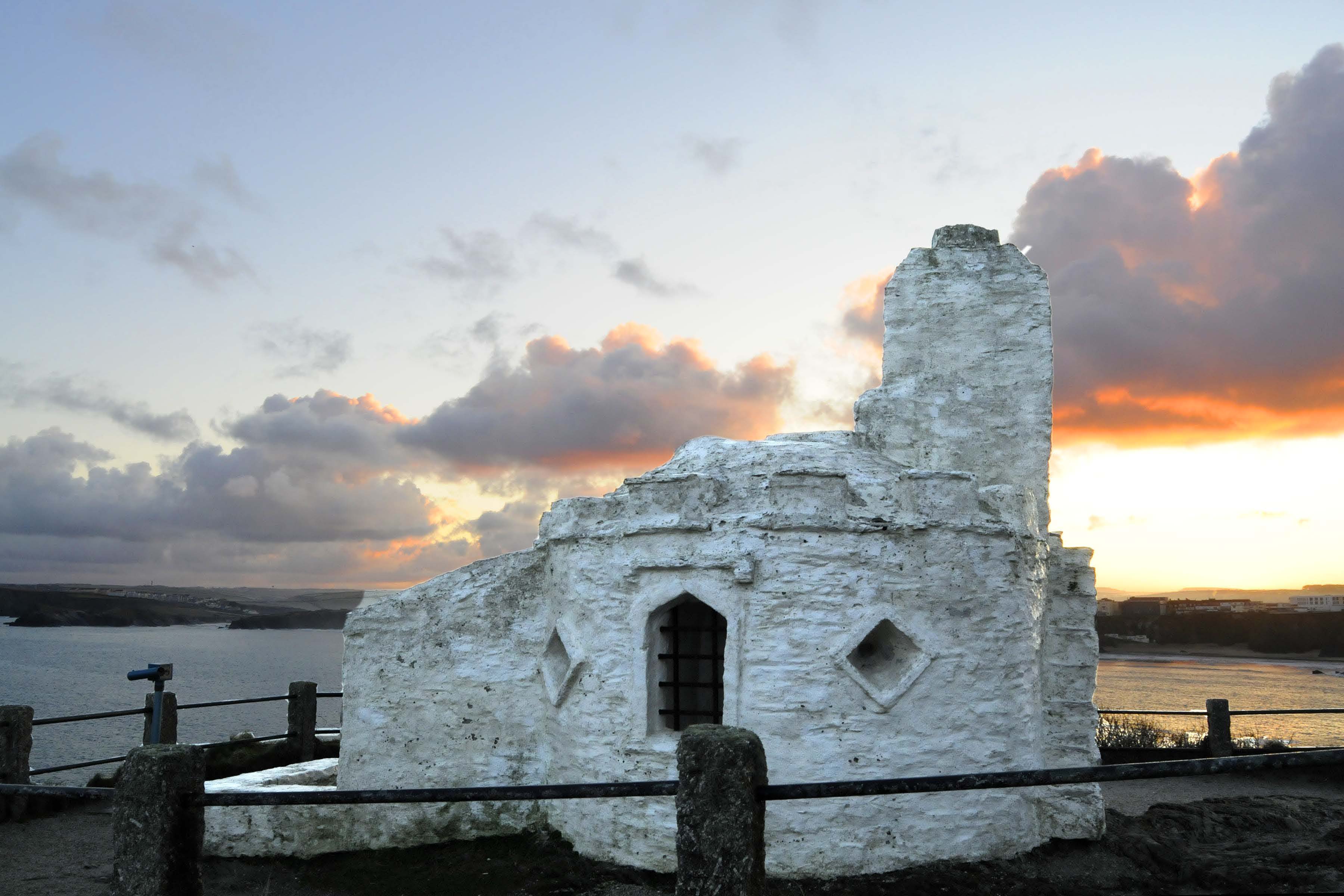
This squat, bright white building is difficult to miss on the Coast Path near Newquay, with a quintessentially Cornish history. Located on the cliffs above town, the huer’s hut has sweeping views of the Atlantic, and was historically used for spotting schools of pilchards moving in the water below.
Built in the 14th century, the lookout was manned by a ‘huer’, whose job was to alert the townsfolk when the pilchards had arrived inshore. When the huer spotted fish, they would sound a horn and let out a distinct cry of ‘Hevva, Hevva!’, spurring the locals to down tools and rush to their fishing boats. Once the fishing had started, the huer would watch down from their vantage point, using hand signals to direct fishermen towards the fish.
Prior to its use as a huer’s hut, the building was likely a hermitage, where a beacon was lit to guide nearby ships.
The huer’s hut is an early stop on the trail from Newquay to Perranporth, or can easily be visited as part of a short walk from Newquay town centre. If you’d like to incorporate the hut into a weekend walk, try this 5-mile route around Newquay’s coastline.
Levant Tin Mine

Levant is a prime example of Cornish mining heritage, perfectly encapsulating the contrast between industry and nature that’s common throughout West Cornwall. Located just outside Pendeen, the great stone buildings and chimneys cling to the cliffs against a backdrop of rough water, invoking a real sense of respect for the miners who worked here a hundred years ago.
The mine is an extensive site, with a restored 1840s beam engine at its heart, the world’s oldest of its type that still works. There’s also a tunnel leading to the man engine shaft, the site of the 1919 man engine disaster, when 33 men sadly lost their lives.
Part of the Cornish Mining World Heritage Site, Levant is well worth a visit, and is now open to the public thanks to the National Trust. However, it can be even more immersive when approached from the Coast Path – we recommend this short circular walk encompassing the mining heritage at Botallack. If you’re looking for an epic trek, Levant is an early point in the dramatic section of path from Pendeen to Sennen Cove.
The Minack Theatre
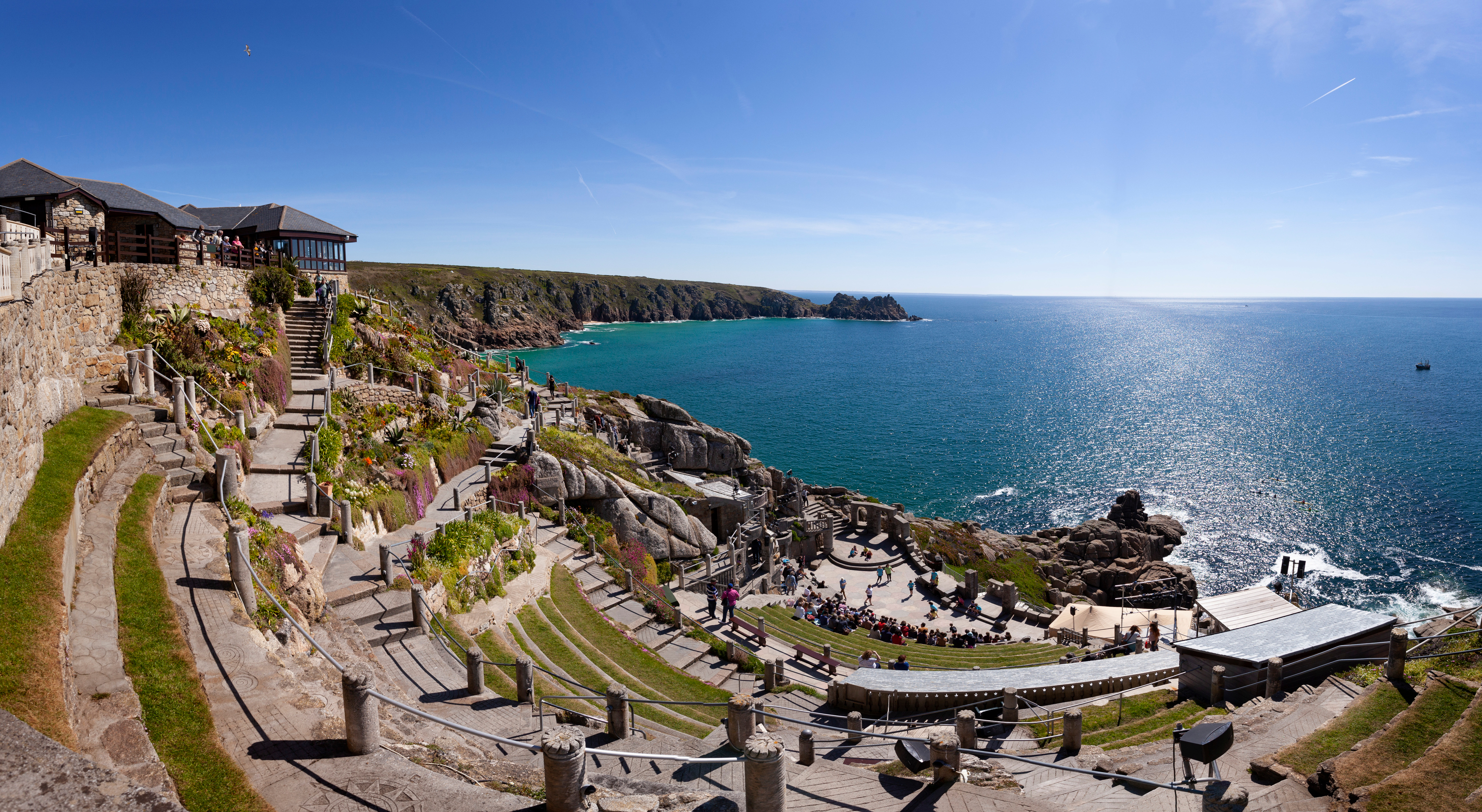
We couldn’t write a blog about the Coast Path’s built heritage without mentioning the world famous Minack Theatre, carved into the coastline of West Cornwall. It’s truly a unique venue, and the only one in the world where you can sit and watch a professional performance with the backdrop of the Cornish coastline and crashing waves.
The theatre was masterminded by the driven and dedicated Rowena Cade in the 20th century, with works starting in 1930. She worked alongside her gardeners to transform what was once a wild, natural headland into a working theatre, using hand tools, hard work and dynamite in place of the expected heavy machinery. Construction developed over the 20th century, and Rowena continued to contribute well into her 80s, carving the name of each performance into the concrete seats.
Now, visitors can take a tour of the Minack Theatre and well-kept gardens, or watch a show as Rowena intended, with a wide range of performances on offer. The theatre is perched on the headland above Porthcurno beach, along the path from Sennen Cove to Lamorna. There are plenty of circular walks which pass Porthcurno and the theatre, including this one from the sleepy fishing cove of Porthgwarra to Porthcurno.
St Michael’s Chapel, Rame Head
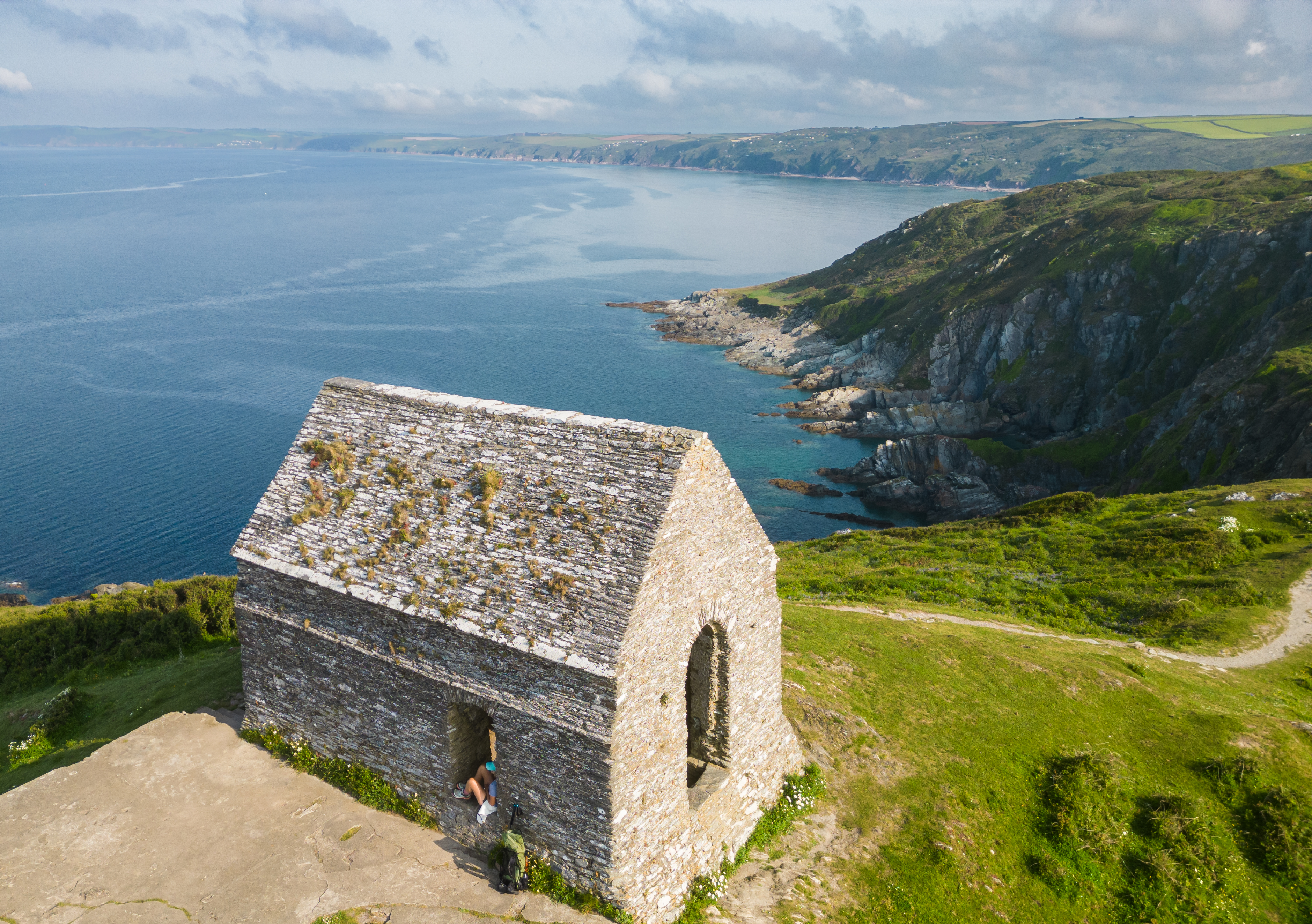
Built on the site of a much older hillfort at Rame Head, near Torpoint, St Michael’s Chapel is as exposed to the elements as it gets. The chapel was built in the late 14th century, although it’s thought that there was a hermitage here well before that.
Perched on the cliffs overlooking Plymouth sound, St Michael’s was an ideal spot for keeping watch for invaders. This task was originally carried out by a priest who would light a candle in the event of an incoming vessel, then by two watchmen in the 16th century, paid to look out for the Spanish Armada. Eventually a machine gun placement was built during WWII, with the concrete pad still present today.
The building is very basic, with little decoration or notable features other than a small window with a far-reaching view along the coast to Plymouth. It is iconic nonetheless, jutting out of the headland as though it’s always been there.
For more information on St Michael’s chapel, read about our short but fascinating Rame Head Chapel walk. You can also stop by while traversing from Portwrinkle to Plymouth as part of our 52 day itinerary.
Although that brings an end to this blog, by no means does it exhaust the list of fascinating historic buildings on the South West Coast Path. With 630 miles to explore, there’s a wealth of heritage waiting to be uncovered, from industrial mining ruins to Neolithic burial chambers.
Next time you’re walking the Coast Path, imagine the generations of people who’ve walked before you. Every church you enter and lighthouse you gaze up at was designed, built, and occupied by local characters, who likely took a minute to observe the wildlife and enjoy the view, just like we do today.
Guest blog written by Barney Munn, SWCPA Communications Volunteer
Barney loves long-distance walking and prehistory, meaning any walk with standing stones, hillforts or dolmens has a firm place in his heart. Despite the countless show-stopping things to see along the Coast Path, Barney’s favourite part is the peace and meditation felt when walking.

Check out Barney’s previous blogs
Protected Landscapes Along the South West Coast Path
South West Coast Path Through the Lens: 10 Screen-Worthy Locations on the Coast Path
5 Autumn and Winter Walks on the South West Coast Path
8 Marine Animals to Spot on the South West Coast Path
4 of my Favourite Summer Walks on the South West Coast Path
 The South West Coast Path