

Guest writer, Bronwen R. Evans, shares what summer solstice means to her, combining personal experiences, solstice folklore, birdlife, and the south west coastal environment that connects them.
Mysteries of the solstice
The word ‘solstice’ finds its roots in the Latin solstitium, or ‘sun standing still’. For me, there is no better way to emulate this than to find a spot to linger for a while, watching the birds make use of the rugged, precarious cliffsides. These days of late June offer the perfect chance to wade your eyes through the buzz and frenzy of a seabird colony, finding the adults diligently flying to and from the nests to feed their new young.
While we today may venture into our landscapes, equipped with an understanding of the creatures we might find – birds, as with natural landmarks and the elements, were often somewhat laced in magic for our ancestors, utilised as helpful navigators of a world we were still discovering. Indeed, the South West is steeped in folklore and local beliefs around the summer solstice, offering clues to the past. Such as Stonehenge’s mysterious history of solstice worship, or the Glastonbury Tor, a popular midsummer celebration space, beneath which there is said to reside a cave that will take you to the otherworld realm of ‘Annwn’.
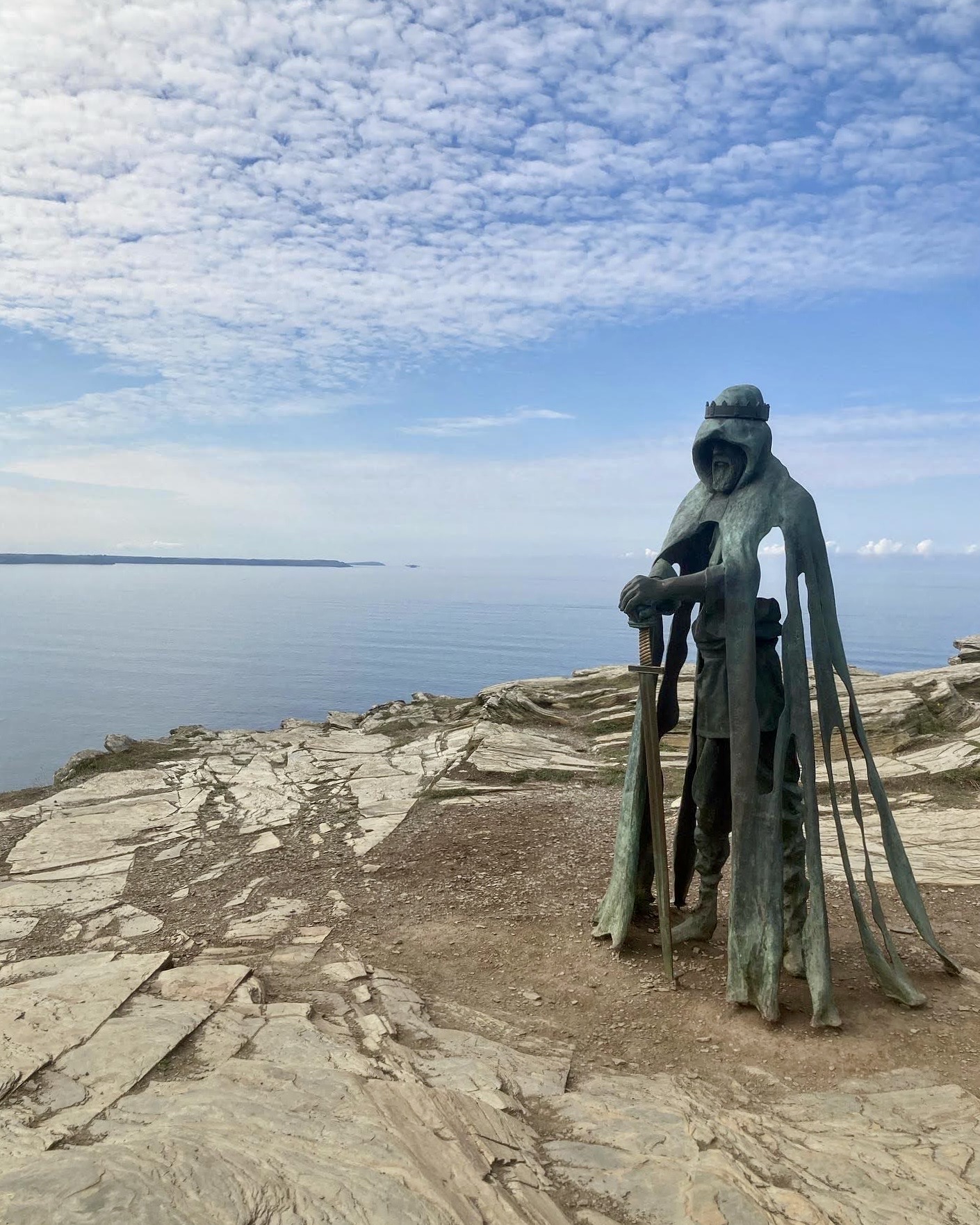
Perhaps no set of legends so widely depict the South West Coast’s connections to the solstice as those of King Arthur. Tintagel Castle, along the North Cornwall stretch of coast path, is thought to be Arthur’s birthplace. Cornish tales believe that the immortalised Round Table sits underneath the nearby Bossiney Mound. On solstice eve, legend tells that the table rises up, and before sinking into the earth again, glitters like gold, lighting up the skies above, perhaps waiting for the return of King Arthur himself.
Pufflings and fairies
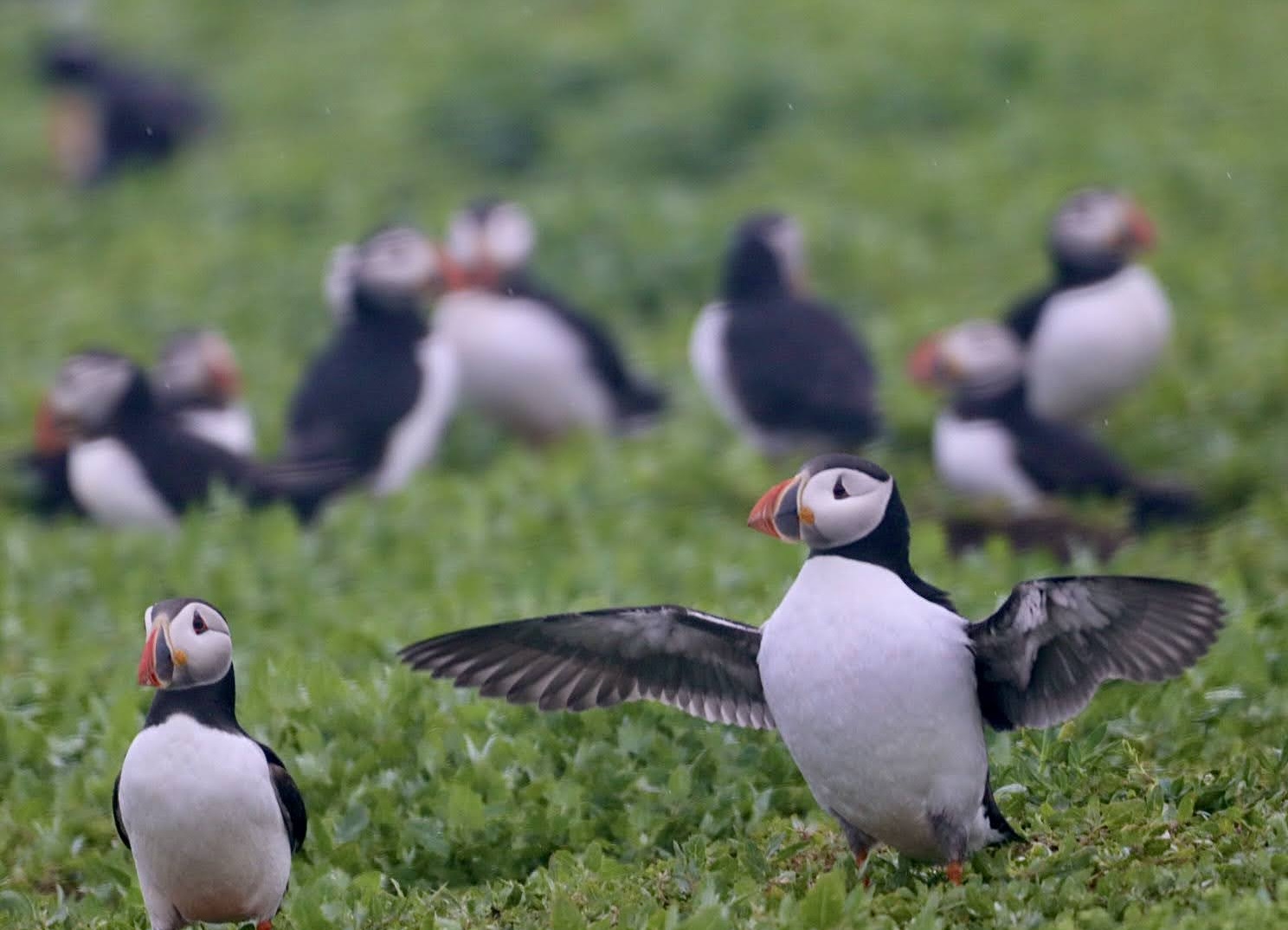
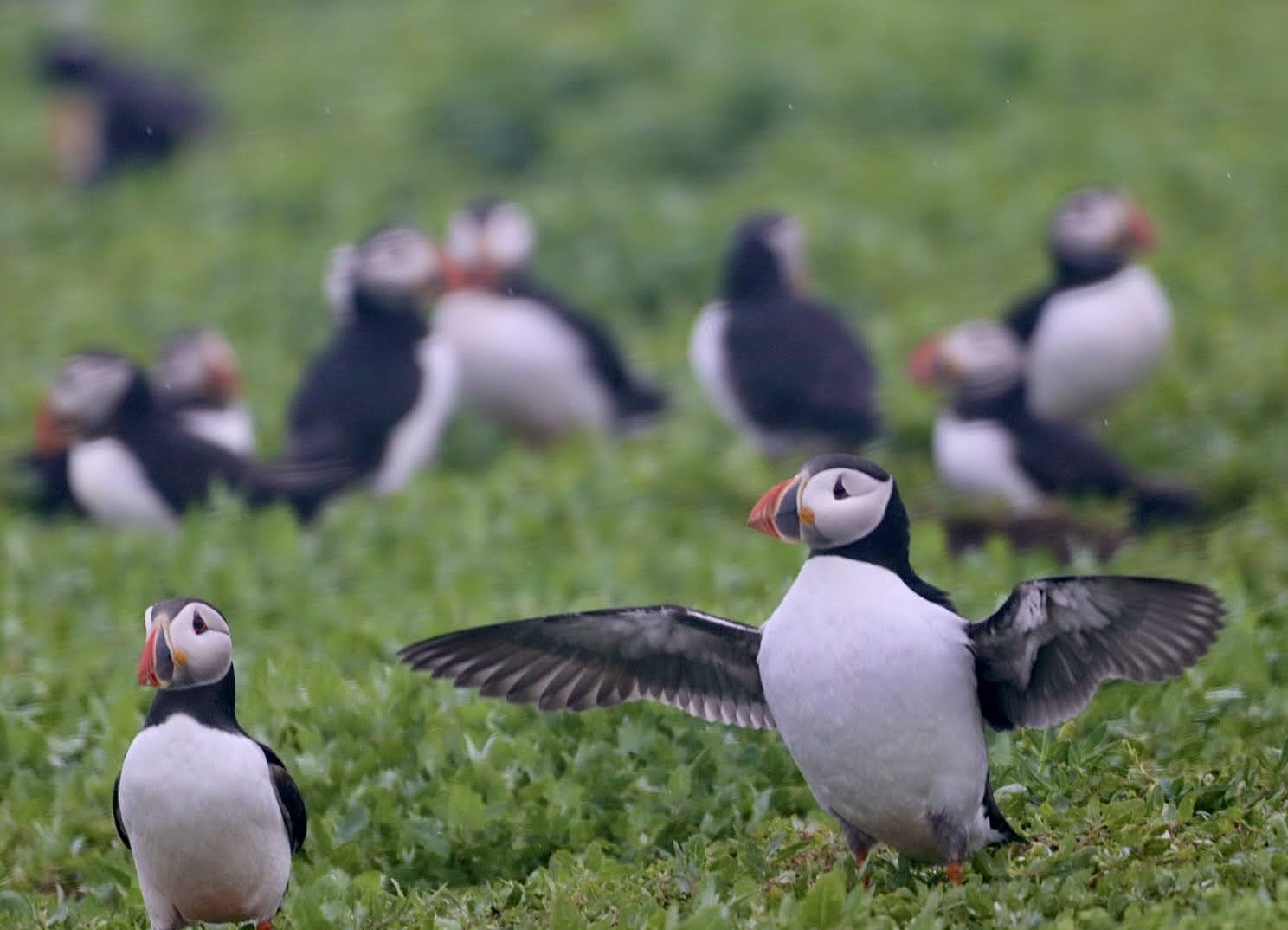
If we delve further into Cornish tales, King Arthur may indeed have already returned, as it is believed that after his death, he was reincarnated as a puffin. Despite their drastically lessened numbers around the coast since the 1900s, when thousands of breeding pairs were reported, the Atlantic puffin can still be found sparsely in various locations. These hardy little birds, adorned with rainbow beaks, are intertwined in the ancient folklore of the coast path. The summer solstice falls each year during peak puffin breeding season, during which these deceptively small birds will lay a single egg and hopefully go on to rear their young, the illusive and adorable ‘pufflings’.
As well as coinciding with seabird mating season, the summer solstice has long been considered a time when the magic of nature is exalted. But unlike the gentle puffins, the more mystical of natural entities, fairies, especially around Devon and Cornwall, seem to be far more determined in their search for merriment. And just as the South West is visited by a variety of seabirds, there are a number of different fairies in its folklore.
The ‘Piskeys’ have been known to deliberately lead lost walkers into bogs. On solstice eve, they are said to dance in rings with lanterns, making their way across the atmospheric coastline of West Cornwall, no doubt attempting to disorientate travellers.
Cliffside beliefs
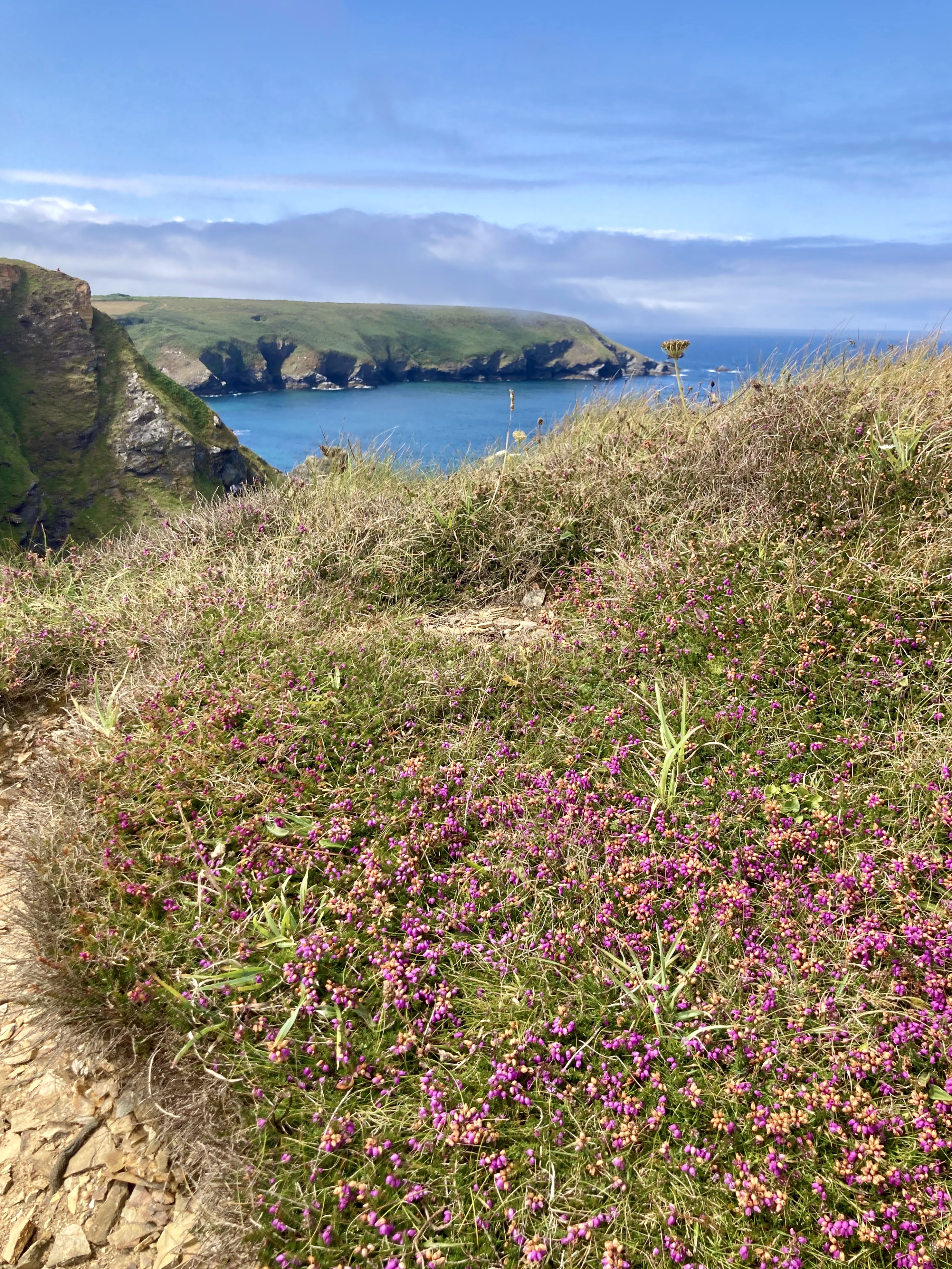
Even those of Celtic Christianity witnessed the existence of the fae realm. 6th-century Celtic hermit, St Levan, wrote of the coast path’s Logan Rock, advising that on the rock’s south-west side, down by the water, can be found the enchanting gardens of the joyful ‘Small Folk’. On solstice nights, he claimed that music could be heard as tiny lights moved atop the cliffs. Strangely enough, during the day, only sea-pinks appear in these green cliffside spots, but those who have spied the areas under the solstice moonlight relay the brilliance of a bounty of flowers, the scents of which can be smelt far out to sea.
Puffins, too, frequenting the cliffs in peak fairy season, have religious connotations. Their genus name Fratercula, meaning ‘little friar’, notes their markings, similar to those of a monk’s habit, as well as their serious posture and bowing heads. However, unlike the flamboyant fairies of the path, they wish to be concealed from sight. Using countershading, their black backs protect them from flying predators, while their white bellies conceal them from those beneath the waves.
Puffins spend most of their year on the water, so it is no surprise that coastal folklore features them as harbingers of weather; a puffin flying low towards land, warning of an oncoming storm. After the breeding season, out at sea, a puffin will shed their colours, their beak, head, and belly fading to grey. One could even be Piskey-led far enough down the garden path to believe that they rely on a little fairy magic for their spring transformation.
Puffin Island
Occasional sprinkles of puffins can be spotted by a lucky few around the SW coast, and thankfully, after much anticipation, all six puffins have returned in 2026 to Dancing Ledge, just off the coast path in Purbeck, Dorset. After a tragic year of deceased puffins washing up around Europe post-storms, this is a happy relief indeed. Though a far cry from the 80 puffins recorded here in the 1950s, I’m sure we are all wishing these little loves the best of luck with breeding in the future.
The Scilly Isles (Annet) also attracts around 100 breeding pairs each year, and a number can be found on The Mouls, an islet near Padstow – both colonies reachable via boat trip.
However, if you find yourself in North Devon or North Cornwall, and like myself, look out to sea at every opportune moment, you may see the Island of Lundy in the distance. Lundy boasts over 1300 returning puffins each year, generally to be found at Jenny’s Cove on the island’s West Side. They are visible around their burrows from an ethical distance, by those willing to (safely) sit on the sloping green cliffside (with a big camera lens, if you’re anything like me). Numbers dwindled to just 13 in the early 2000s, but since the island was declared rat-free, they are now flourishing again, earning back Lundy’s Norse name, ‘Puffin Island’.
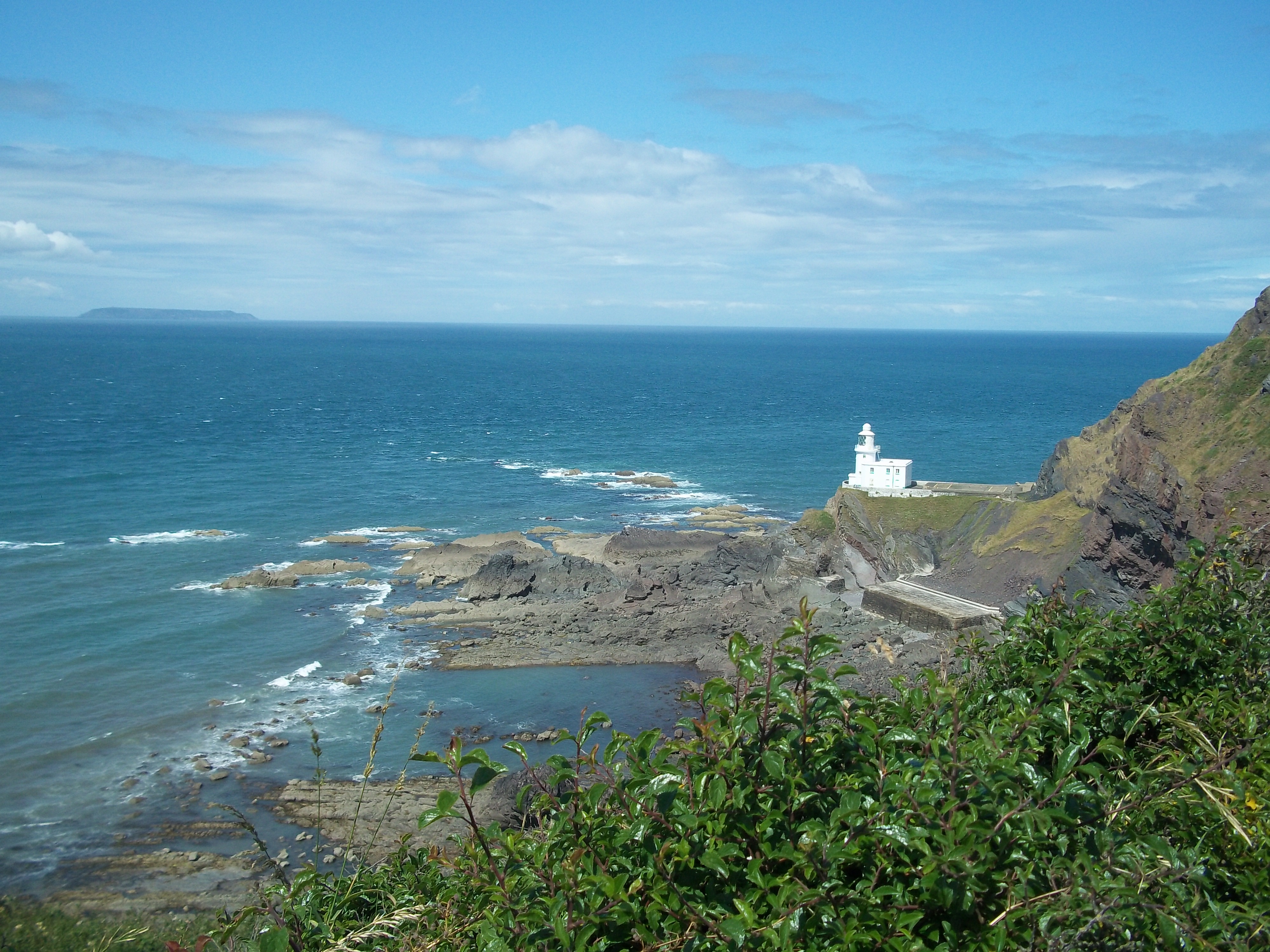
The island offers incredible sunsets across all seasons, but conjures ones that are particularly bewitching around the solstice. It also has its fair share of exciting history and supernatural happenings, from tales of Boggits to ghostly sightings by staff and visitors, myself included. Most interesting perhaps is the theory, held by numerous Arthurian guidebooks, that Lundy may hold one of the possible portals to Annwn, the aforementioned otherworldly realm, deeply connected to the solstice and King Arthur in Celtic mythology. If you have visited the island, it is not hard to see how its sea-mists and stunning rock formations could be a place of deep mythological significance.
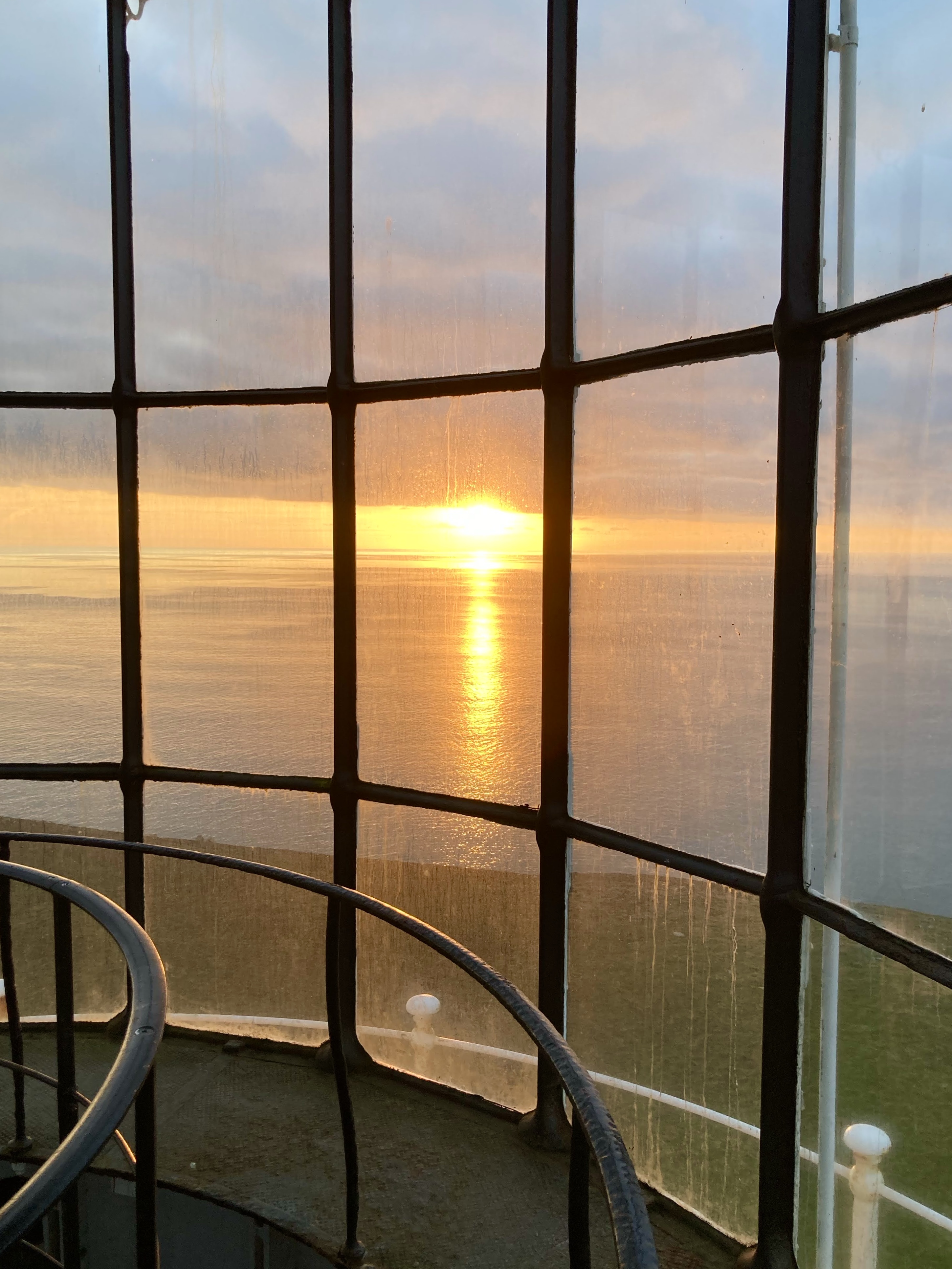
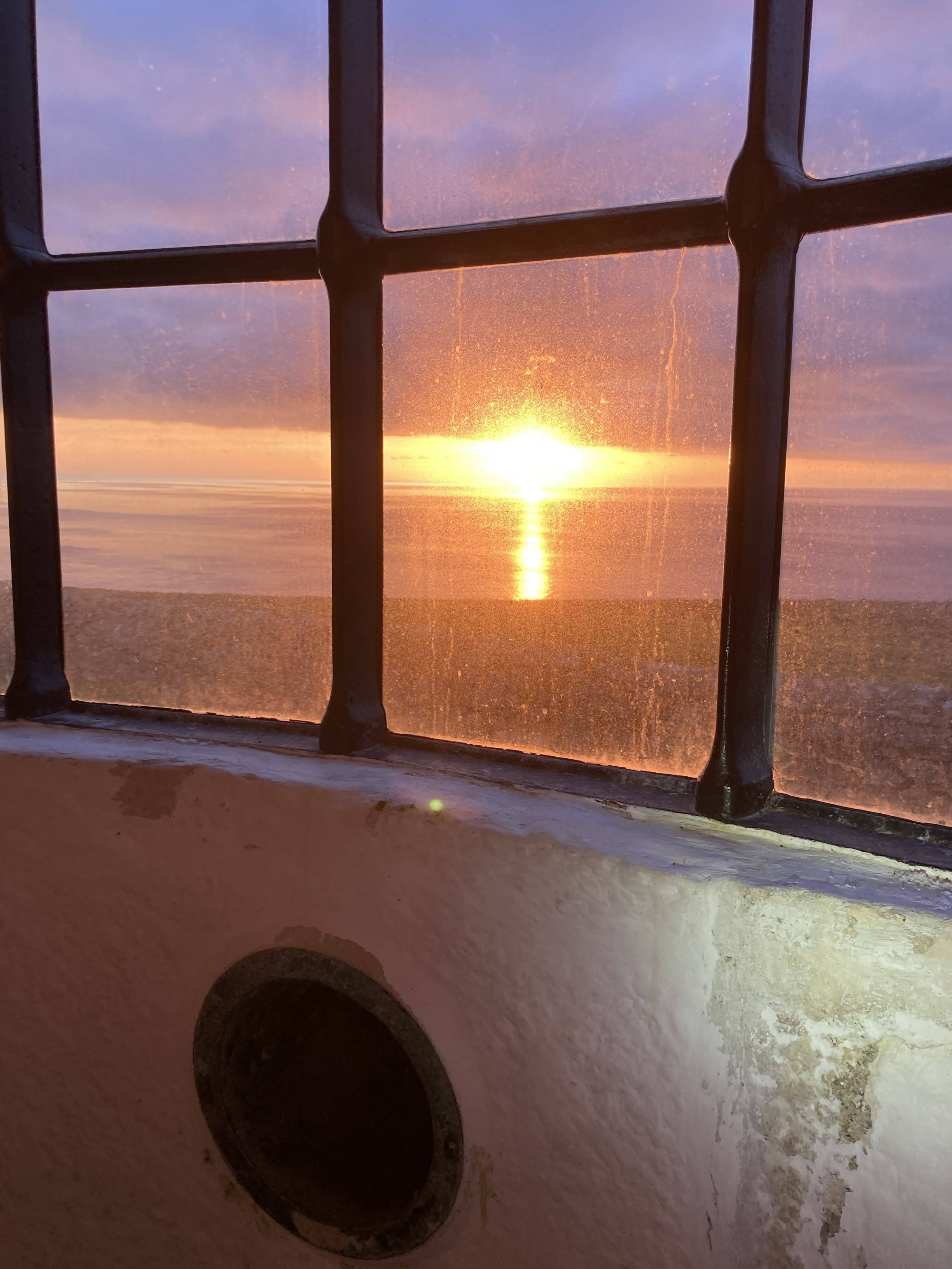
For me, Lundy holds not only great supernatural and natural significance as a bird observatory and protected marine area, but it is in the graveyard beneath the Old Light lighthouse, where my family rests. Like the puffins, I try to return each year to visit them. However, looking out from prime positions off the South West Path, such as Bucks Mills, Bursdon Moor, or the coastline around Morwenstow in N. Devon, I can regularly wave across the Atlantic to both birds and ancestors.
Happy searching!
I have had many wonderful birding experiences around the coast path, and on this mystical day, and for the rest of the summer, I invite you to venture out for the same. Do let me know if you see any little lights dancing over the cliffs, while enjoying some of my favourite June bird locations:
- Fulmar and peregrine falcon at Hell’s mouth, Cornwall.
- Chough around Lizard’s Point, Cornwall
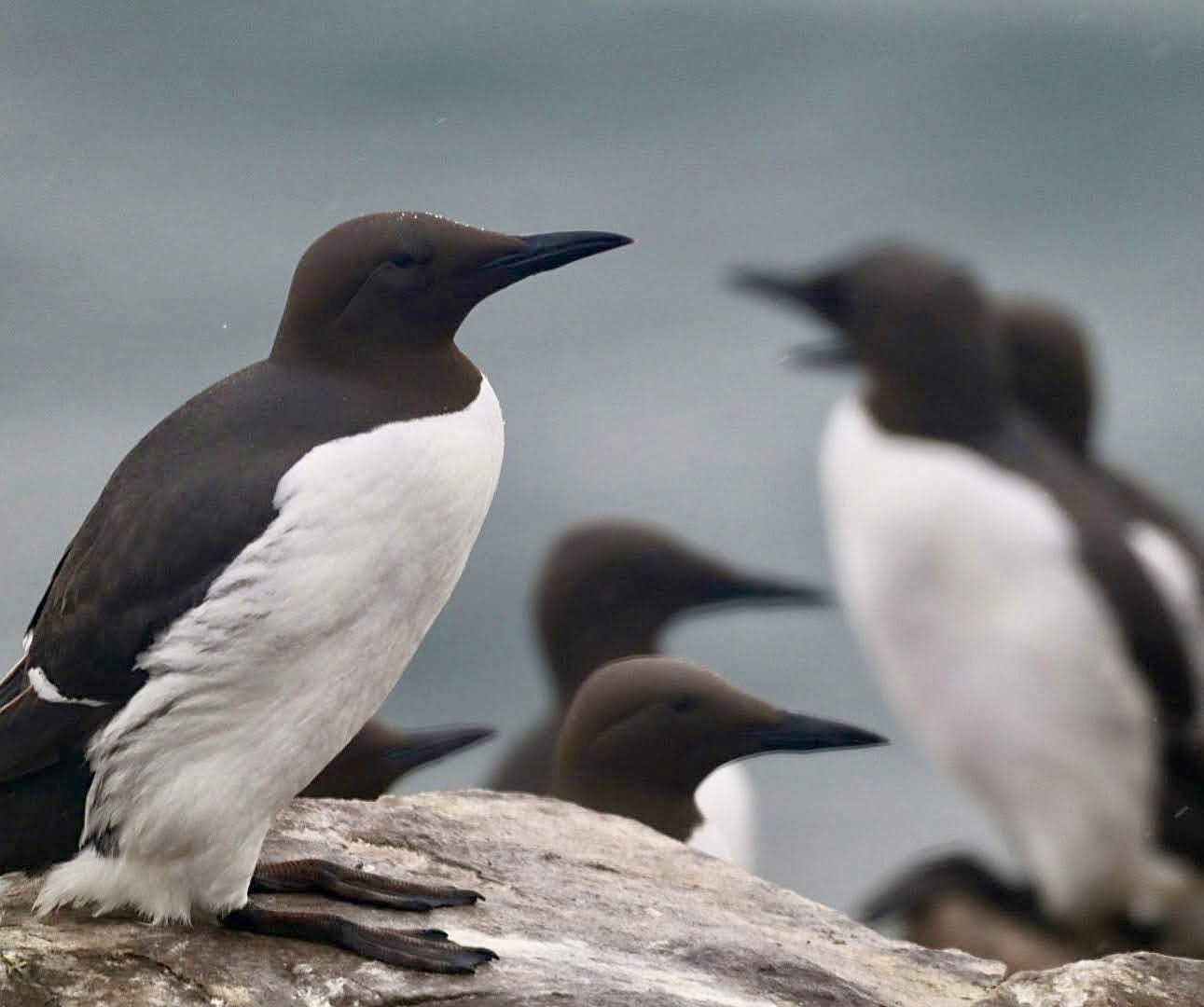
- Razorbills and guillemots around the ‘North Walk’ along the coast between Lynton and The Valley of Rocks, Exmoor
- Redstart and House Martins, Porlock coast, Exmoor
- Little Terns on Chesil beach, Dorset
- Shearwaters off Portland Bill, Dorset
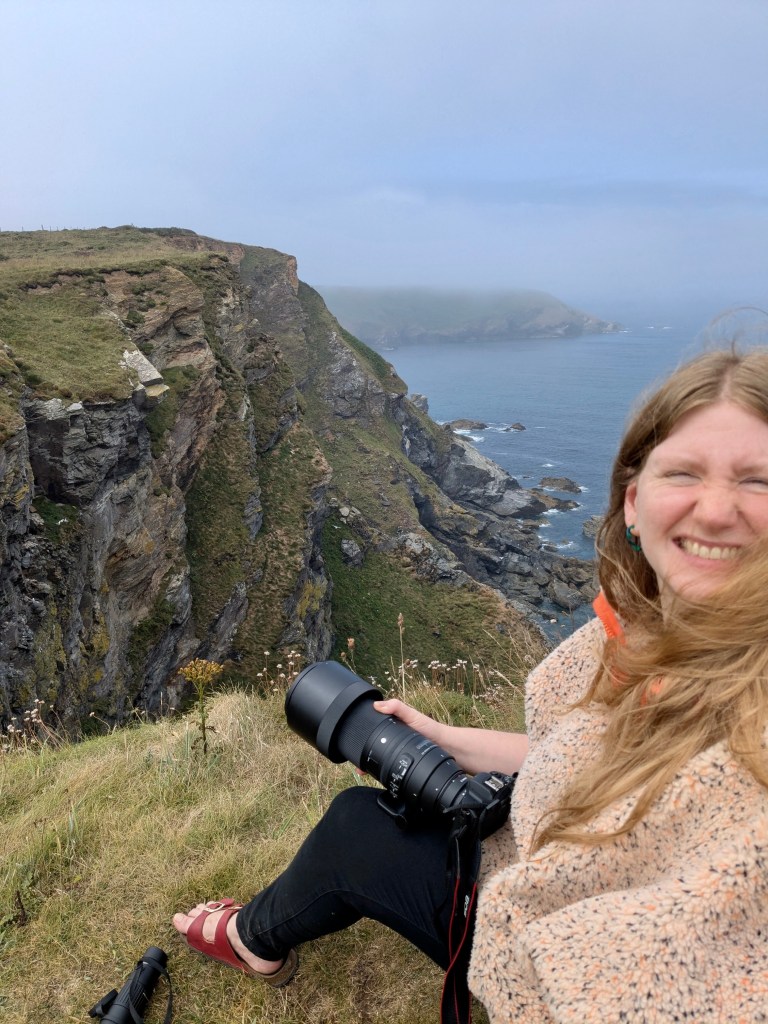
Written by
Bronwen R. Evans
A big thank you to Bronwen for writing this article for the charity, in celebration of Summer Solstice, and the magic that the changing of the seasons brings to the landscape and the wildlife that inhabit the incredible South West Coast Path environment.
Follow Bronwen on Instagram
@bronwenrcevans
All images, unless otherwise credited, by Bronwen

