

Tell us about this project?
Last year, I became one of the inaugural recipients of a stipend established to fund original works of art that reflect on or respond to the legacy of Westcountry writer Ronald Duncan. Duncan was a renowned poet, but his work spanned many other genres, including plays, short stories, autobiographies, books on farming, film scripts, and newspaper columns. This collection of writing has been donated to the Special Collections archive at the University of Exeter, where I have been able to study it and draw inspiration for my piece of work.
Below is a wonderful collection of photographs from Ronald Duncan’s time spent at Marsland Mouth and the surrounding area. Images Courtesy of University of Exeter Special Collections (MS 397 Ronald Duncan Collection)
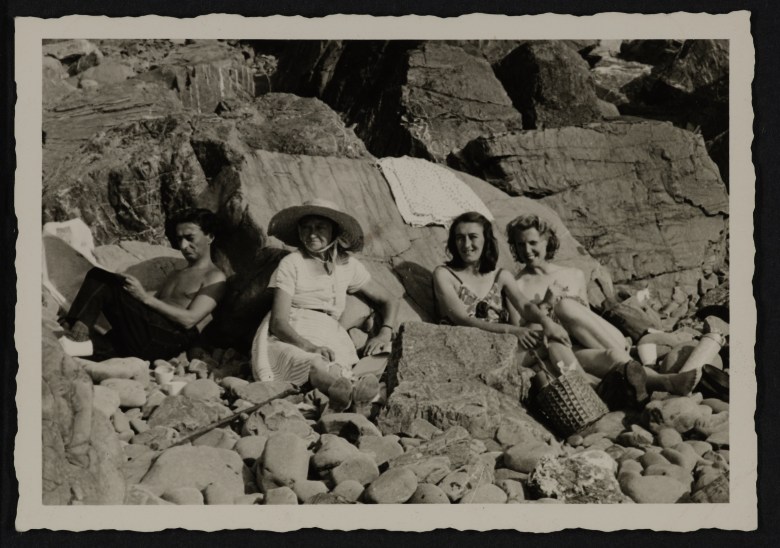
Sepia toned photograph showing, left to right, Ronald Duncan, Mole, Bunny, and Rose Marie sitting on Welcombe beach. Ronald Duncan is sitting slightly apart reading a newspaper. 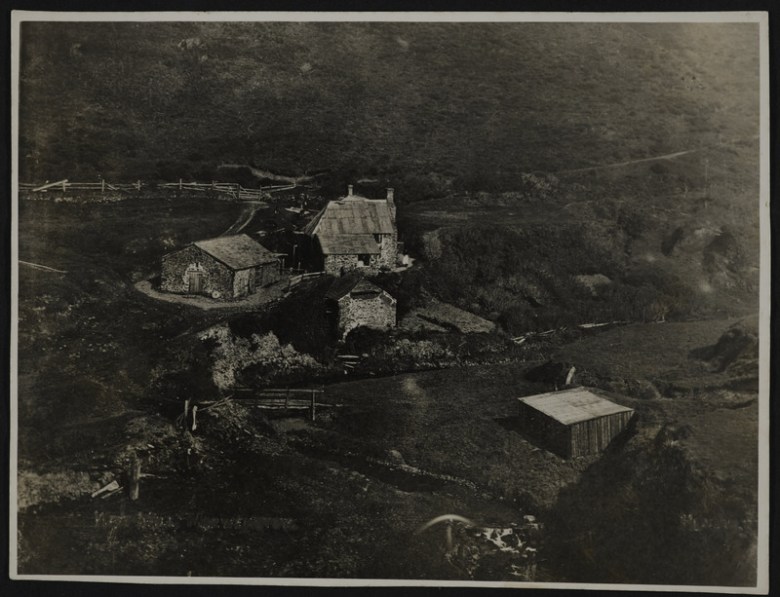
Sepia toned photograph showing West Mill, seen from above. 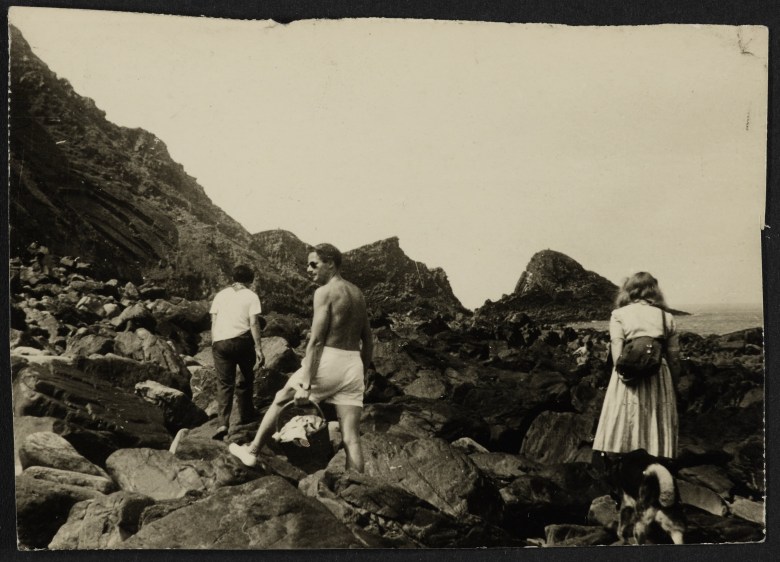
Sepia toned photograph showing Rose Marie Duncan, an unknown person and Bo on Welcombe Beach, walking towards Gull Rock. 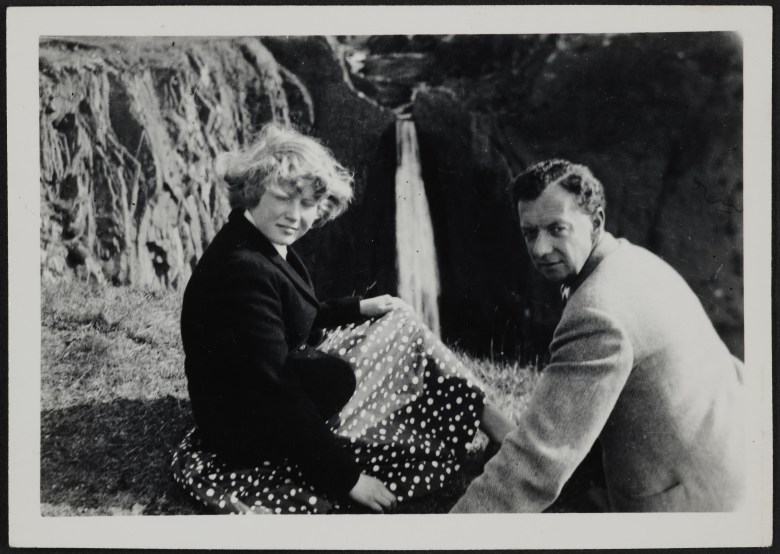
Black and white photograph showing Briony Duncan with Benjamin Britten, sitting overlooking [Speke’s Mill] waterfall. 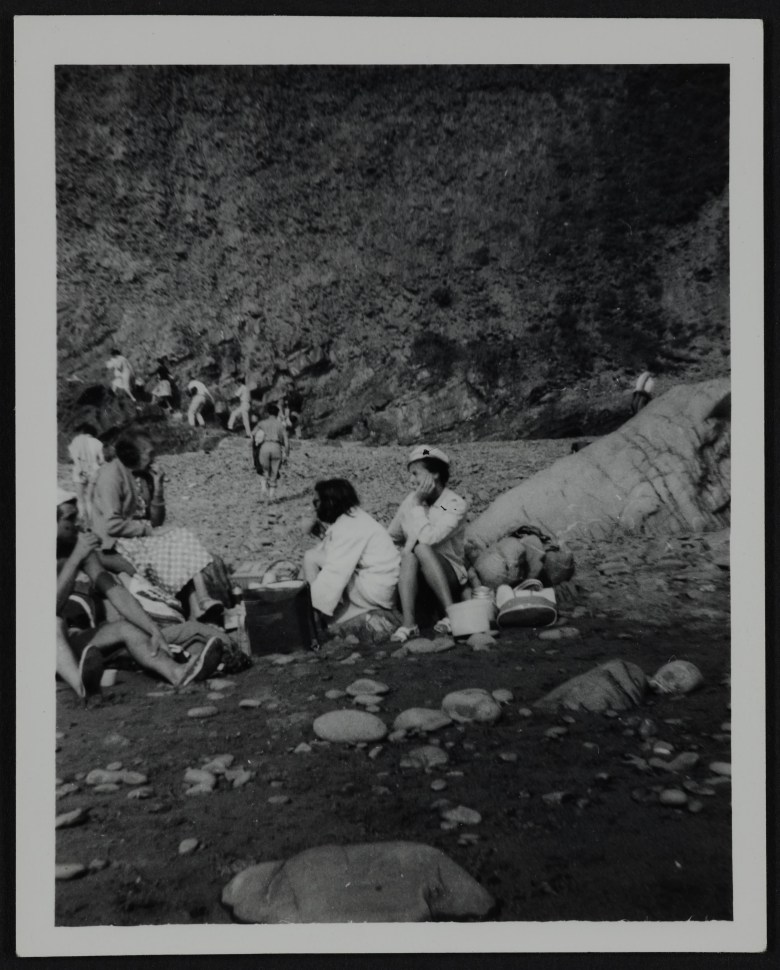
Black and white photograph showing Mole, Bunny, and Geraldine Barrington picnicking on Welcombe beach.
How did you approach this project?
My aim was to use Duncan’s words as a starting point to rethink the entangled relationship between the local land, plants, and the sea, and to bring in plant mythology and wider ideas of non-linear and deep time.
So first, I spent time in the Old Library on the University’s Streatham campus, reading through Duncan’s three autobiographies to piece together his relationship with Welcombe, his attempts at farming and the ways that he viewed land generally. I studied some of his more experimental works, including his play, O-B-A-F-G and the plans for staging it. I also came across his collaborative work with the BBC Radiophonic Workshop in 1969 called The Seasons. Duncan wrote different poems for each month and each season, which was then set to music created by the Workshop. And then in October of last year, I came out to the Coast Path.

Had you worked on the Coast Path before?
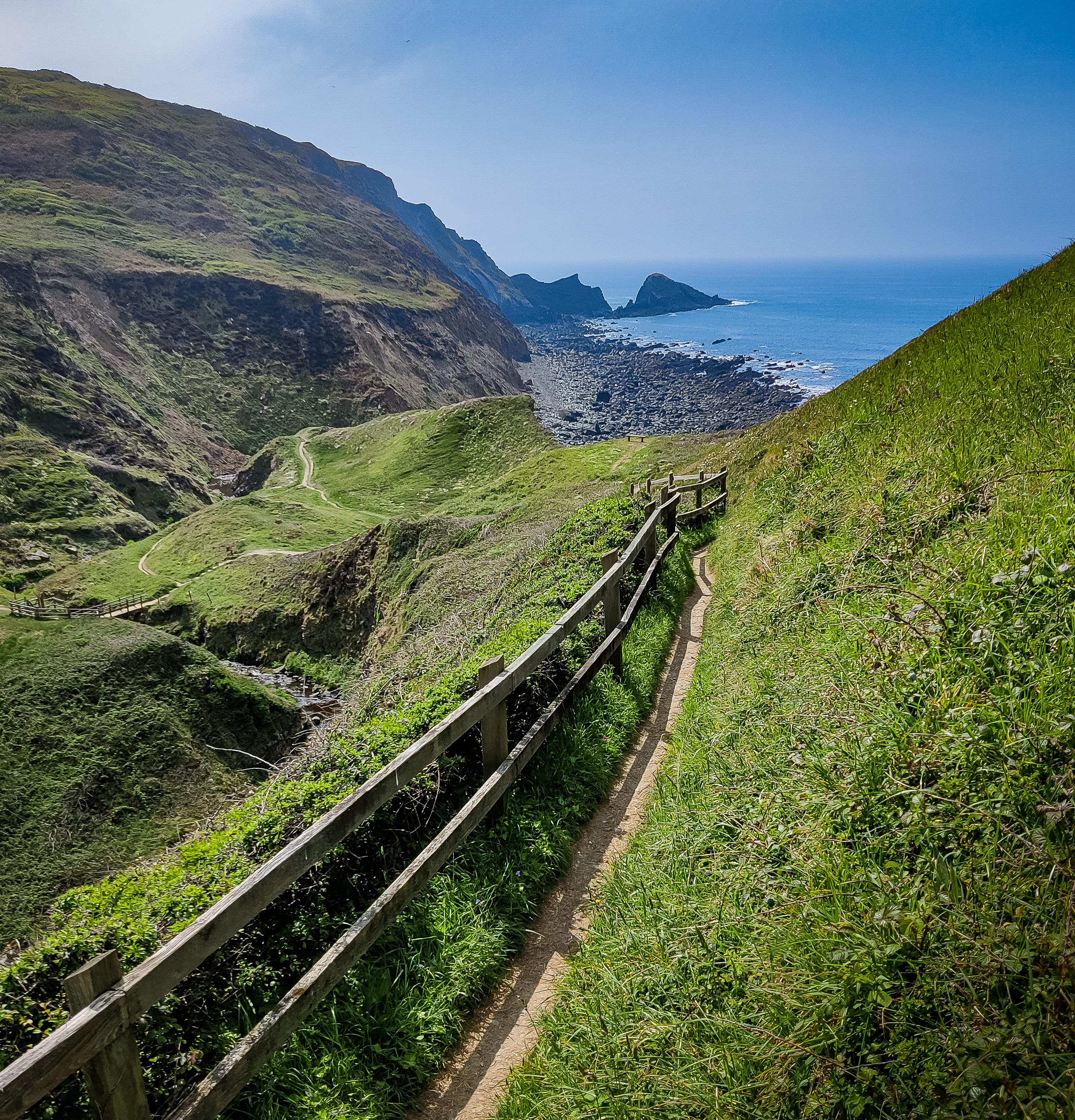
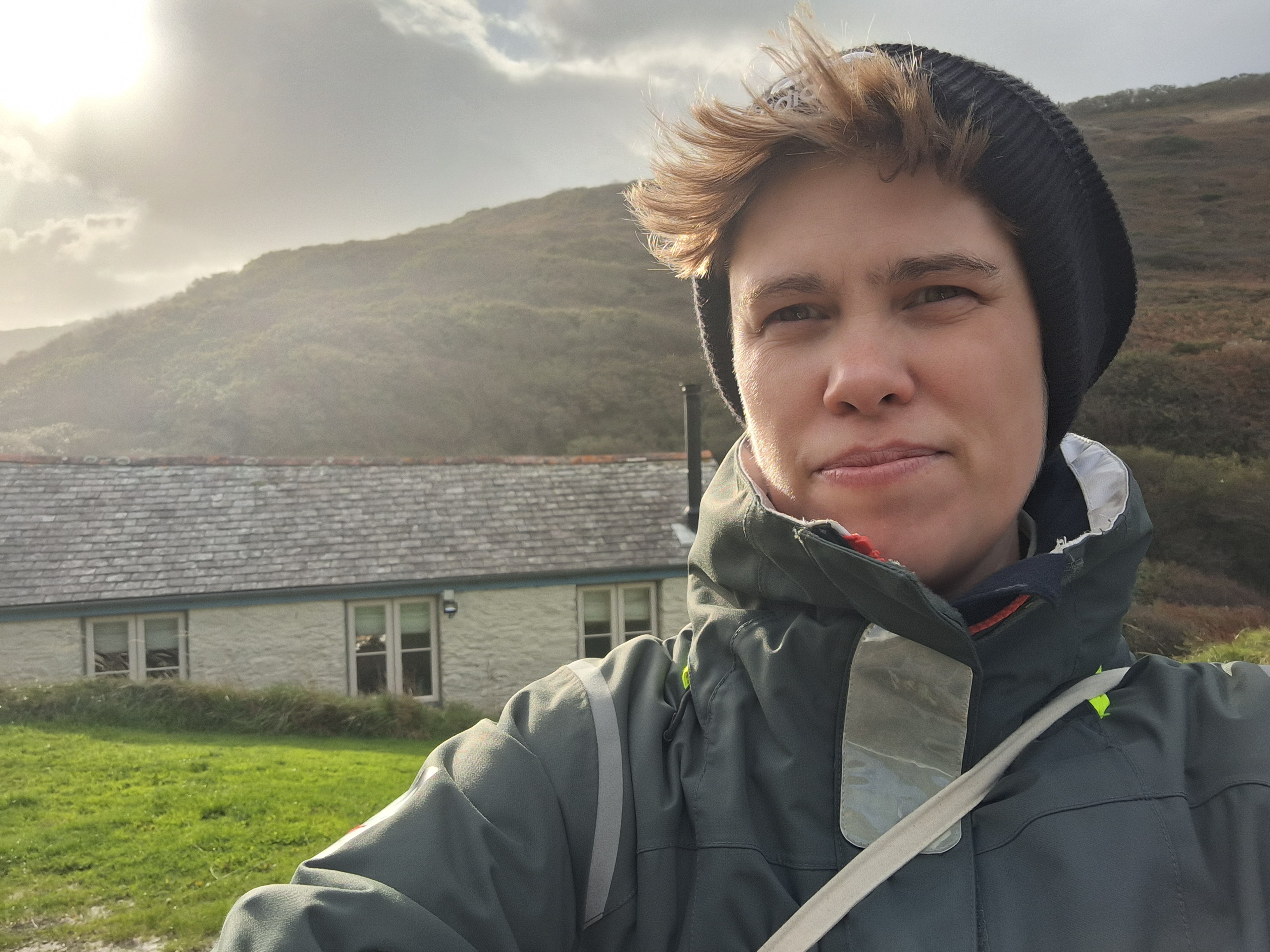
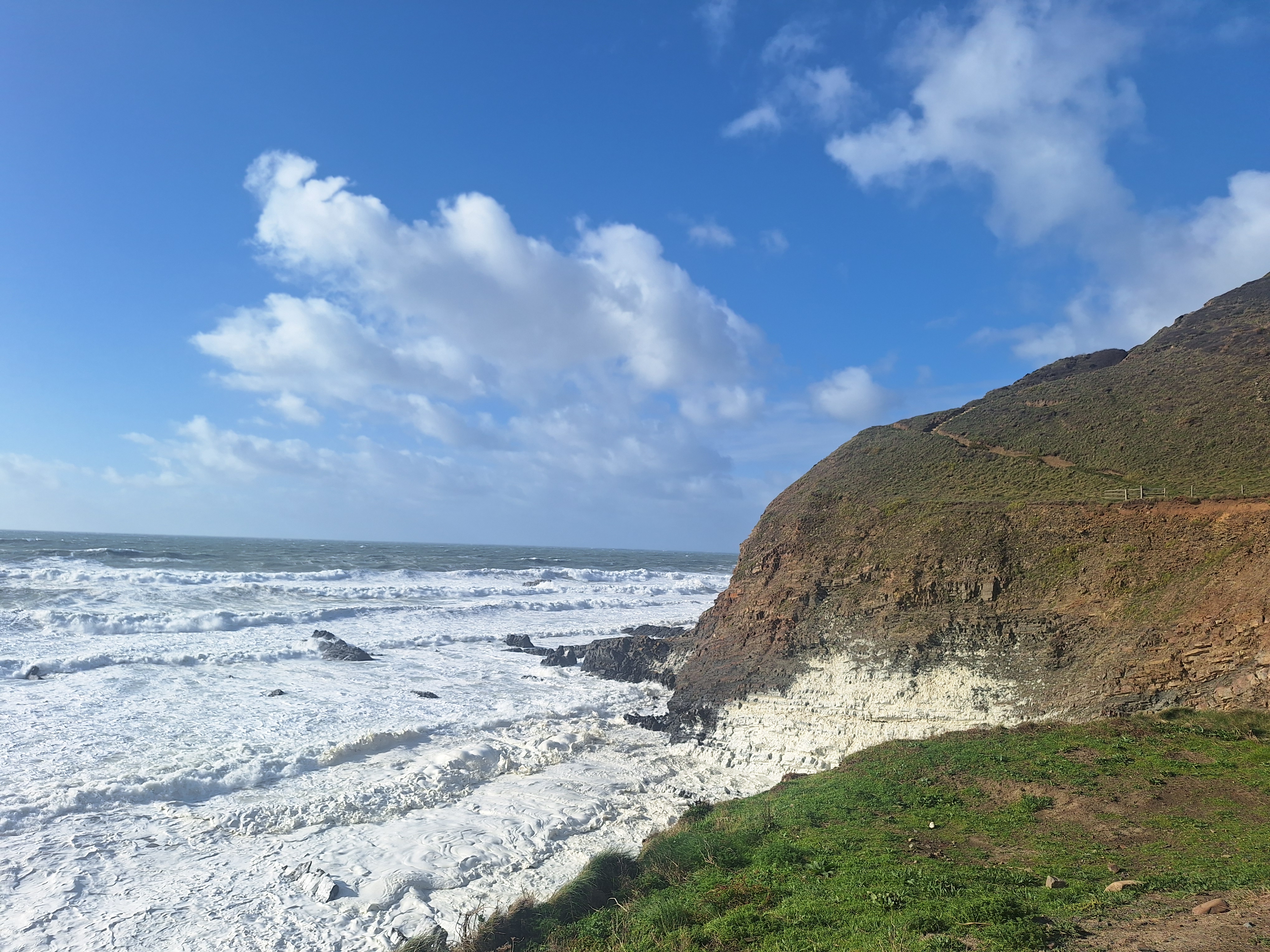
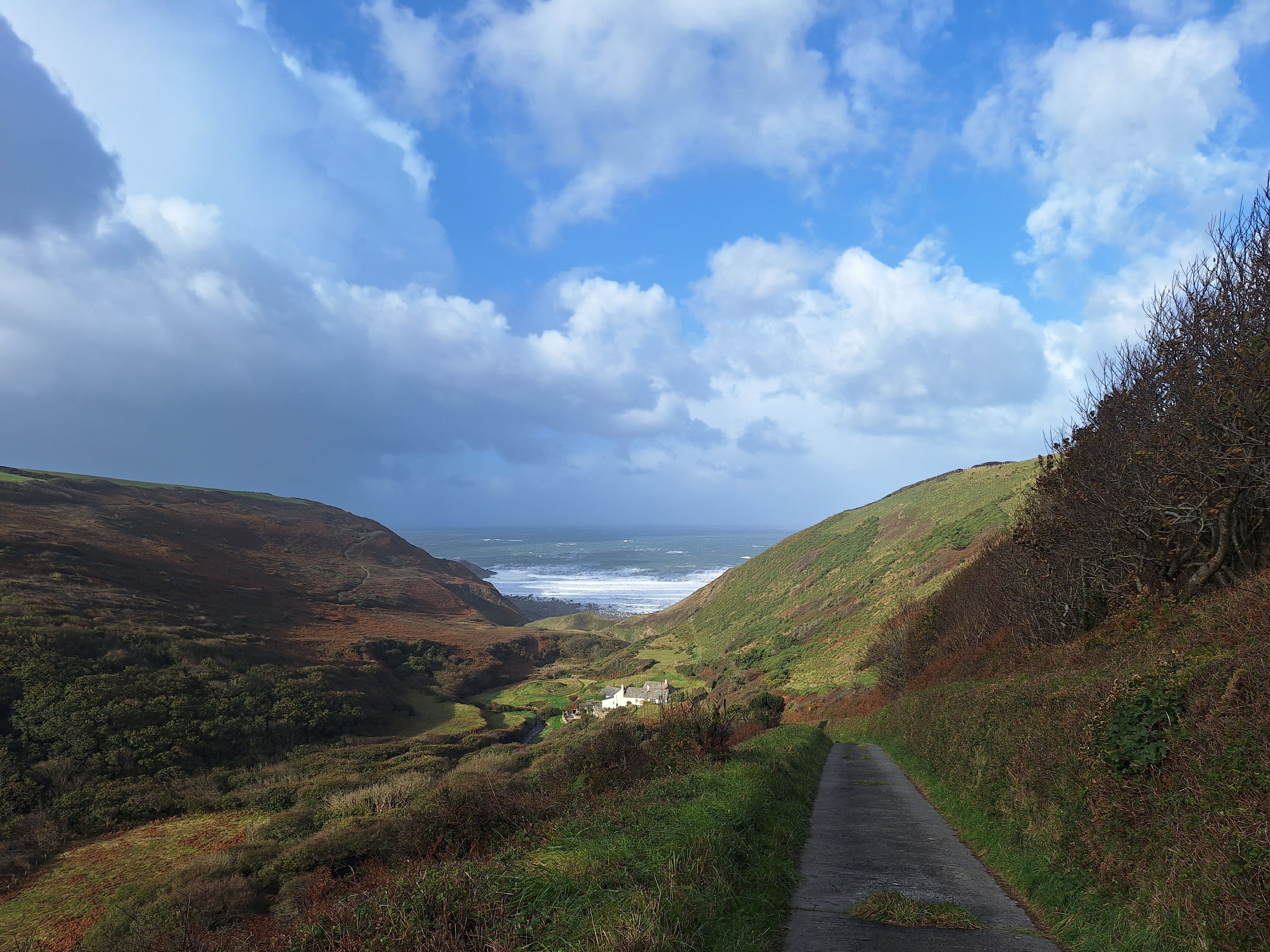
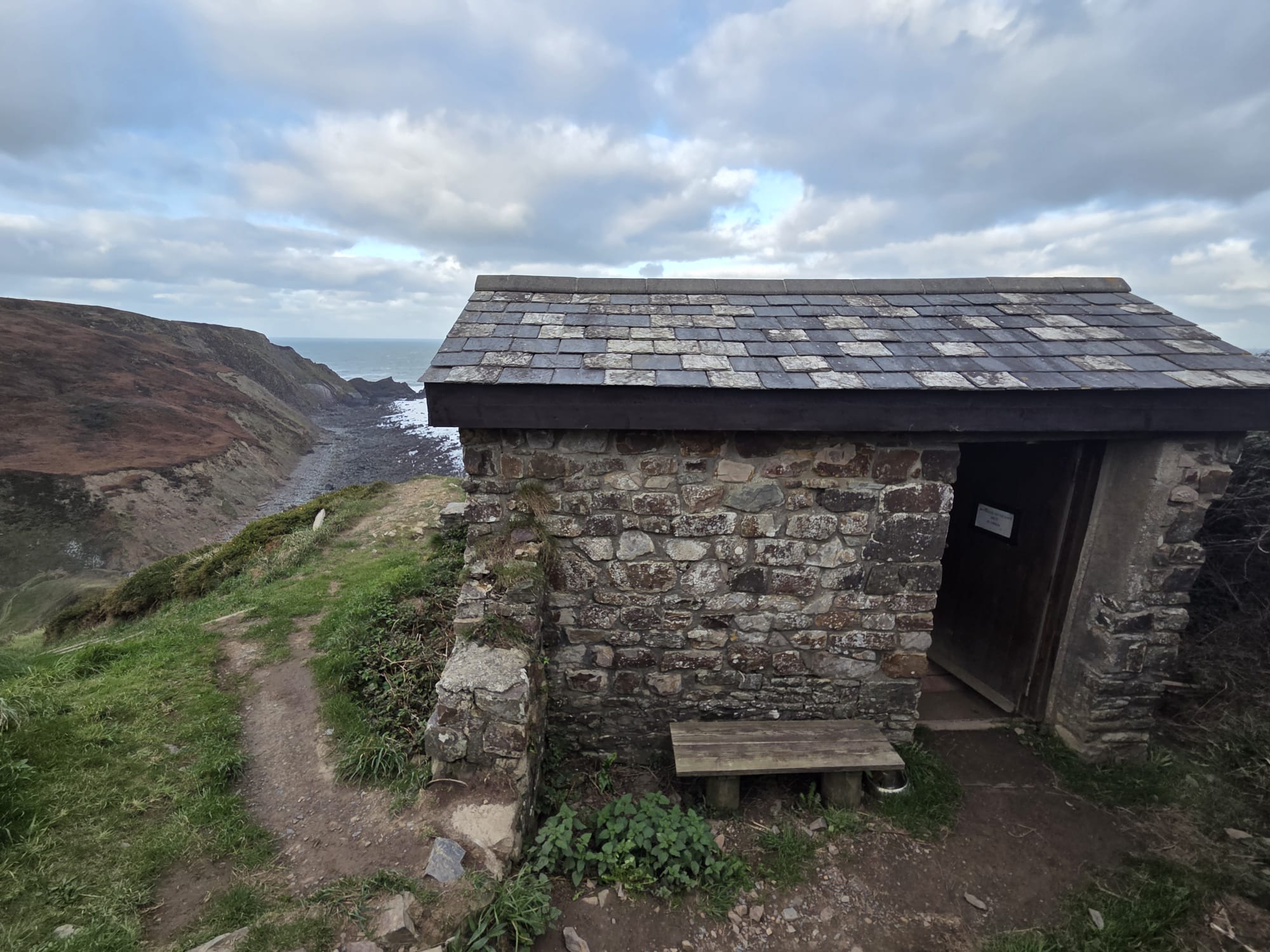
You know, I hadn’t even been to the Coast Path before I came out in the autumn! I spent a long weekend at Donald’s writing hut, taking field recordings from the building as well as from the sea, coast and surrounding fields. While I was there, I managed to walk along parts of the path around Clovelly, Hartland and Bude. I was also aware that in his autobiographies, Duncan mentions hikers coming to his house from their walks along the path, but that was a different time when you could knock on someone’s door and ask for food and shelter!
As an artist, you are always aware that space to work can be difficult to find, so it was incredible to imagine having this type of place as your own studio, to lock yourself away and commit to your practice. The view and the sense of being embedded in the coast itself was something that really struck me.
Tell us about your finished piece of work?
The poem – solmōnaþ [i was born in the mud month] – takes its name from the Anglo-Saxon term for ‘February’ and is divided into three parts, focusing on a specific snag tree (a term for a dead or dying tree), the ferns I encountered, and the land around Welcombe. Then there is the accompanying soundscape, where I took my field recordings and processed, distorted and mixed them using Ableton software to create a piece that responds to the work created by the BBC Radiophonic Workshop.
When can we hear this work?
It’s being unveiled on August 15th, and there will be a reading in the Writing Hut which anyone can attend. So, if you are walking the path that day, come join us! You can also access the poem via my website.
What inspires your art practice?
The work of people like Daphne Oram and Delia Derbyshire at the BBC Radiophonic Workshop during the 1960s has always been a huge inspiration to me. And, to have an opportunity to listen to The Seasons with its distorted sounds that were concocted with Duncan’s strange poetry over the top, was a real gift to me. It’s quite haunting and even stranger to think that this was intended for drama and dance workshops with school children!
And finally, what do you hope people will take from this work?
I hope that the work shows a different perspective on the Devon landscape, and that it brings something a bit unique to people’s interactions with the path and the writing hut. Using field recordings to create sound work is also very important to me as it attempts to capture a moment or a feeling that you experience in that particular place, and I hope to share that with people who chance upon the hut!

Who was Ronald Duncan?
Ronald Duncan (1914-1982) was an author, journalist, playwright, poet, and scriptwriter, perhaps best known as the librettist for Benjamin Britten’s The Rape of Lucretia (1946) and for his poem The Horse, which is read annually at the Horse of the Year show. His career encompassed experiments with several writing forms, including his epic poem Man (The Complete Cantos, 1980), and the aforementioned O-B-A-F-G. In 2016, the Ronald Duncan Literary Foundation (who fund the stipends) left the archive of literary and personal papers to Exeter’s Special Collections.
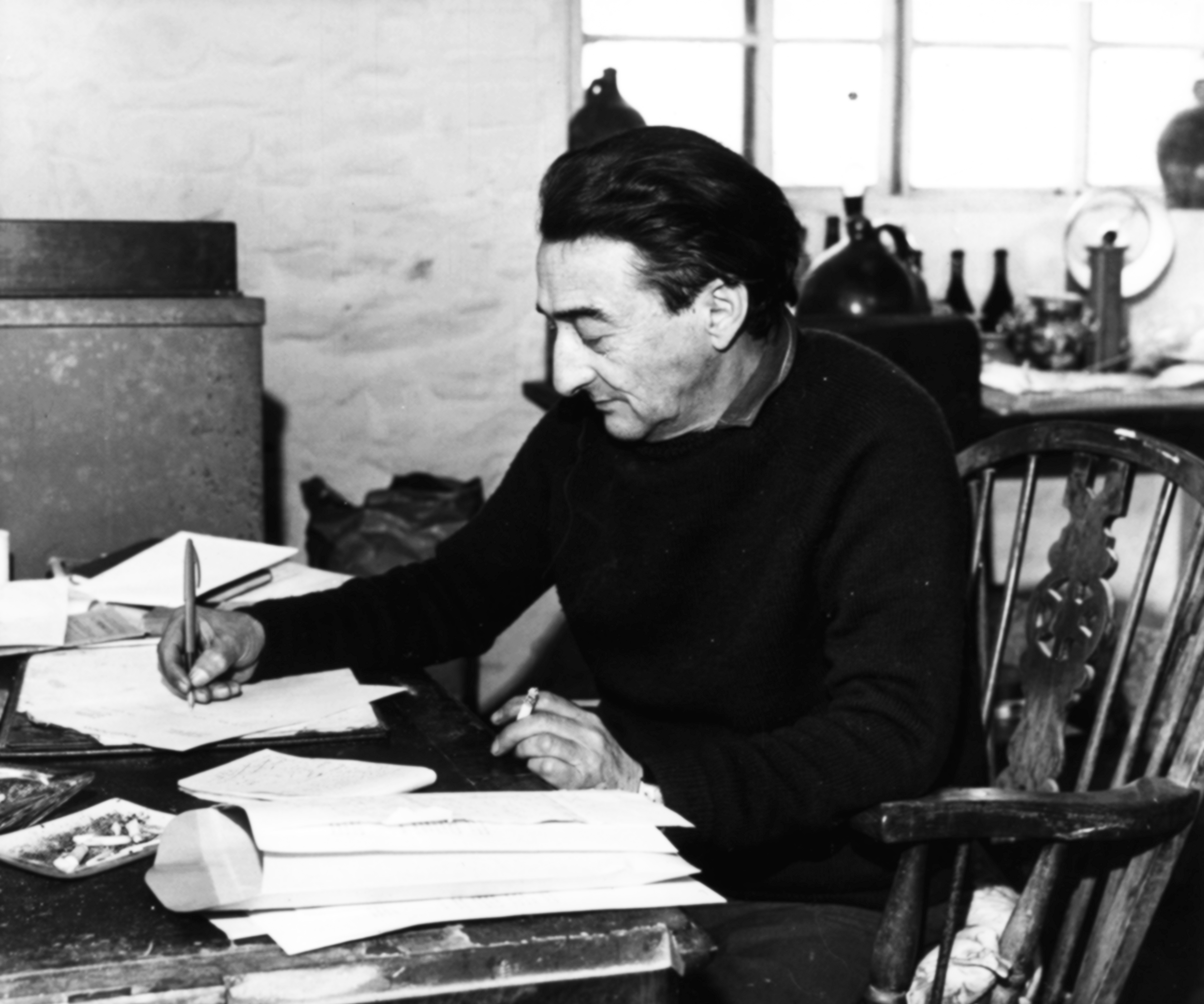
Photo: Ronald Duncan writing in the hut. ‘Courtesy of University of Exeter Special Collections (MS 397 Ronald Duncan Collection)’
“It is wonderful to see the first stipend project realised,” says Caroline Walter, Head of Heritage Collections at the University. “Sam’s work lies at the heart of what this stipend was established for: providing opportunities for South West writers to engage with the University’s unique collections and create exciting new works that bring them to wider audiences. I hope everyone who encounters the work along the South West Coast Path enjoys taking a moment to reflect, listen and engage with it.”

Walk to Ronald Duncan’s Hut from Welcombe
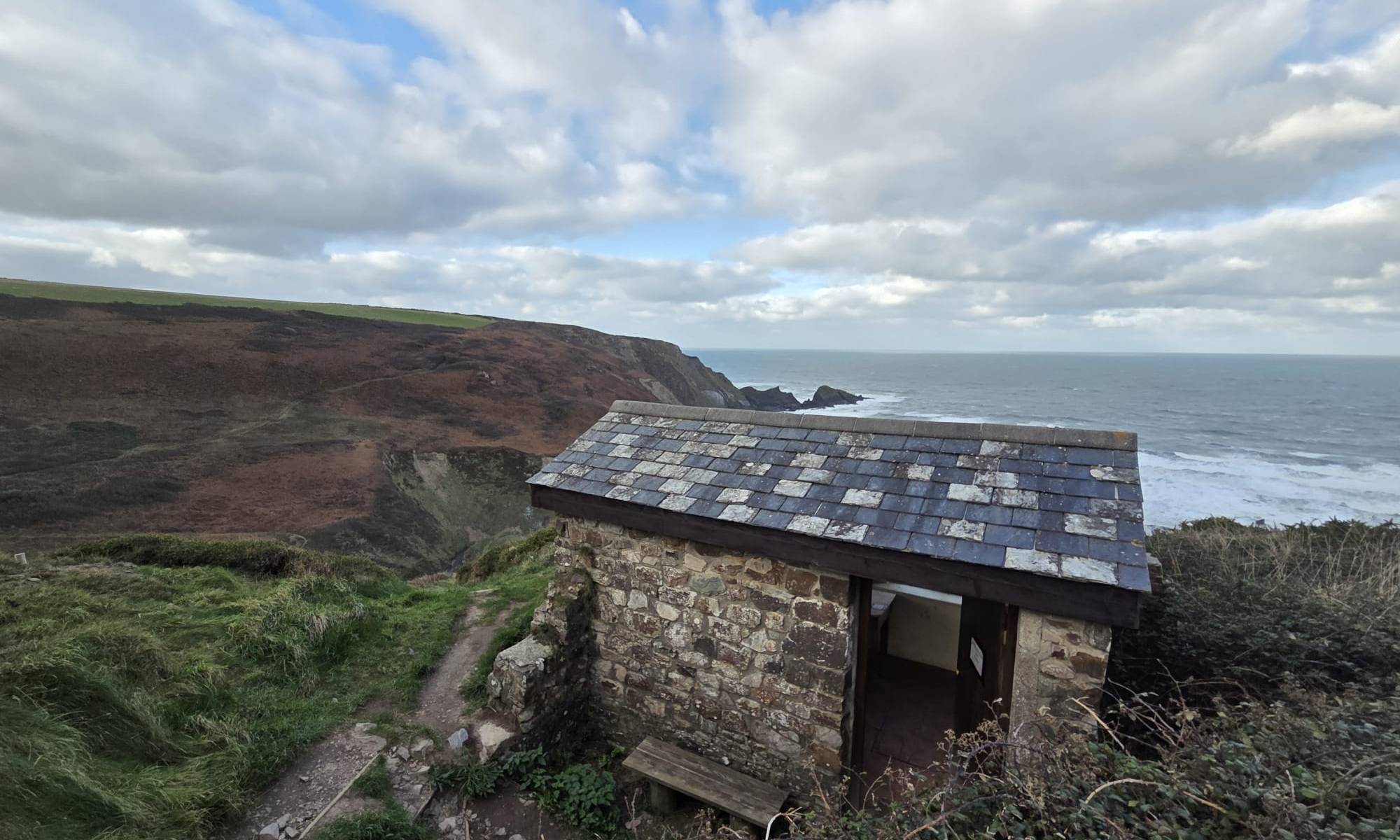
Explore Welcombe and Marsland Mouth with this short but sharp walk where the mill leat straddling the Devon/Cornwall border flows past the old mill and tumbles to the rocky beach in a cascade of water. This wonderfully remote area of woodland, heathland and maritime grassland was first turned into a nature reserve by chocolate magnate Christopher Cadbury. At Marsland Mouth you’ll come across Ronald Duncan’s stone hut, where you can experience the art installation by Sam Godfrey from 15 August.
CLICK HERE for the 2.7-mile circular walk using footpaths, tracks and lanes, with several stretches of ascent and descent.

