
What inspires your art practice?
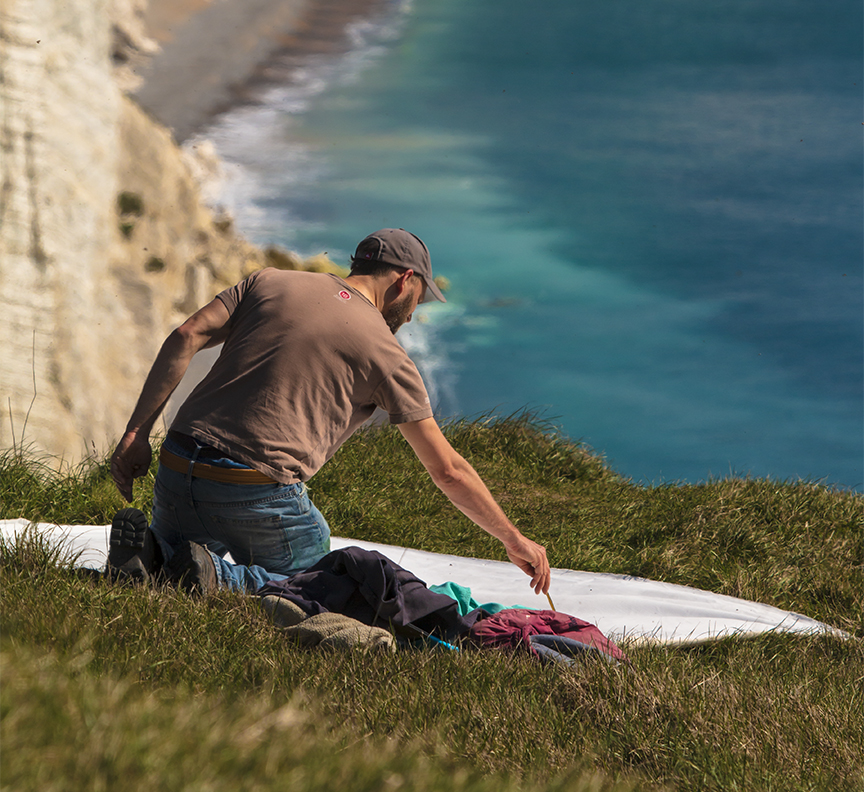
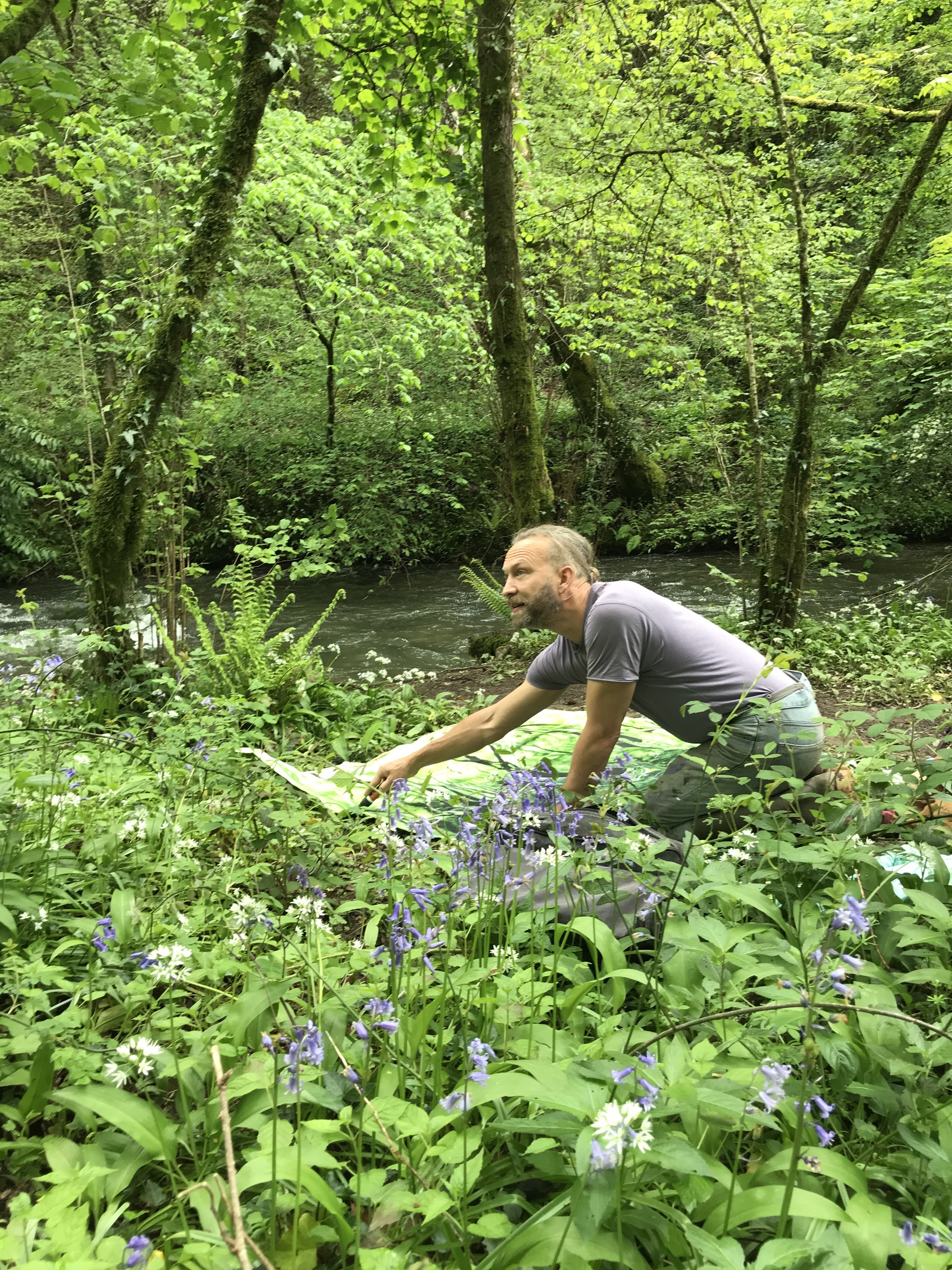
I venture into the landscape with openness: to experience what is there and allow it to shape the work. That encounter is central not only to the creation of my artworks, but also to how I think about our relationship with the living world.
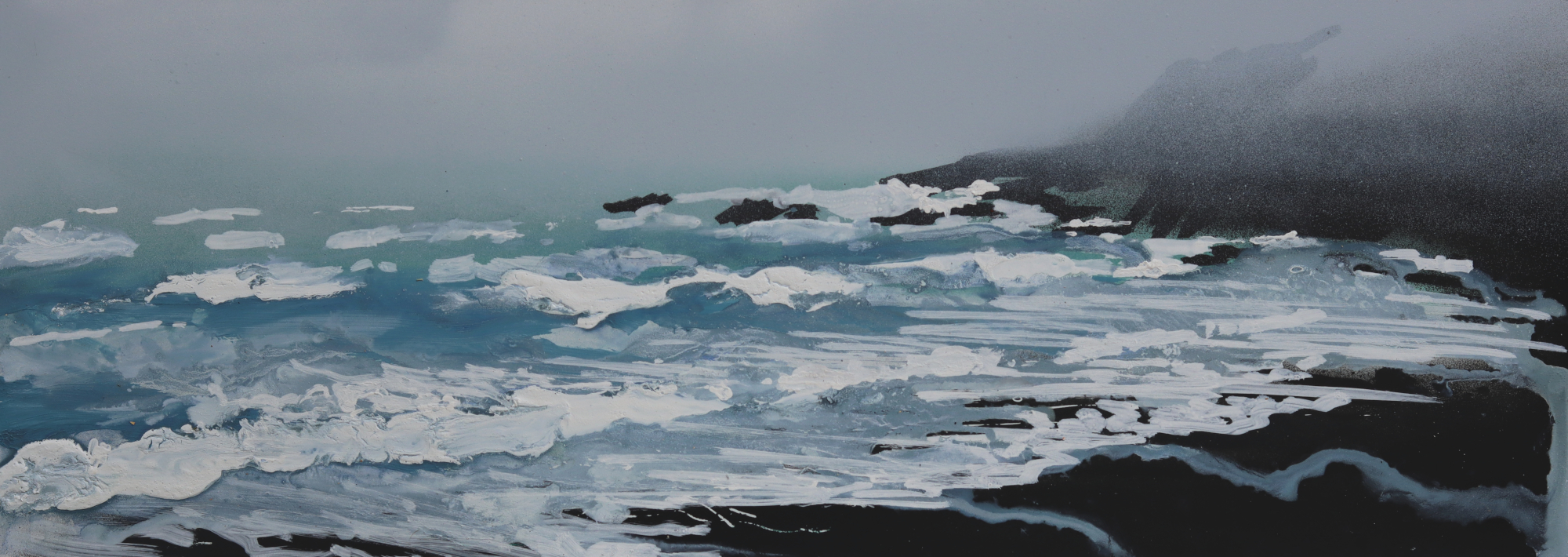
Painting outdoors requires a degree of surrender and a willingness to enter into a relationship with a place. The light shifts, the weather changes, it is alive and breathtaking. Wind, rain, mist and salt become part of the experience—and often part of the painting itself. I’m interested in that tension between control and unpredictability: between trying to capture a place and allowing the place to influence what I make—and potentially change me in the process.
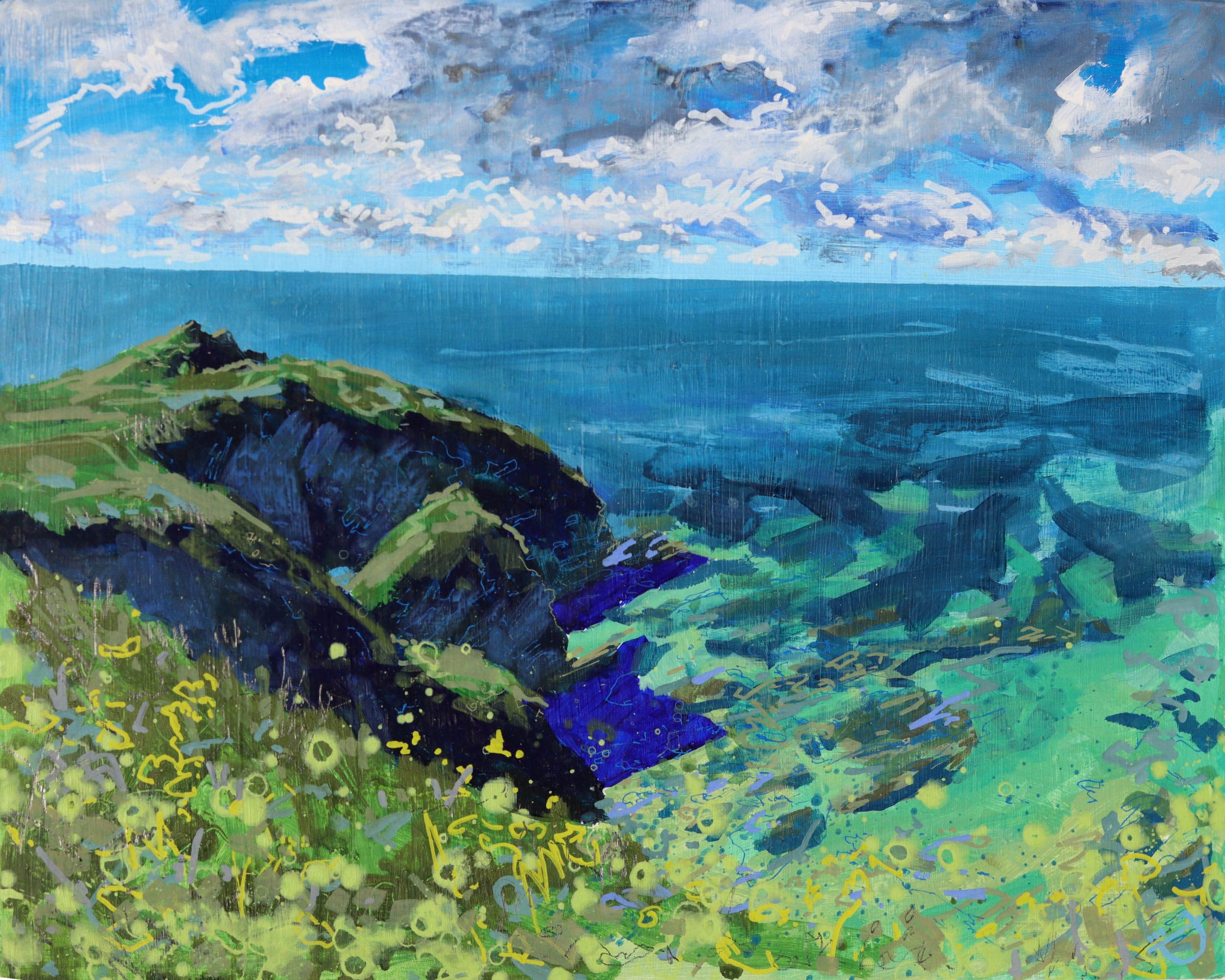
My work draws equally from landscape painting and graffiti. I love the immersion, physicality and exhilaration of painting directly from nature, alongside the bold, graphical impact of graffiti. For me, these languages are not opposites. Both carry urgency, authenticity and grit; bringing them together allows graphic structures to interrupt and coexist with organic forms, creating landscapes that feel lived-in rather than pristine.
What keeps bringing me back is the paradox within nature: it can be fierce and fragile, resilient and vulnerable, a source of enormous joy while also being under immense pressure. I want the work to celebrate nature without reducing it to passive prettiness—and to acknowledge ecological damage whilst still celebrating its extraordinary diversity and resilience.
What influence do you take from the coast and nature?
The coast isn’t simply a subject I paint; it has shaped the way I see and feel.
I grew up on North Cornwall’s Atlantic coast, surrounded by raw cliffs, fierce surf, powerful tides, shipwreck histories and rapidly changing weather. It taught me that landscape is not a static view. It is alive, layered and continually being shaped by forces much larger than us. I enjoy the humility of feeling part of a greater whole.
That influence appears in the movement, scale and atmosphere of my work: Atlantic light, blown spray, weathered stone, tangled vegetation and the energy of approaching storms. I’m especially drawn to thresholds—the meeting of land and sea, shelter and exposure, permanence and change. The coast makes all those tensions visible.
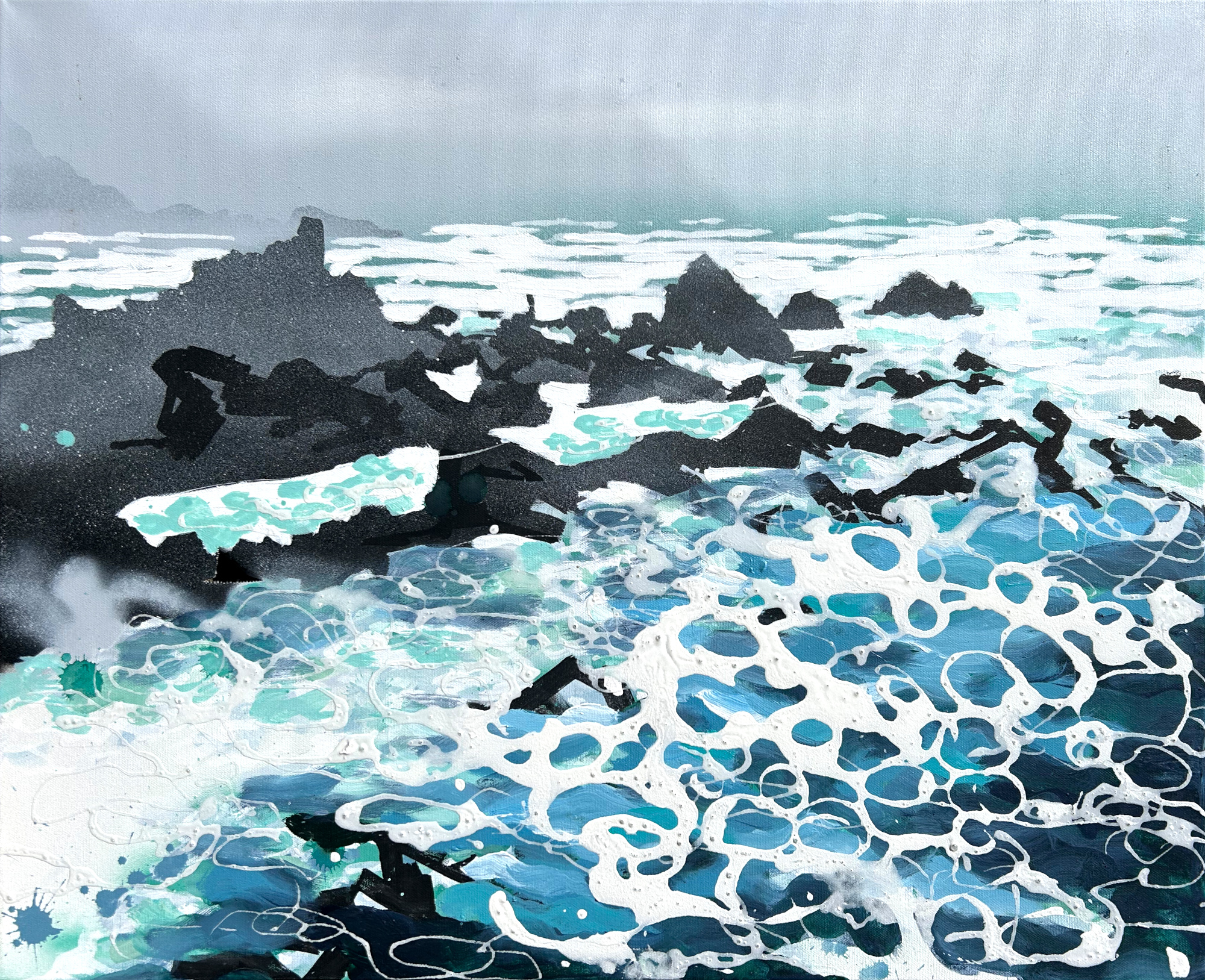
Nature also shapes the values behind my work. I have a deep, reverent and sometimes torn relationship with it: wanting to celebrate its beauty while remaining honest about pollution, climate change and habitat loss. Increasingly, I’m interested in how art can strengthen people’s sense of connection and responsibility. It’s important that the work does more than point at nature; I want it to deepen our relationship with the living world, encourage care and contribute to the wider culture of stewardship and recovery.
How important is the Coast Path to you?
The South West Coast Path is important to me both personally and collectively. It passes through the landscape that formed my earliest visual language and offers the exposure, immersion and constantly changing perspective I look for as an artist.
A coastline seen from one viewpoint can become a picture. Experienced on foot, it becomes a sequence: cliffs, fields, hedges, settlements and coves gradually revealing their geology, wildlife, weather and human histories. Moving at walking pace gives us time to notice those transitions and understand how connected they are.
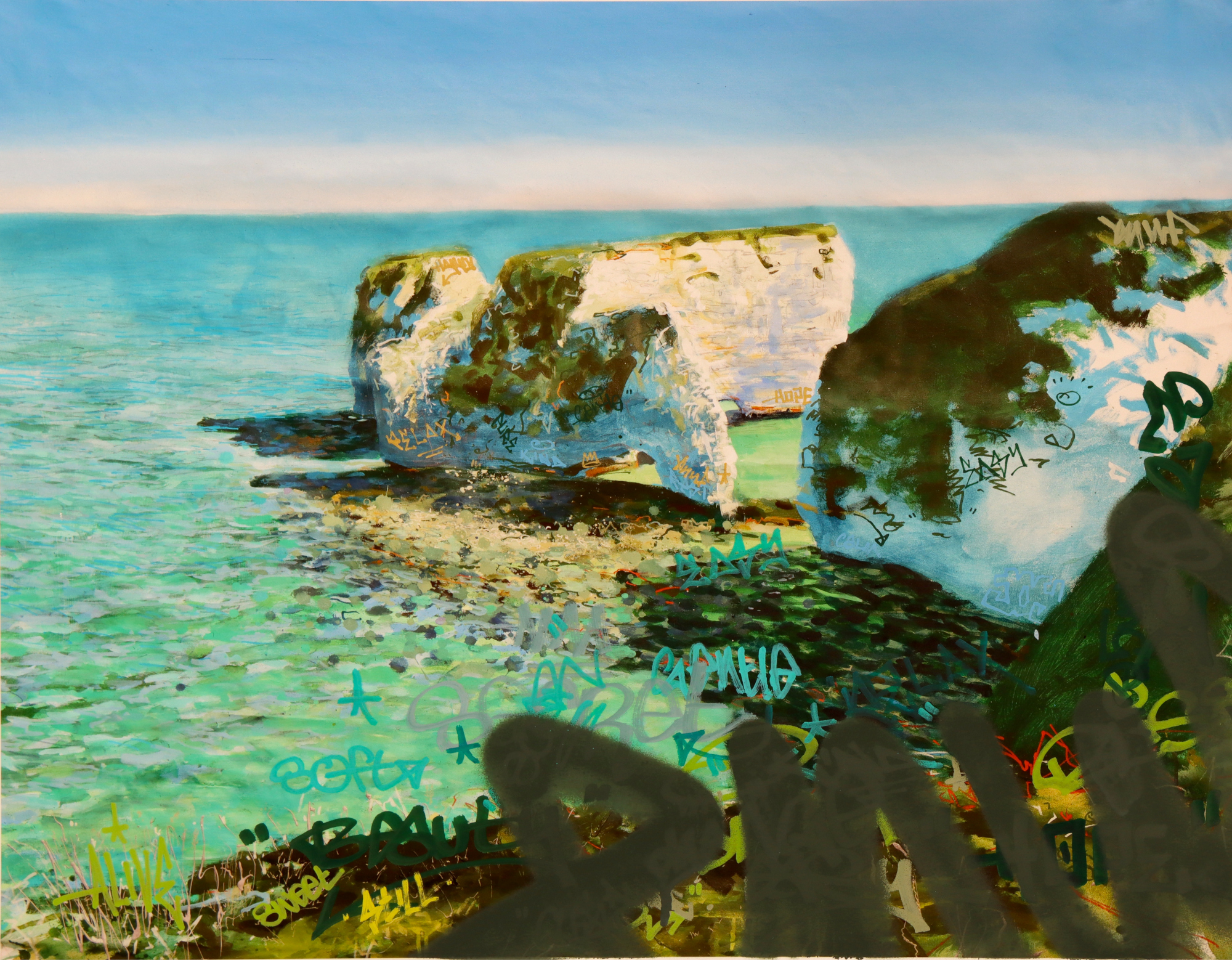
One of the Path’s greatest values is that it enables so many people to form their own direct relationship with the coast—not through a photograph or screen, but through wind, ground, distance and physical effort. That feels increasingly important. Care often begins with attention and grows through relationship: we are far more likely to value and protect places we have genuinely encountered and come to know.
Possibly my most memorable experience from painting on the South West Coast Path was a series of works created within the 120 mph winds of Storm Eunice. It was a challenge to stand upright let alone paint, I had a skeleton kit and each piece captured the incredible wild energy of the extreme weather event.
In the frame of indigenous wisdom ‘the place where the land knows my name’ is a beach and section of the path in North Cornwall it’s literally where I grew up, came of age and regularly return to reconnect. I believe that the path holds the same value and purpose for many people who I’ve heard describe experiences akin to a natural pilgrimage.
For me, the Path is far more than a route around the edge of the South West. It is a thread connecting landscapes, communities, memories and ecosystems—and, quite literally, a long, living studio.
About Joe
Joe Webster—also known as Feral—is an award-winning artist, educator and public-art practitioner based in Devon. Raised on North Cornwall’s Atlantic coast, he has spent over twenty years painting outdoors, often in driving rain, mist, hail and storm weather. Working across acrylic, spray paint and large-scale murals, Joe combines an intimate observation of landscape with the graphical impact and layered visual language of street art. His work explores our connection to land, sea and sky, and the tensions between resilience and ecological change.
Joe has a selection of paintings at The Brownston Gallery in Modbury.
Follow him on Instagram
https://www.instagram.com/joewebsterart/
Photo Credit: Esmie Widlake