
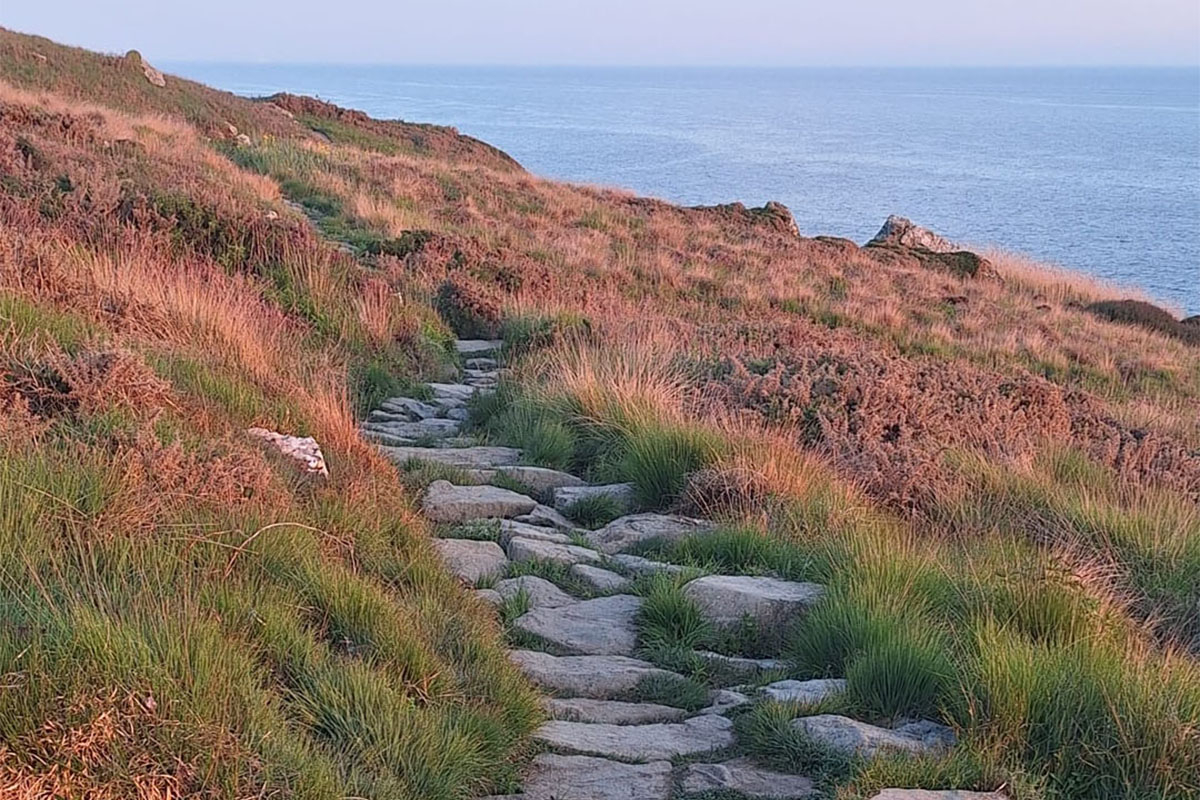

Granite Causeway
It is quite well known by South West Coast Path walkers that the length from St Ives to Zennor can be tricky walking in places. But until about 10 years ago many walkers would have been put off even embarking on this length because of encountering extremely difficult terrain almost at the start, immediately after passing Clodgy Point, just west of St Ives. Here a length of just over 100m presented a terrain of rocks, mud and water, and even at the height of summer it would be a lucky walker to cross it dry-shod.
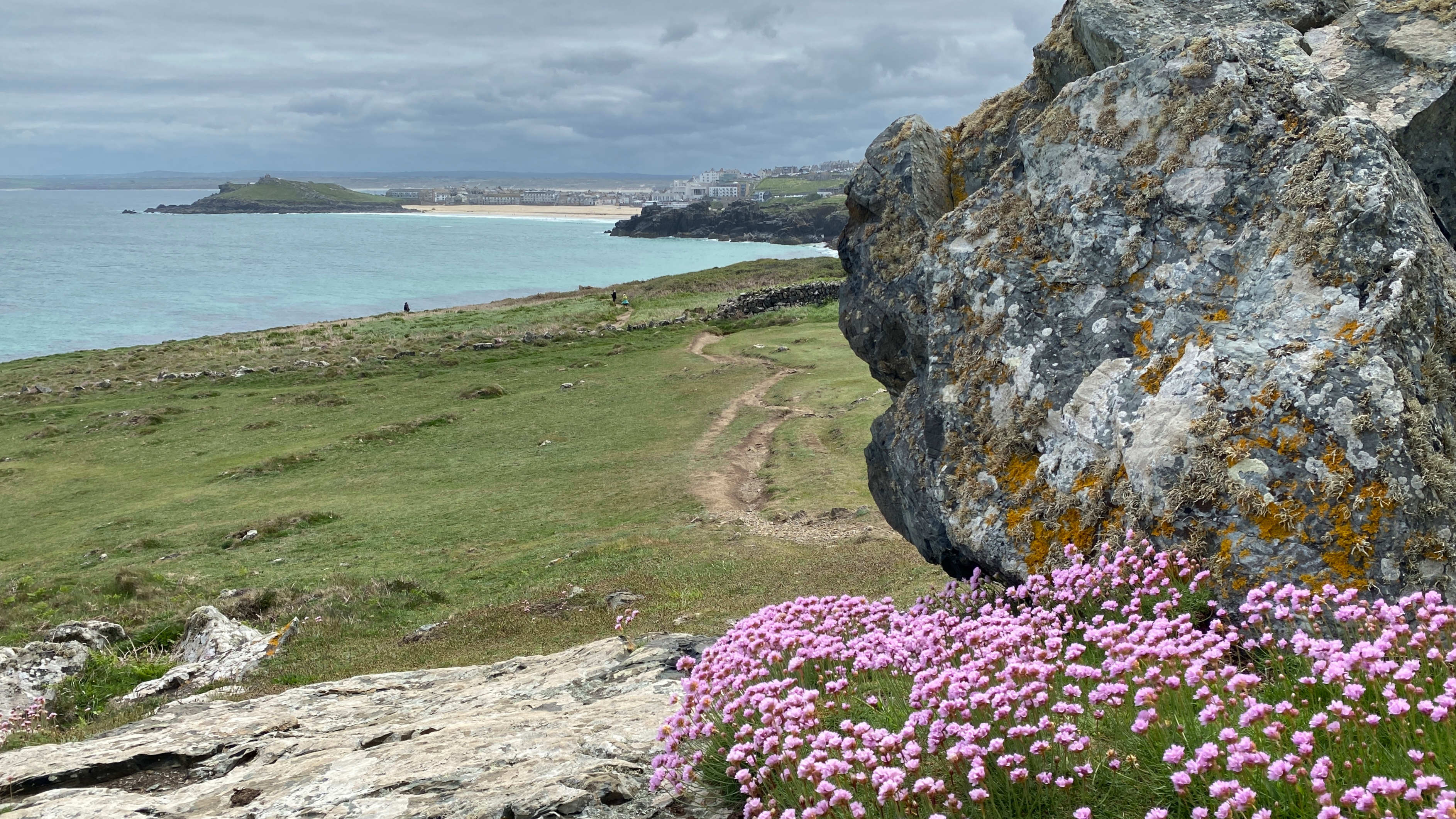
This length had long been on the Association’s wish list to be improved, but the conditions and the difficulties of access had always defeated any ideas. However in 2015 circumstances came together to present an opportunity. The local footpath ranger at the time for Cormac, Cornwall Council’s contractor, Hamish Gordon, was a strong supporter of the Coast Path and of the charity, and was also keen to see an improvement here. Hamish had the idea of constructing a stone causeway to raise the path above the problem conditions. He had been partly inspired by the fact that many years previously a small attempt to ease the problem had been undertaken by placing a few old, broken paving slabs over the worst sections. Hamish’s plan was to provide a continuous walkway which would be efficient but also both aesthetically and environmentally acceptable, unlike the old slabs.
As a result of an underspend on footpath work at another Cormac project, funds became available in 2015 which he earmarked for the improvement works at Clodgy. The Association offered some additional funding so the project could go ahead.
Sourcing the granite
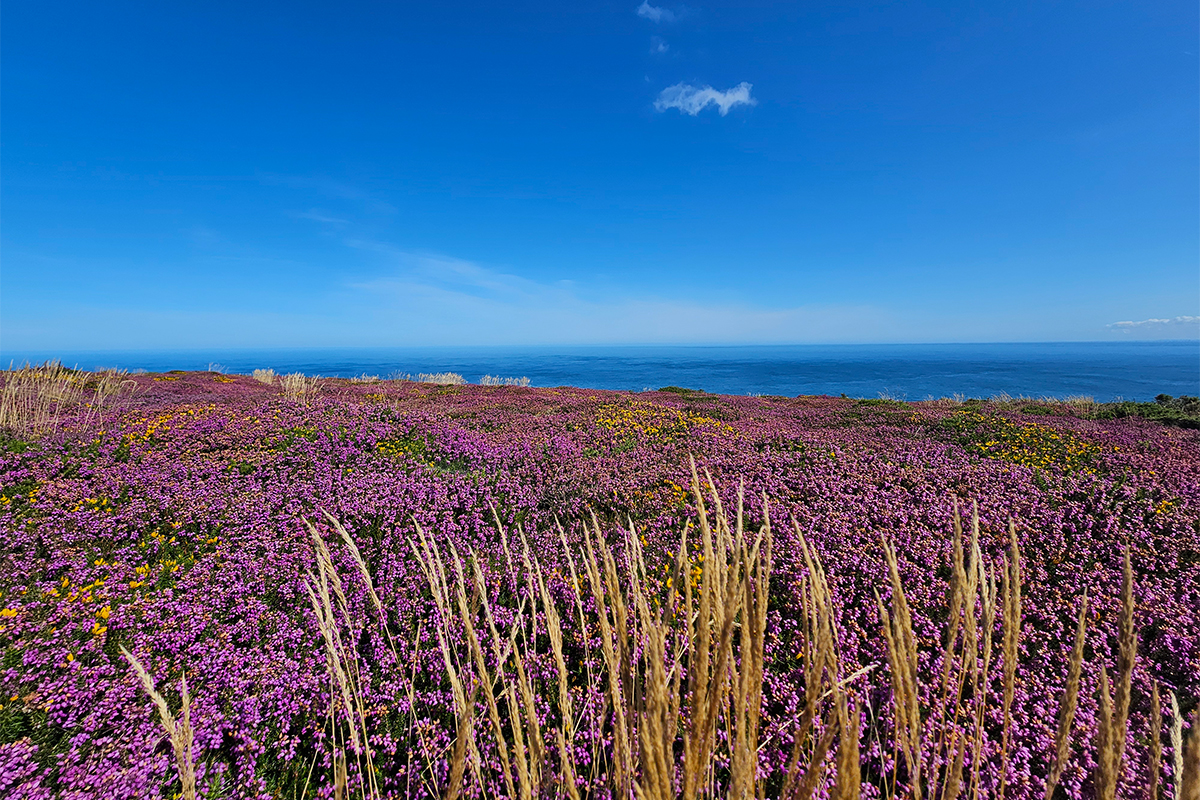
Now the details had to be put in place. The first issue was sourcing suitable granite, this rock being the basis of the local geology. The length of coast at Clodgy is included in a Site of Special Scientific Interest (SSSI), designated for its range of plants which thrive in wet conditions, including some nationally rare species, and species of unusual invertebrates that depend on them. Much of this importance is based on the geology, so it was a requirement of Natural England that in order to maintain the integrity of the SSSI the granite to be introduced would have to be appropriate to the area. Oddly, the granite from the nearest quarries did not properly match that of the SSSI, but after investigation it was found that suitable granite (metadolerite) could be obtained at Porthoustock Quarry at St Keverne, inland of Falmouth.
Having sourced suitable granite – over 100 tonnes was required, the next issue was to supply it to the site. After being taken by lorry from Falmouth to St Ives, the stone was taken along a narrow lane which ended at a public footpath. This footpath, Burthallan Lane, was a direct access to Clodgy but was very narrow, overgrown and with a very rocky and uneven surface. Consequently before it could be used to transport the stone work had to be done to severely cut back and widen the path and level its surface. Even then, the only means of transporting the stone was by using a power barrow. Given the limited load the power barrow could carry, many journeys up and down Burthallan Lane were necessary.
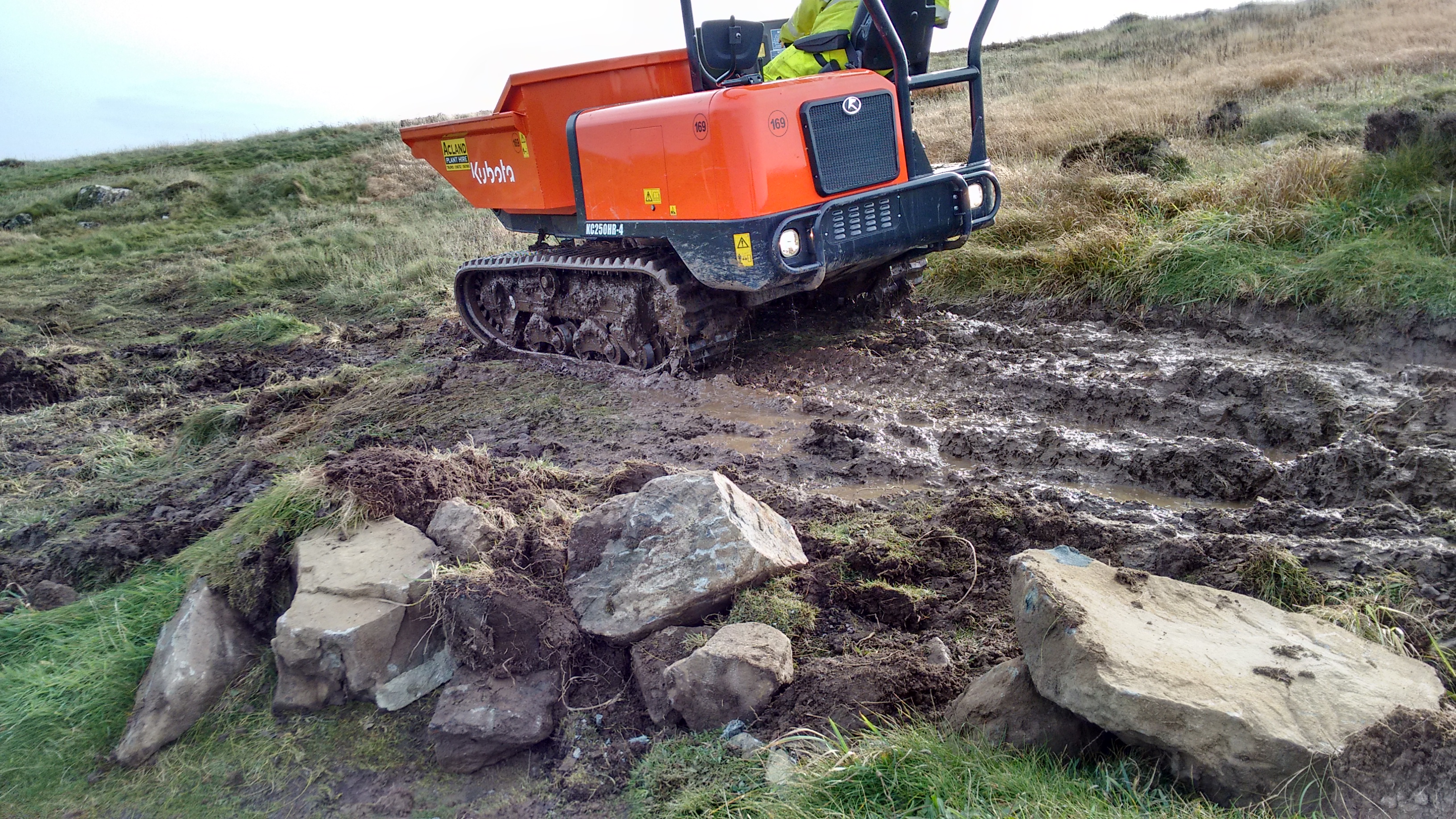
A mini-digger was also taken down the lane and it was this machine – or rather, its driver – which did the bulk of the work, which began in November 2015. The digger scraped the line of the route clear and relatively level and then the bucket was used to put each stone in place, each place carefully chosen, then rammed down and sometimes shaped by the bucket to ensure an appropriate fit. Fine adjustments were made by others in the team, usually of three. The digger then slowly proceeded along what had been laid until the end of the length was reached.
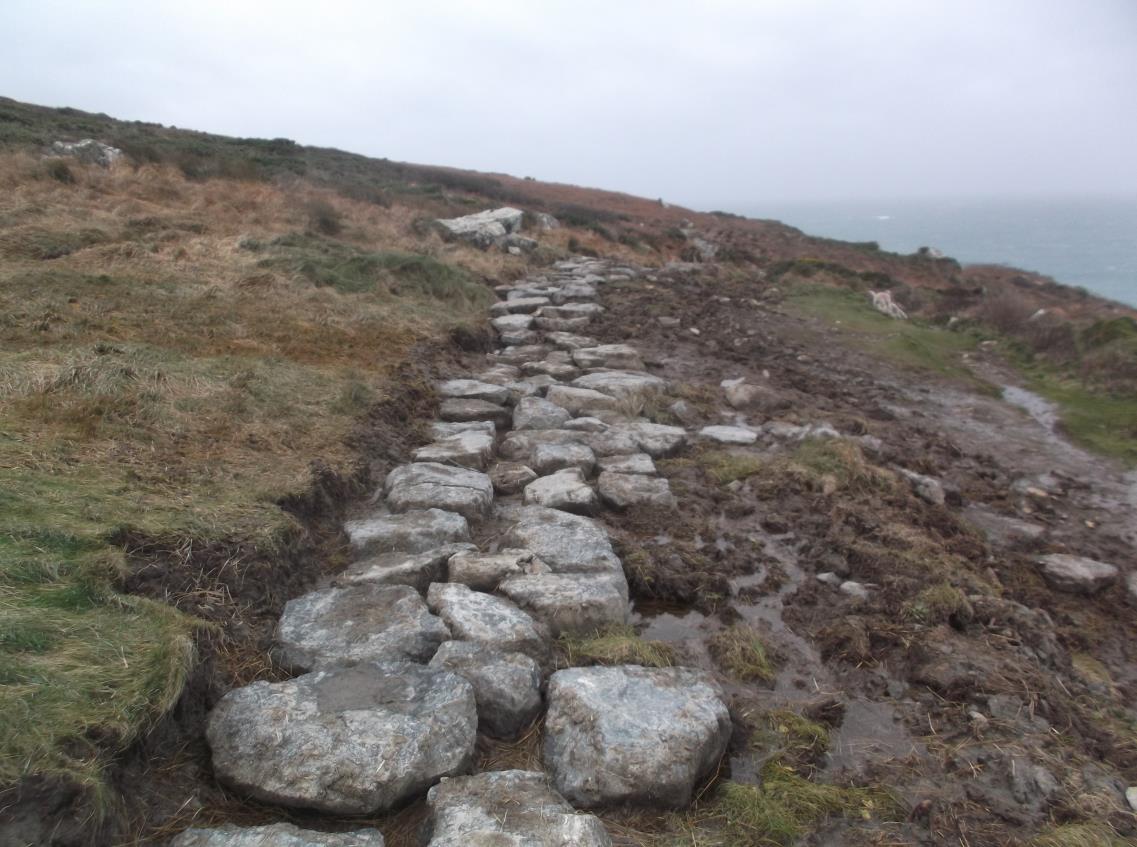
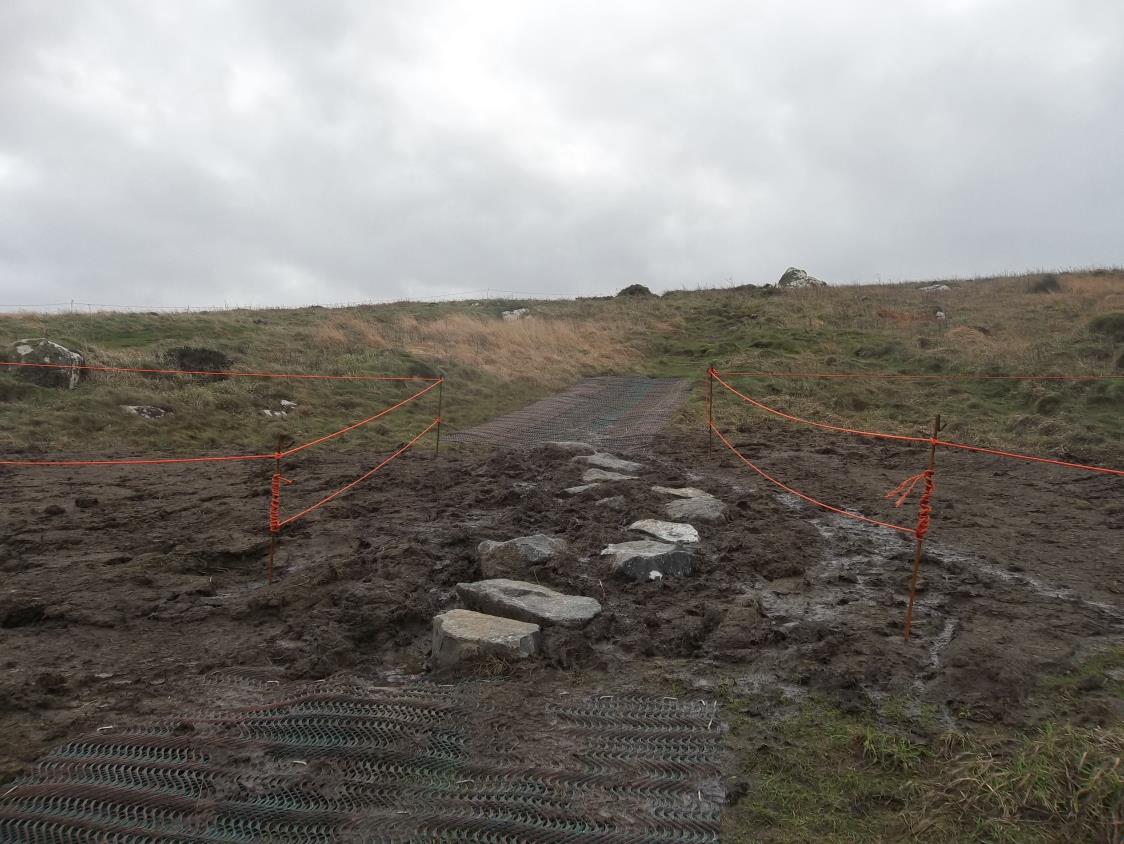
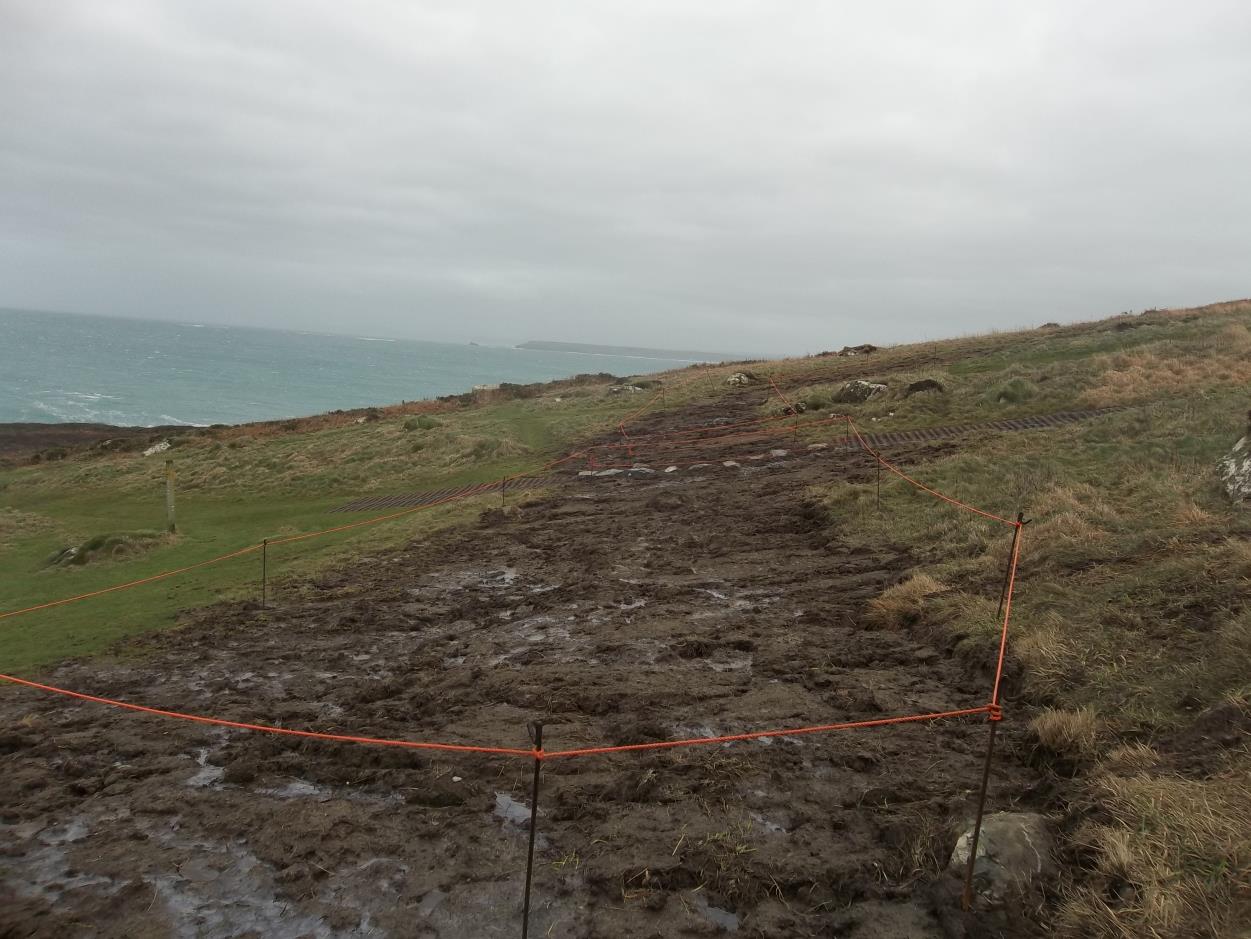
As well as the physical conditions, the works team had to deal with some public issues. Although there was a formal closure on the length of path there was no easy alternative route so many walkers still passed by. Whenever a walker arrived, rather than telling them to go back the team stopped work for safety reasons, leading to many conversations and explanations. There was considerable praise for the patience of the team and their willingness to explain the work.
2015 Storms
The project was completed by the end of 2015, and took just six weeks despite the extreme conditions and being buffeted by Storms Abigail, Barney and Clodagh during that time. By mid-2016 almost all evidence of the work and disturbance had gone.
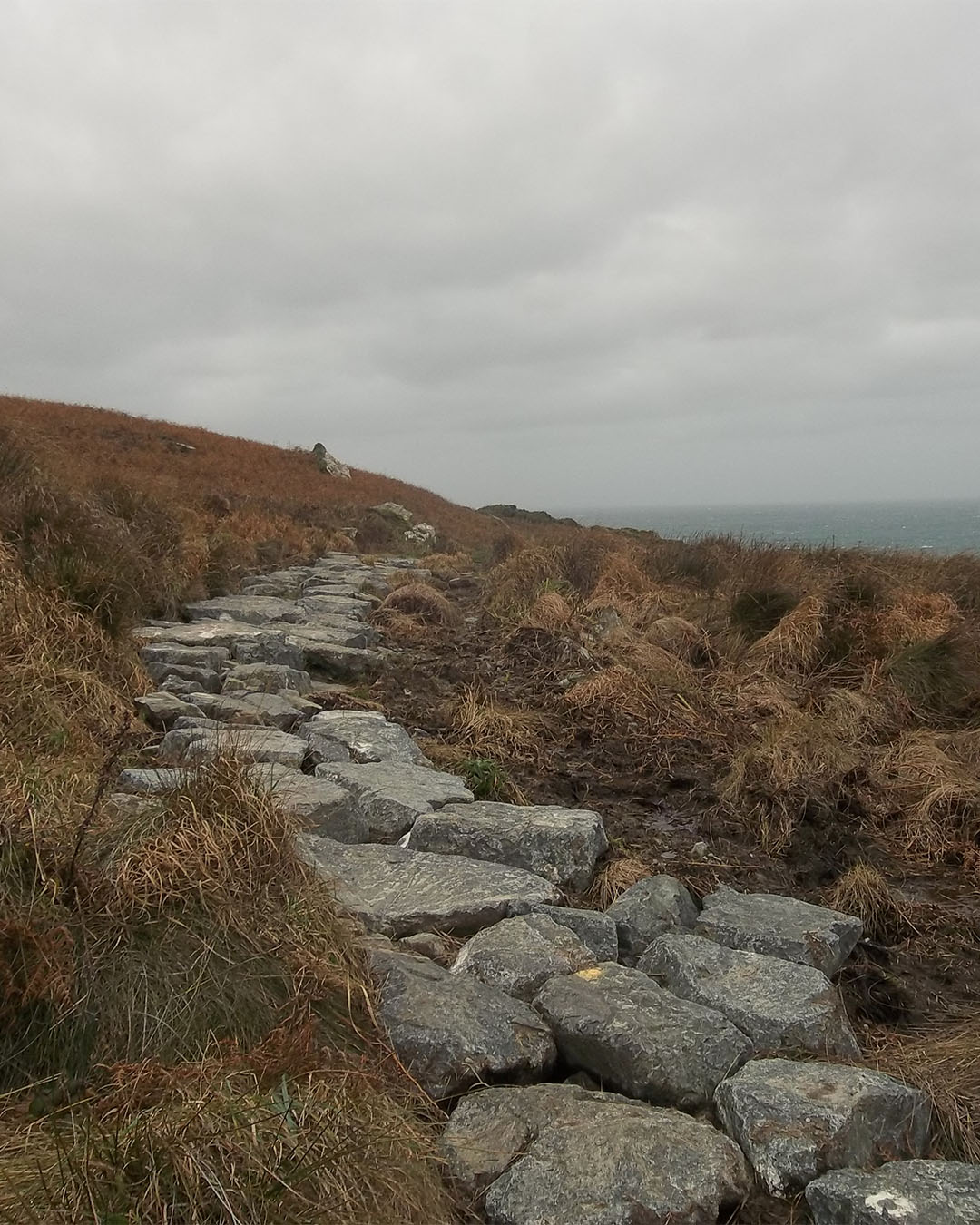
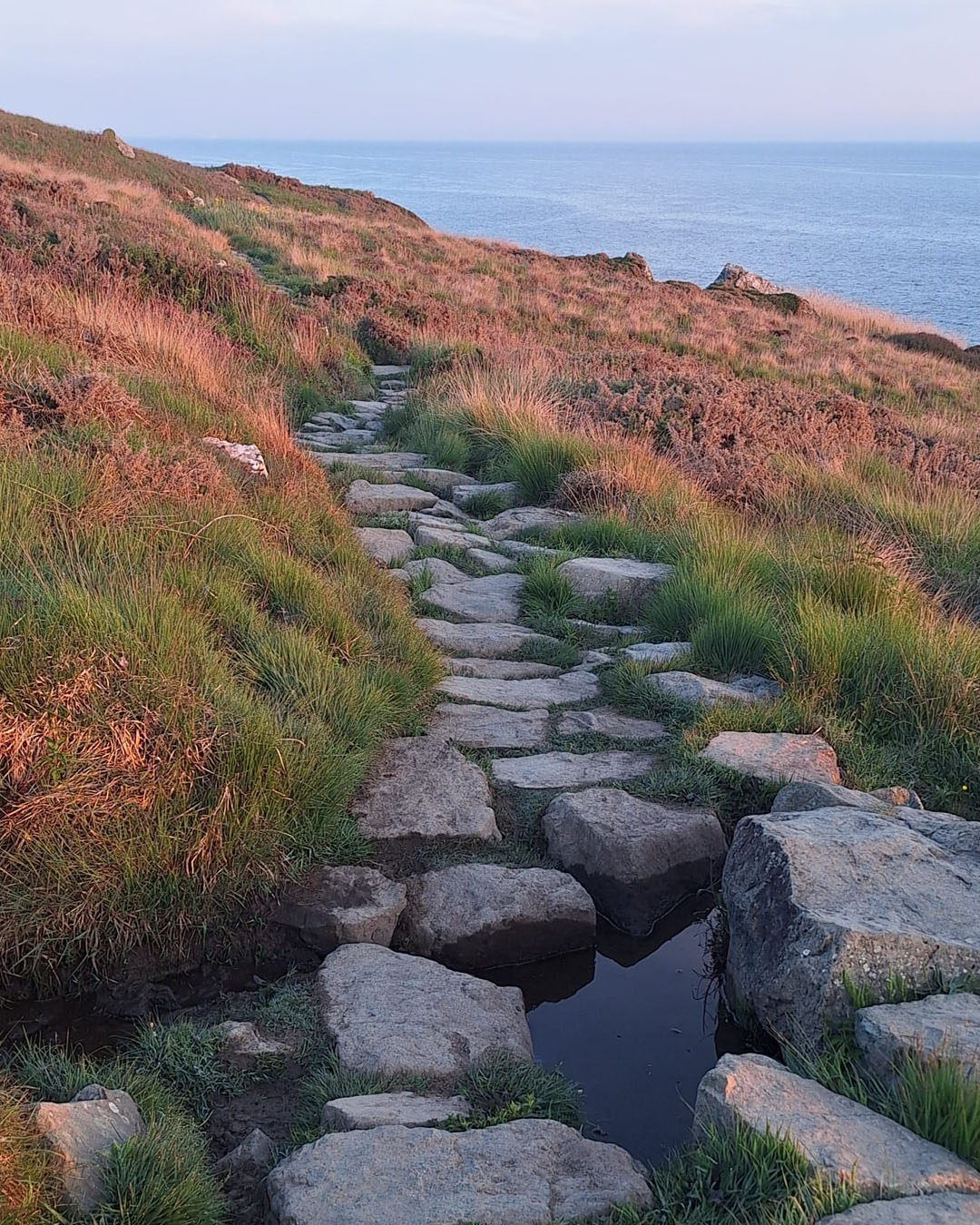
Photo by David York
Incidentally, as noted, the footpath at Burthallan Lane had to be drastically cleared to allow for plant access. There was much initial concern about this work, but the effect in the longer term was a much improved walking experience for accessing the coast at Clodgy from the higher part of St Ives. As on the causeway, by mid-2016 there was little sign of the works that had been needed, other than the wider, less rocky path, as the hedges quickly grew back.
The great improvement to the Coast Path here owed much to the idea of Hamish Gordon and to the skill and expertise of the team, and especially the digger driver. The Association congratulates them on an outstanding success that has been enjoyed by thousands of walkers since.
Written by Steve Church
South West Coast Path Association
Volunteer Path Rep and Planning Officer
Lorna Sherriff, South West Coast Path National Trail Officer said of the project,
“This project is a brilliant example of what can be achieved when local knowledge, practical skills and partnership working come together. The granite causeway at Clodgy has transformed a difficult and often boggy section of the South West Coast Path into a far more enjoyable year round route, while remaining sensitive to the special landscape and wildlife in the area. It really has made a lasting difference for walkers using this much-loved stretch of coast.”
Funding for the Project
This work was funded by the Coastal Communities Fund and fulfilled ambitions by Cornwall Council and the South West Coast Path Association to improve this section of Path. You can read more about the project HERE and watch an interview with Steve Church, HERE.
Support our Work
Funding has been drastically reduced, and opportunities to make improvements of this scale are reliant on generous donations and support from our members and supporters. If you’d like to support improvements to the trail that you love, consider becoming a member. 50% of membership fees go directly into path improvements and promoting the Path for generations to enjoy.

