

A short way past the Old Penlee Lifeboat Station, with the western edge of the Lizard Peninsula still visible over your shoulder, a touch before Mousehole, there’s a sign. It’s only small, but it feels significant. It states: you are now entering a dark sky park. Beside it another sign declares this is an area of outstanding natural beauty. Not a bad combination.
Beauty above. Beauty below. Beauty abounds.
But it’s that first sign that truly chimes. Perhaps because I tend to consider the entire coastline of Cornwall an area of outstanding natural beauty. Well, it is. But it’s not that. Instead, it speaks I think to something infinitely bigger, vaster. And at the same time, smaller. Like a place left alone. Not too tinkered with.
It speaks to state of mind, atmosphere and intention as much as to an artwork in the sky.
These signs quietly mark the gateway to West Penwith, on the far edge of Cornwall. God’s country. Outpost. A land rich in history, heritage and lore. And, in my mind, from Mousehole to St Ives, home to the South West Coast Path’s finest miles. Quite possibly it is the pinnacle coastline in all of England.
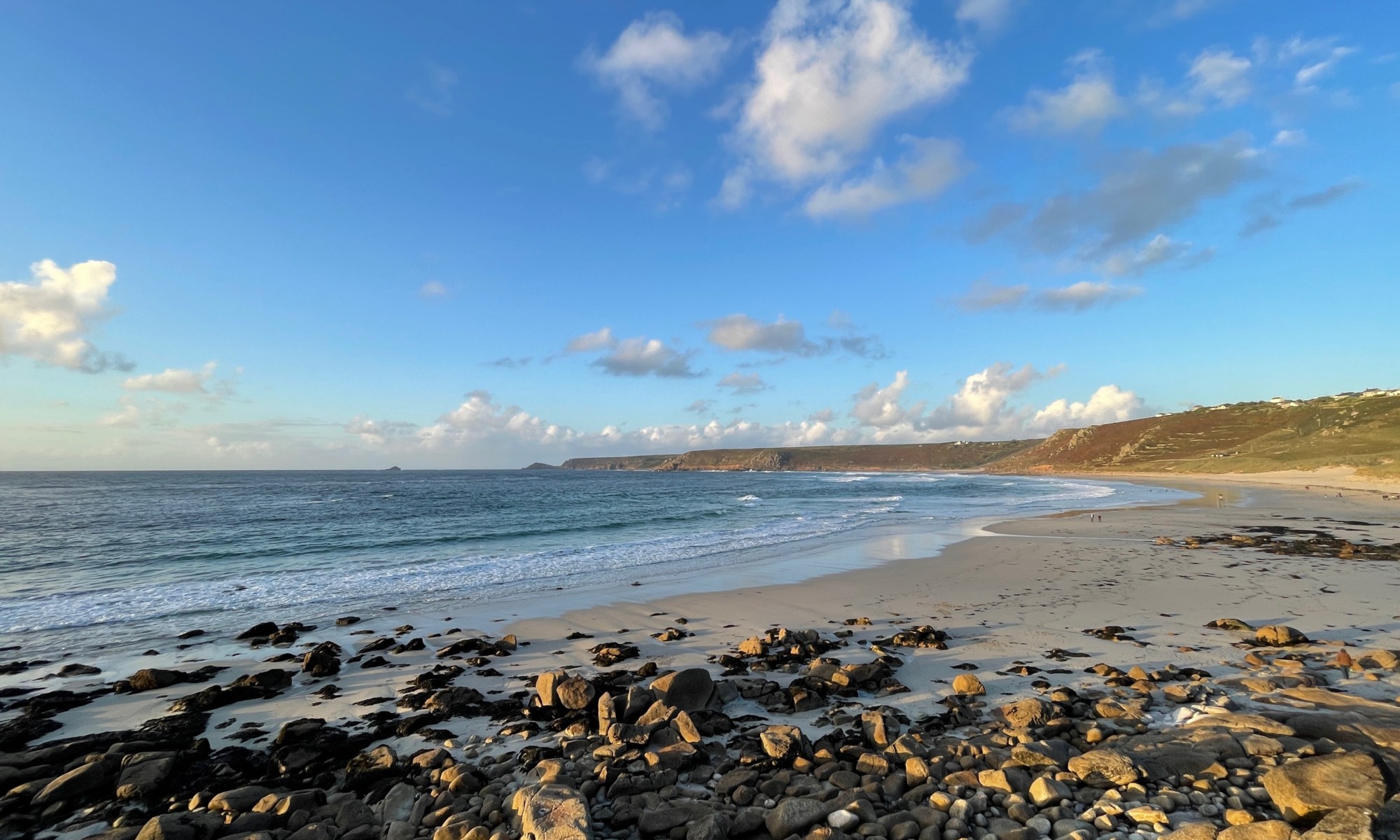
I’ve ventured the path many times. Particularly along the southern end, from Mousehole to Sennen. It’s a delight. And Sennen itself is a dream end-of-trail destination. Tucked in beside Land’s End yet wholly exposed to the harsh Atlantic, it was once a thriving fishing port. These days it turns different tides.
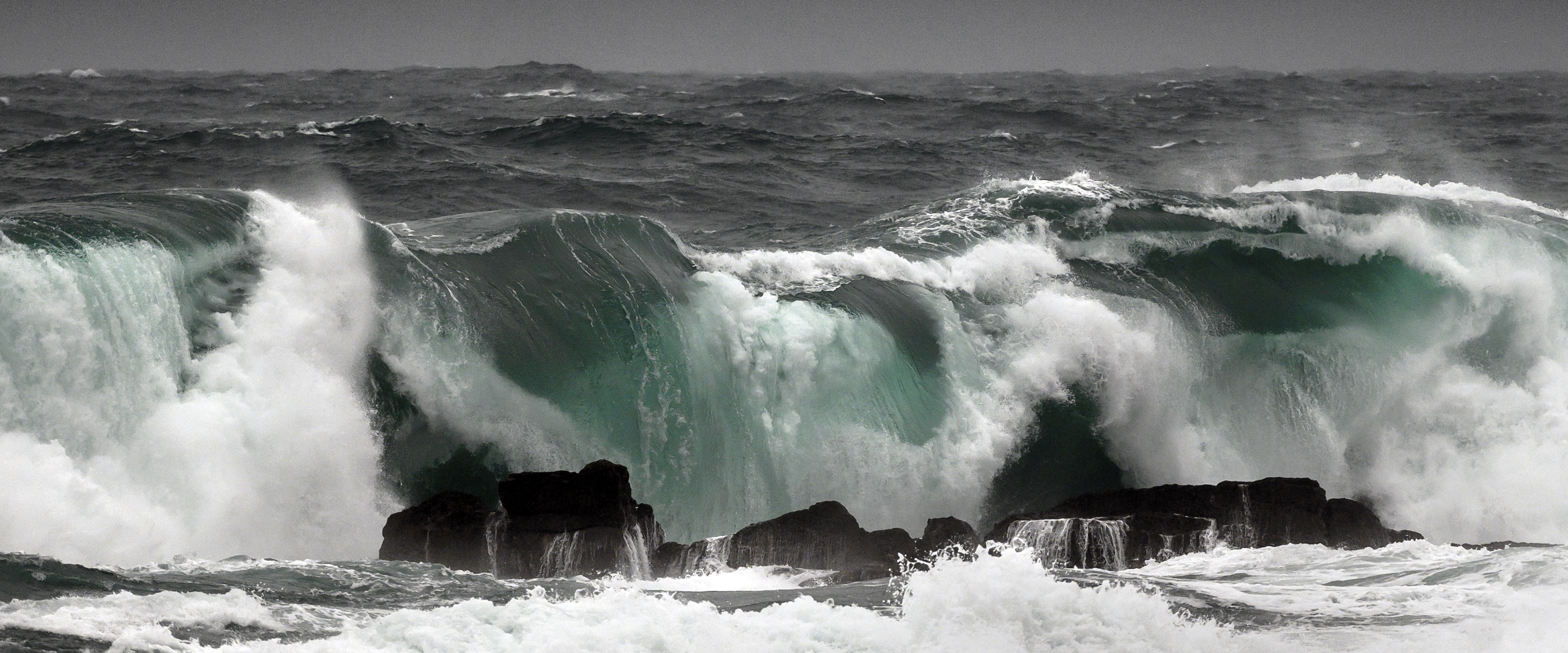
The Cornish know its white-sand secrets well, and on its ferocious, foreboding ocean seasoned surfers risk deadly rips to catch what might just be the best lines in the country. People come from far and wide. Yet it is not spoiled nor even necessarily monied. It is far too charactered for changing and its weathered charms remain sure as the day they were defined.
With a light pack and an early start, from Mousehole you can make it to Sennen in a day. It’s no more than fifteen miles. But it is a technical path, boulder-strewn and with barely a dip in her demands, so it takes far longer than you might think. And with so little time to pause and to appreciate fully this coast’s glorious geology and subtropical botanical beauty – to feel the land and breathe the air and to find unity and tranquility in the lulling rhythms of the ocean, it’s far better tackled in two.
She insists: go slow. Why argue?
Mousehole bursts with Cornish coastal village charm. It draws the crowds. With its cute, cobbled lanes and cuddled-up cottages, it’s easy to see why. Today it swarms with holidaying folk. Yet decades back, the ocean – the locals’ sanctuary and main source of income – left an indelible scar on this village, taking eight of its bravest in the infamous Penlee Lifeboat Disaster.
Some way along the coast, tucked back and easy to miss, rests a remote memorial garden. A peaceful place, honouring the brave souls that battled hurricane skies and horrifying seas attempting to save the crew of the stranded Dutch vessel, Union Star. It marks the spot the violent sea finally lured the ship to its conclusion. No one survived.
I reflect on that tragic night as I pass through Mousehole, then wend my way with haste, eager for the trail. Soon, I rise steep, away from the village and into ancient woodland and along pretty pathways before finally reaching the precipice. I catch my breath. Postcard-perfect scenery washes over me.
There’s an old saying in Cornwall: west is best. And as the land unfolds, it’s hard to argue. Certainly, all that is awe-inspiring and galvanising about Cornwall is abundant in West Penwith, of that there is little doubt.
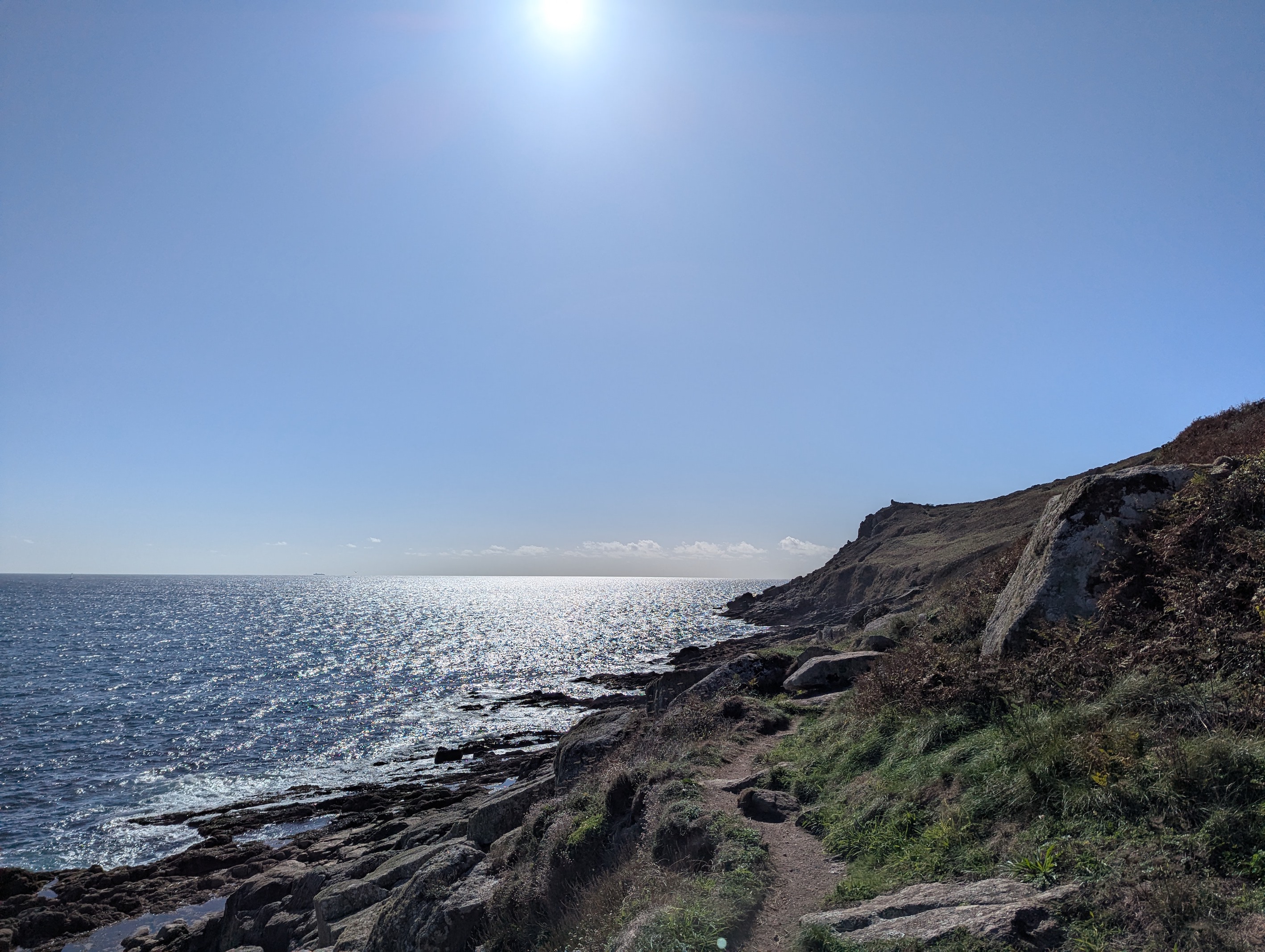
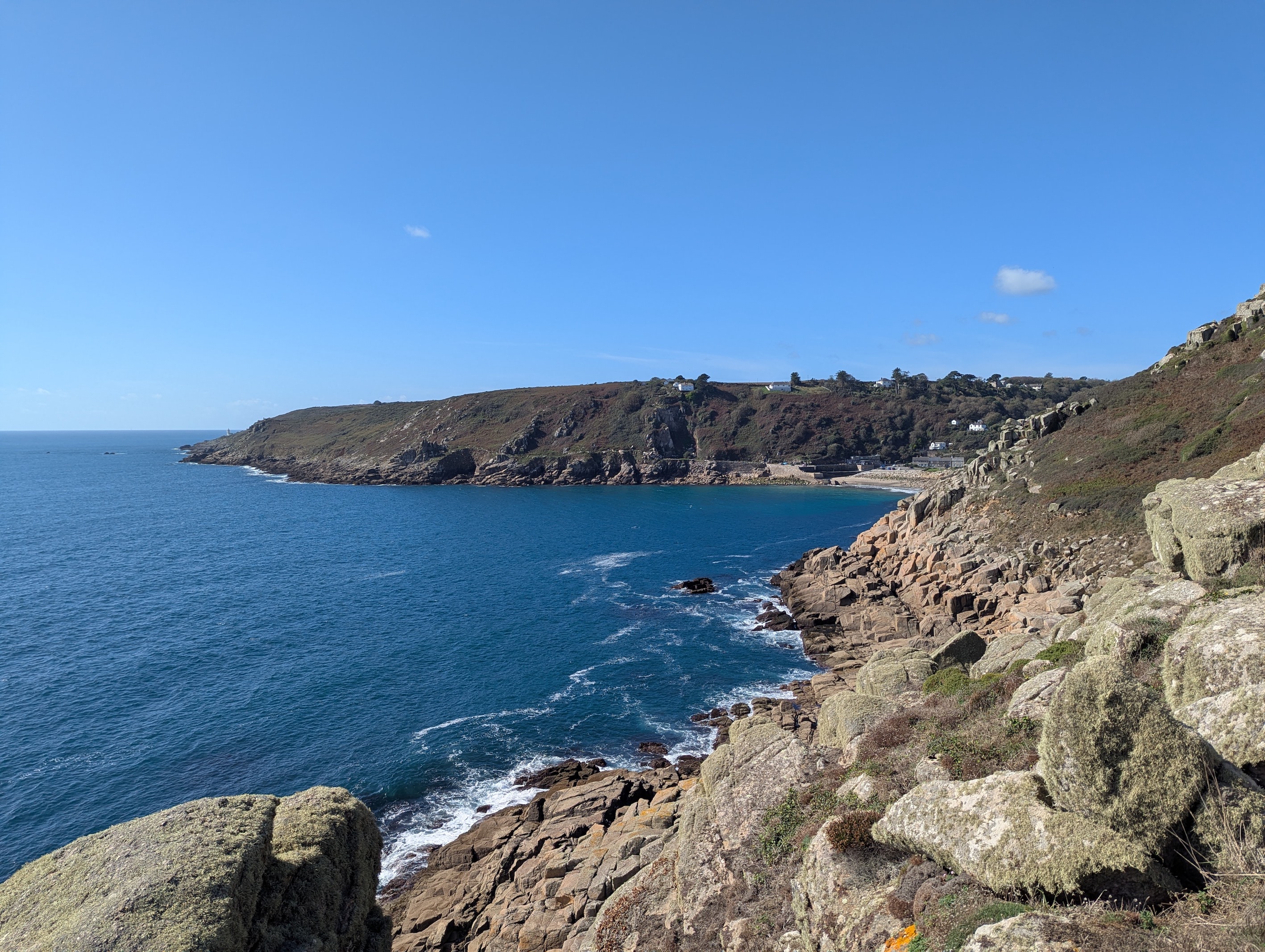
I step into it, and the path puts me to task, bobbing and rising with boulders here and there and no end of deep, light-dappled valleys and sun-starved peat bogs. After a while the path levels out and I cross an exhilarating ridge and Lamorna comes into view. On the face of things, it’s no more than an opening to the ocean. Yet out of sight a quiet village backs up deep into the land along the spine of the valley.
It’s a good spot to pause. I take a dip. As I rest, hardy granite rocks, clean, soft-shaped across millennia by the unrelenting Atlantic, come to the fore. The geology is unique and, particularly in the far west, unimaginably mineral-rich. It is upon these rocks and on these shores that the region’s mining heyday were built. Cornwall flourished, its miners innovating, risk taking and ultimately reaping rewards the envy of the world.
Those times have past. Now Cornwall relies heavily on tourism and agriculture. But the ore veins that once way-signed the miners of West Penwith to treasure troves beneath the sea can be spotted as you traverse the land. Like echoes of graft and prosperity, windows on surer times.
The path beyond Lamorna is more exposed. At first, it’s a fully taxing affair. Head up, one foot in front of the other is not a thing at this point – the opening miles less hiked than scrambled. Yet the path soon renews a sense of space and serenity. And as it eases and opens, seabirds swoop and play and fill the air with squawky chorus and I find my stride in a landscape so beautiful it draws my breath. Increasingly, rugged cliffs blend with rolling verdant pastures and moorland-like expanses. I sense the shift in my heart as well as in my surroundings.
I descend the path and hop-scotch joyfully across St Loy’s Cove’s giant-sized pebbles. Soon it weaves among a magical microclimate garden before rising sharp out of the valley. And there in the distance, marker of the day’s end: Logan Rock – presiding peacefully over the land, master and lover in one.
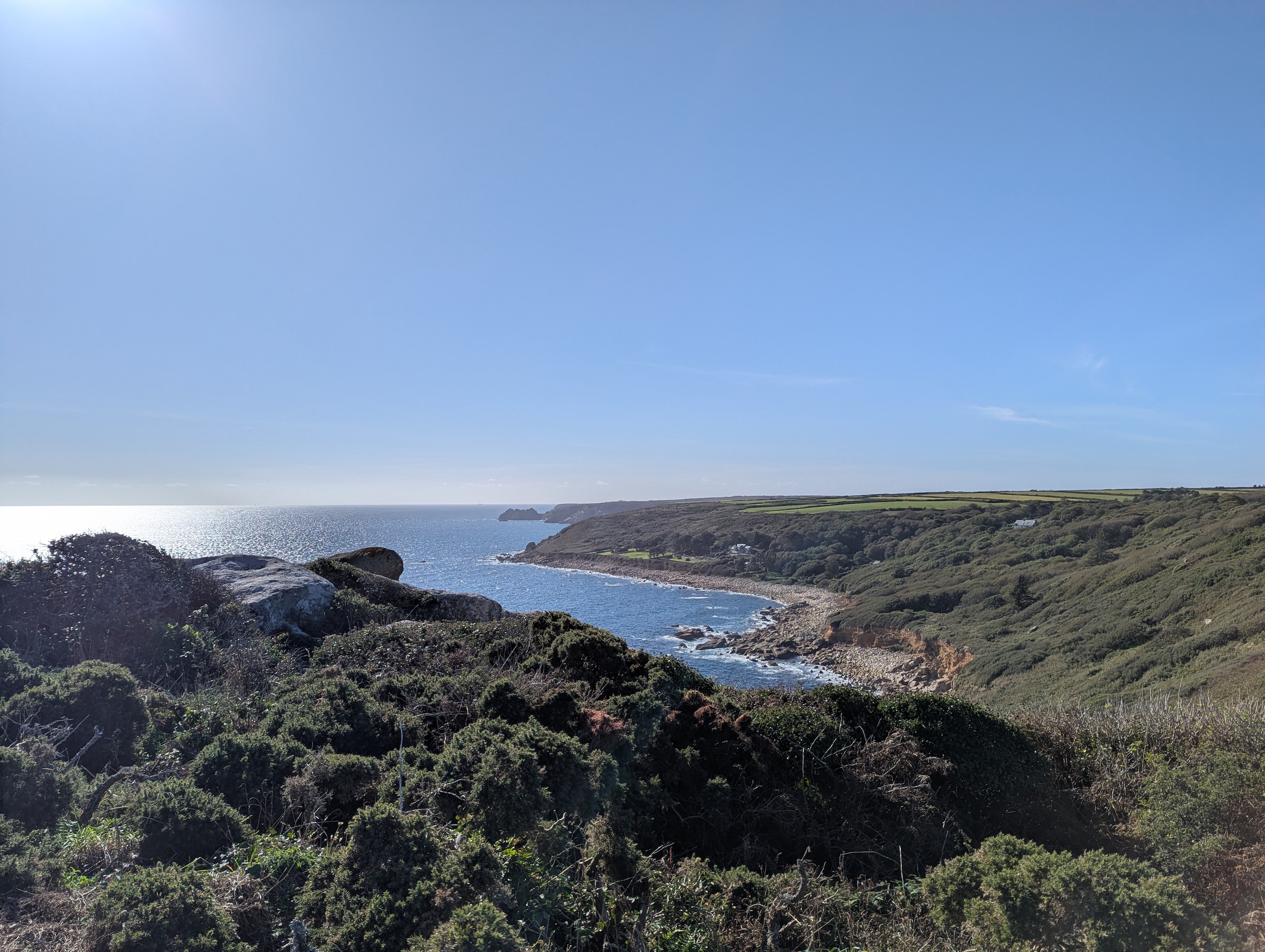
Another push across wildening land, then down to Penberth Cove. It’s a charm of a hamlet, a time capsule. I pause by the ford, and the ebb and rise of the ocean return me to tranquility. But it doesn’t hold – tiring legs on the climb out a reminder of the day’s graft. The campsite at Treen, a little further on, is set slightly inland on high cliffs where wild horses roam. When I arrive, it’s welcome. I make camp. A pint awaits in the village.
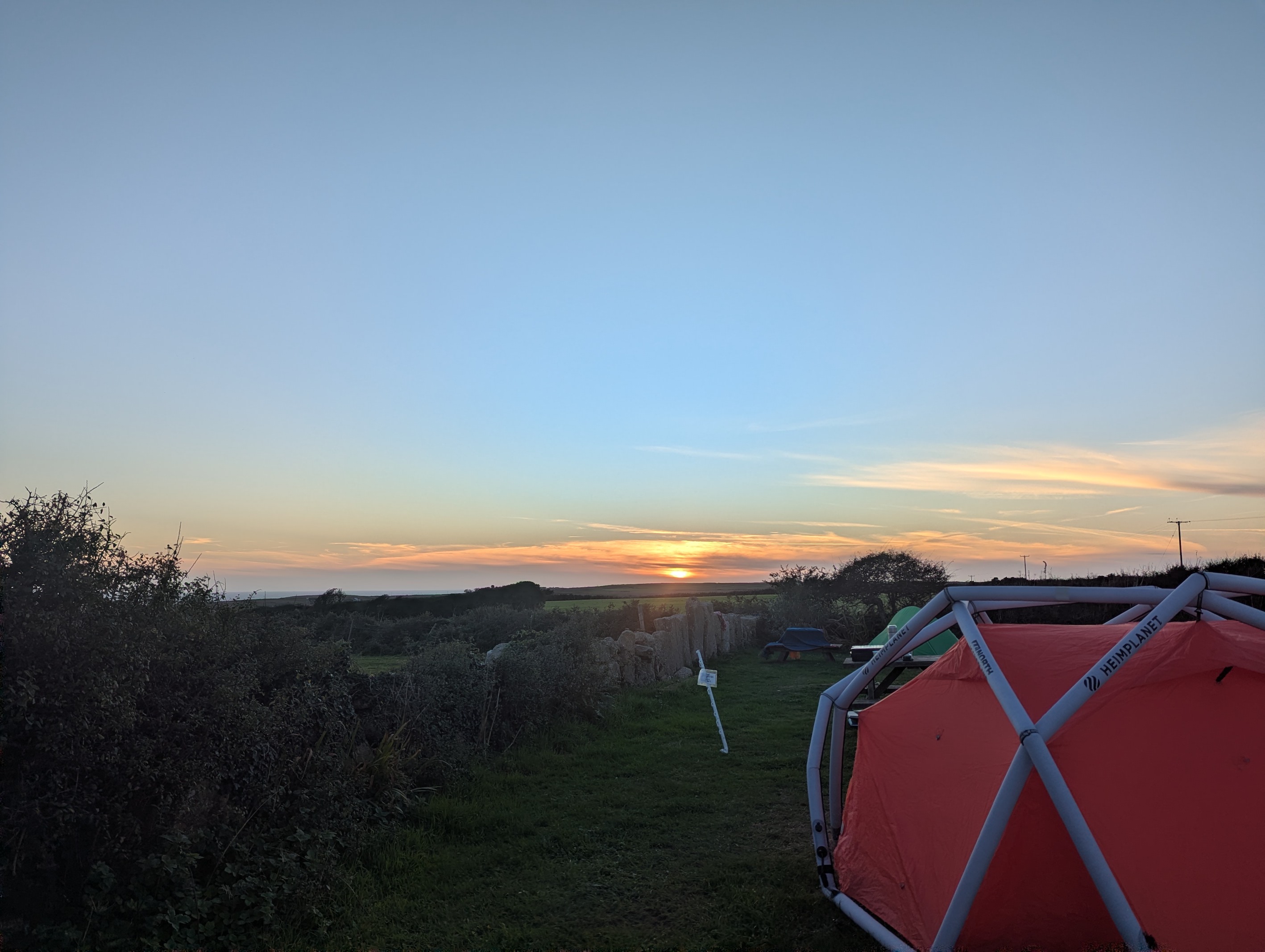
Next morning, I rise slowly, fix porridge and coffee. The path from here to Sennen is a little over five miles. It’s a special trail, and home to some of West Penwith’s greatest natural treasures. Exposed to harsh Atlantic fronts the land is rugged and wild and wise, and increasingly, slate grinds with granite, carving cathedrals in rocky outcrops.
I rejoin the clifftop path and stand immediately over the majesty of Pedn Vounder Beach. With its magnificent expanse of near-white sands framed by turbulent turquoise seas and epic granite cliffs, it is arguably Britain’s finest beach, and one of the world’s best too – the geology working with the water to create a quality on the eye found only in these corners.
The path down to the beach is not easy, and the sea is particularly dangerous. Even so, it’s baffling to think, at least beyond the wise of the locals, that this enchanting place went under the radar for so long.
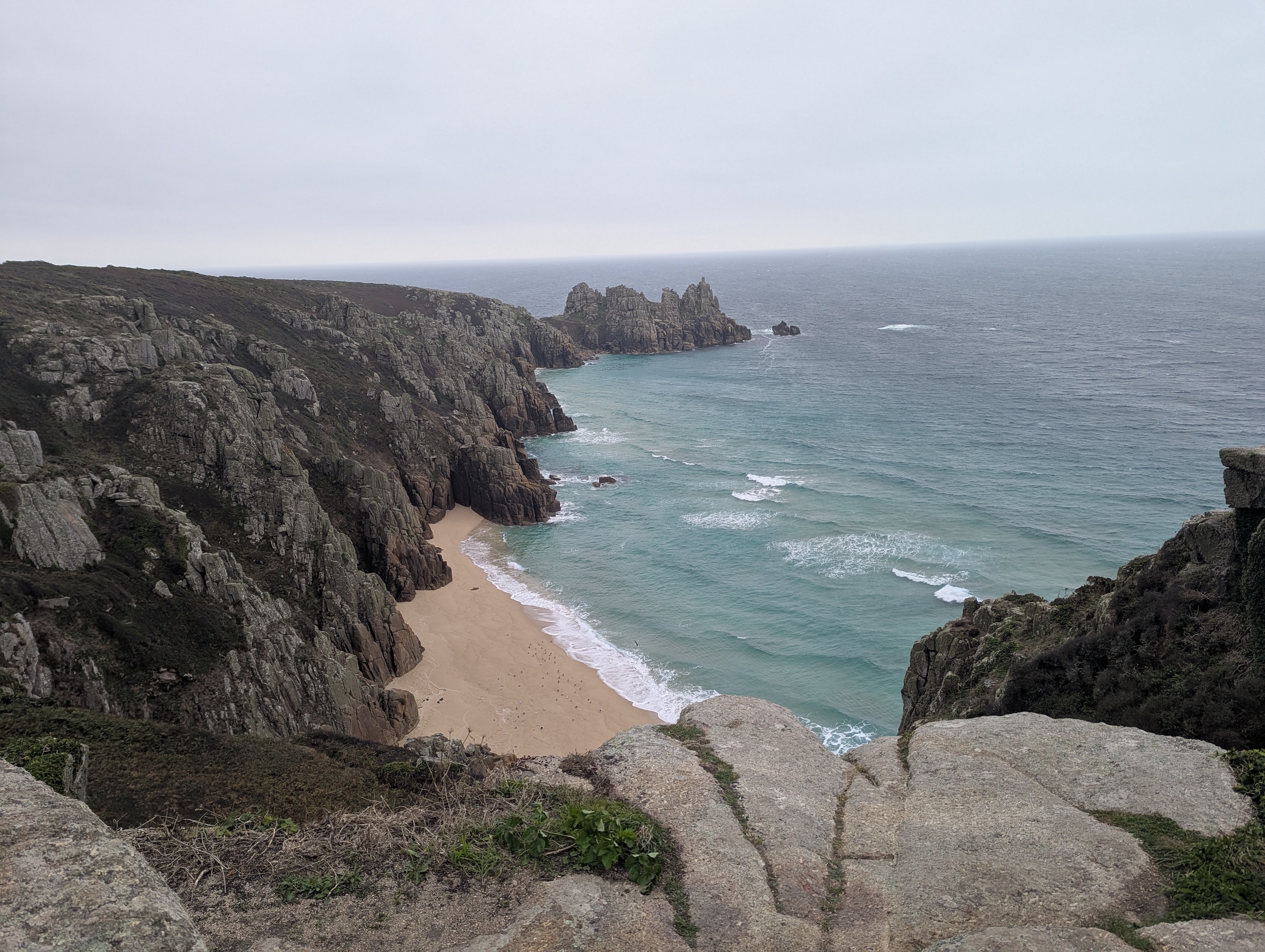
Around the time of the pandemic, though, word spread. Pedn Vounder became a beacon for where to be seen on social media. People came, took selfies, and left. Trouble was, they also left their rubbish. For a while things got so bad the locals and the National Trust couldn’t keep up, and now the beach is closed. A devastating outcome, born of scant regard for the fragility of our coastal eco-systems and how lucky we are to have these spaces. Sensitive education is a necessary solution.
Next door, Pedn Vounder’s little sister, Porthcurno, is another a-grade white sander. Once it was a global communications hub, and relics remain. These days it’s watched over by the iconic Minack Theatre and backed by a sizeable car park. On hot summer days a spot on the sand is hard to come by. I’m pleased to be here in autumn. After a rejuvenating dip, I push on, climbing steep steps carved into the cliff face. In the theatre car park tourist coaches abound. I push on.
The path becomes quickly rugged and testing, soon passing the lesser-known but no-less-stunning Portchapel Beach. Before long I arrive at Porthgwarra, a gem of a hamlet and a haven from howling winds. Its cottages are made of thick stone. There’s a welcoming cafe and a dreamy little beach, sheltered on both sides making it ideal for a dip. I resist the urge, instead treating myself to a warming pasty and a coffee in the cafe.
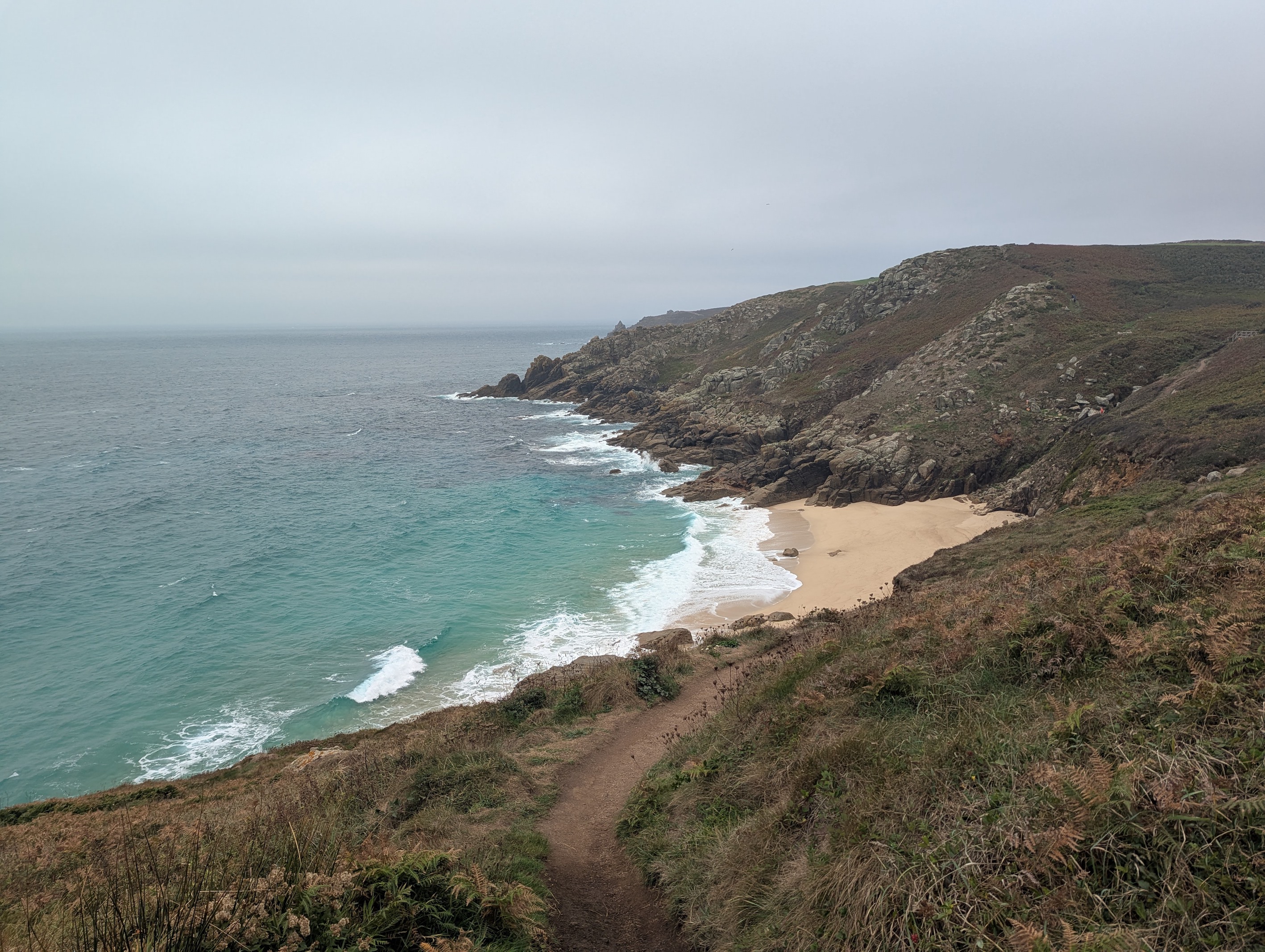
I stay a while, enjoying the gentle lapping waves before climbing the path up, out and away. I pass the National Coastwatch at Gwennap Head. Here, the land takes on new forms, fresh textures. The sea has a silvery quality. The light’s turned shifty and murky. Dramatic, Atlantic-battered cliffs are omnipresent, and as the path unwinds they rise and fall, a fitting backdrop to the end-of-earth atmosphere. I’m enveloped by the remoteness, the sense of exposure, the isolation. It has a liminal quality, and I love it.
Before the leg-tester descent to Nanjizal Bay, a cavern in the cliff face beyond evokes images of pirate ships taking shelter, just as I’m sure they once did. The bay itself is like a wise owl. Slightly haunted looking, but beautiful. And despite its fame, it retains its remote air. Yet what strikes me most about this place, and it always surprises me, is just how much the beach itself shape shifts. The powerful ocean washes high across the sands here, rearranging rocks and pebbles and removing and depositing sand as if an indecisive artist is trapped at sea.
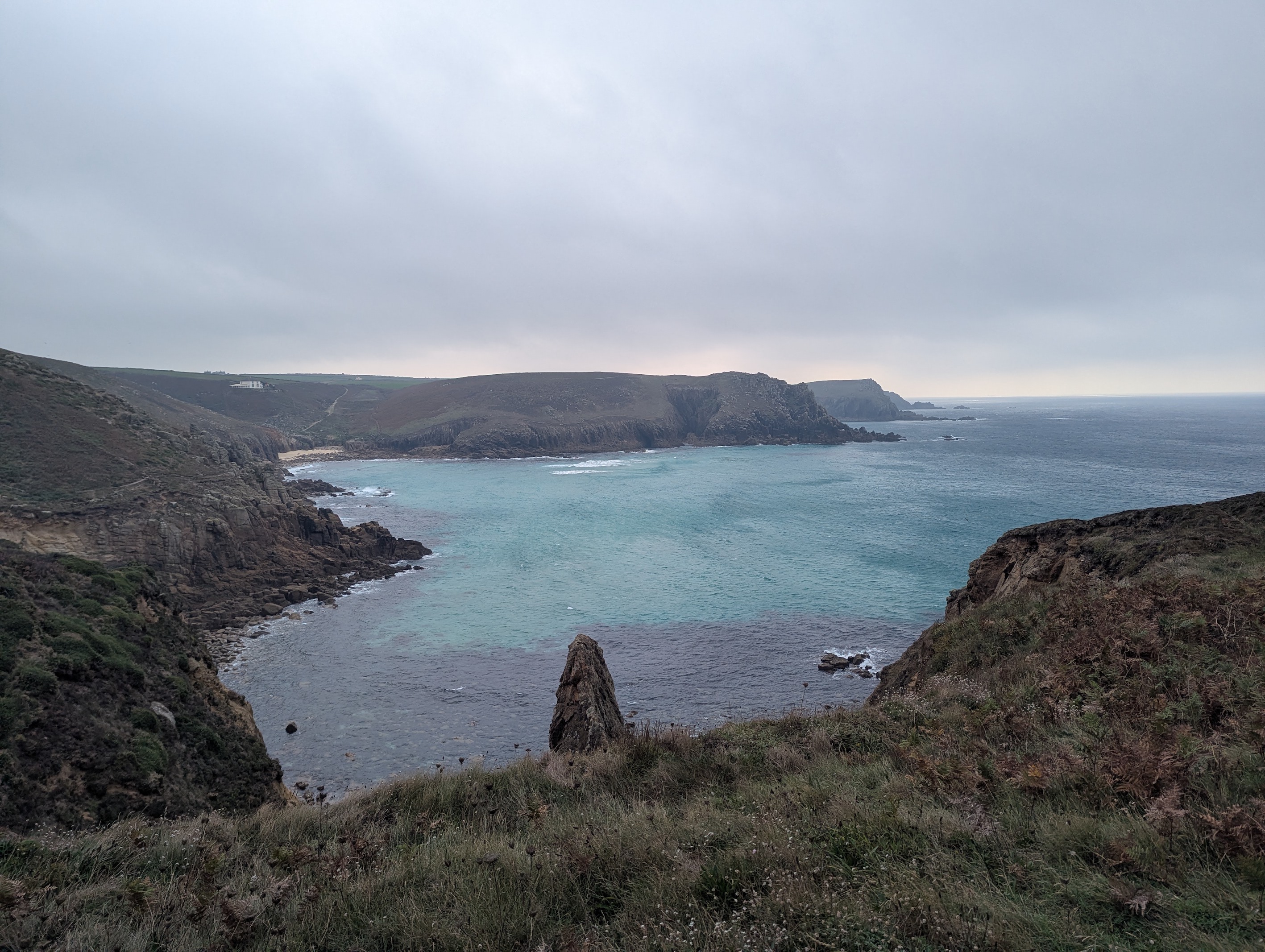
From here, Land’s End is within touching distance. But the path never relents. The scale of the granite plays with my sense of perspective, and jagged rocks jut like knives from the ocean; a warning to all ships, watched over by the Longships Lighthouse.
I make Land’s End. Tourists flock to the building and to the signpost, embracing the theme-park feel. I pass by, raising a smile as I spot the first official welcome. In bold type by the main gateway, it’s a shout out to all riders, walkers, and however-on-your-steamers either starting or finishing their Land’s End to John o’ Groats journeys. Fair play. It’s a nice touch.
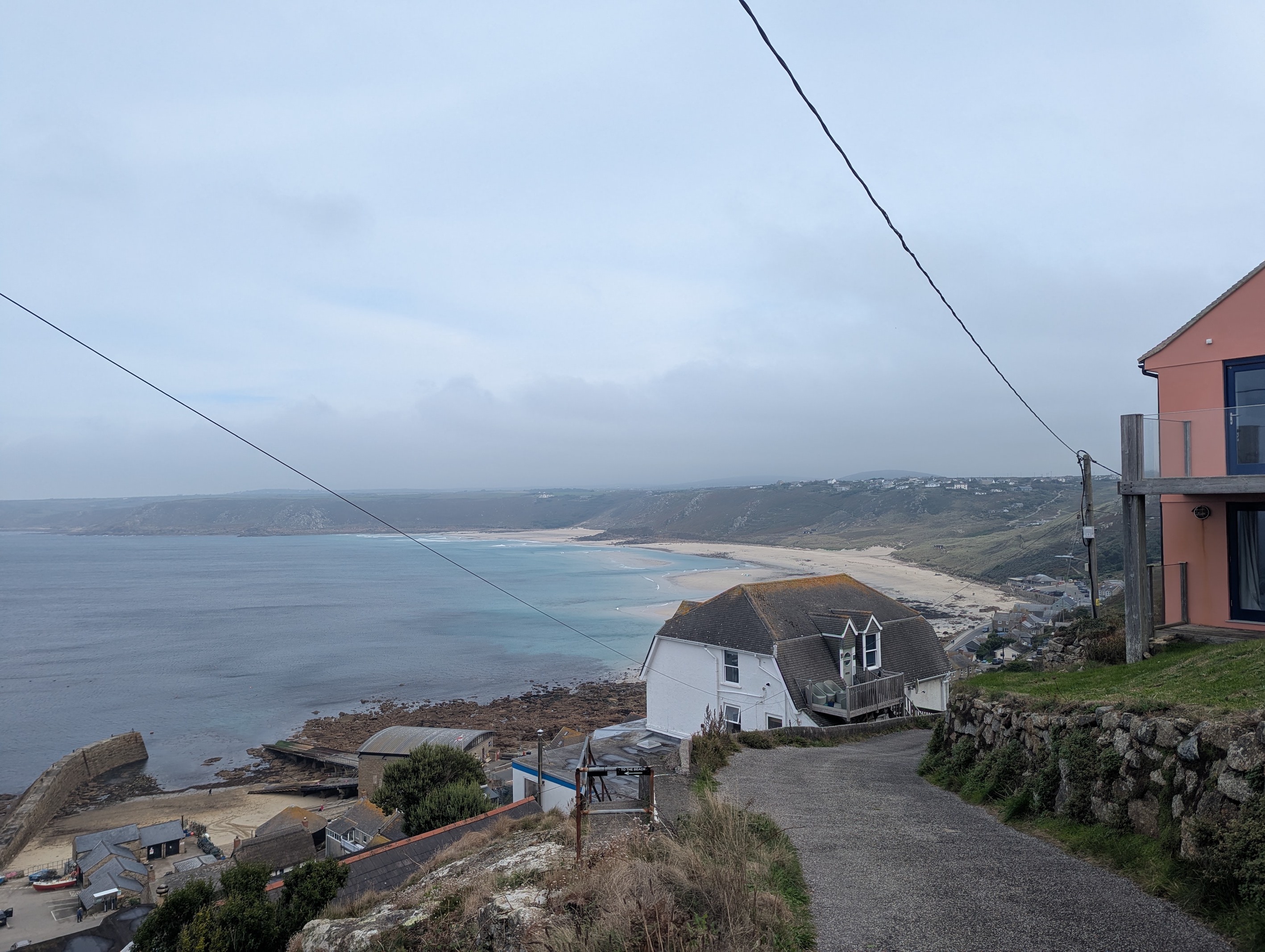
I leave the hubbub and begin the final passage, passing a Nordic shipwreck before making the brow of a hill.
And there, in the distance, Sennen.
As sure a place to rest as ever there was.
About the Author:
Dan Fowler
Dan completed the South West Coast Path in 2023, nine years after starting.
Bitten by the thru-hiking bug, he’s also completed several other National Trails including Offa’s Dyke Path, the Coast to Coast, and the Pembrokeshire Coast Path.
When not tackling trails he writes for purpose-led brands and loves film and live music.
If you’d like to find out more go to: https://www.joiningdots.org
All images by Dan Fowler unless otherwise credited.

